
During a compliance review of a company's procurement department, the auditor reviews the policy requiring separate employees to approve purchase orders and authorize payments. What is the primary purpose of embedding these types of internal controls into a compliance program?
Select an answer to reveal the explanation.
Short Explanation
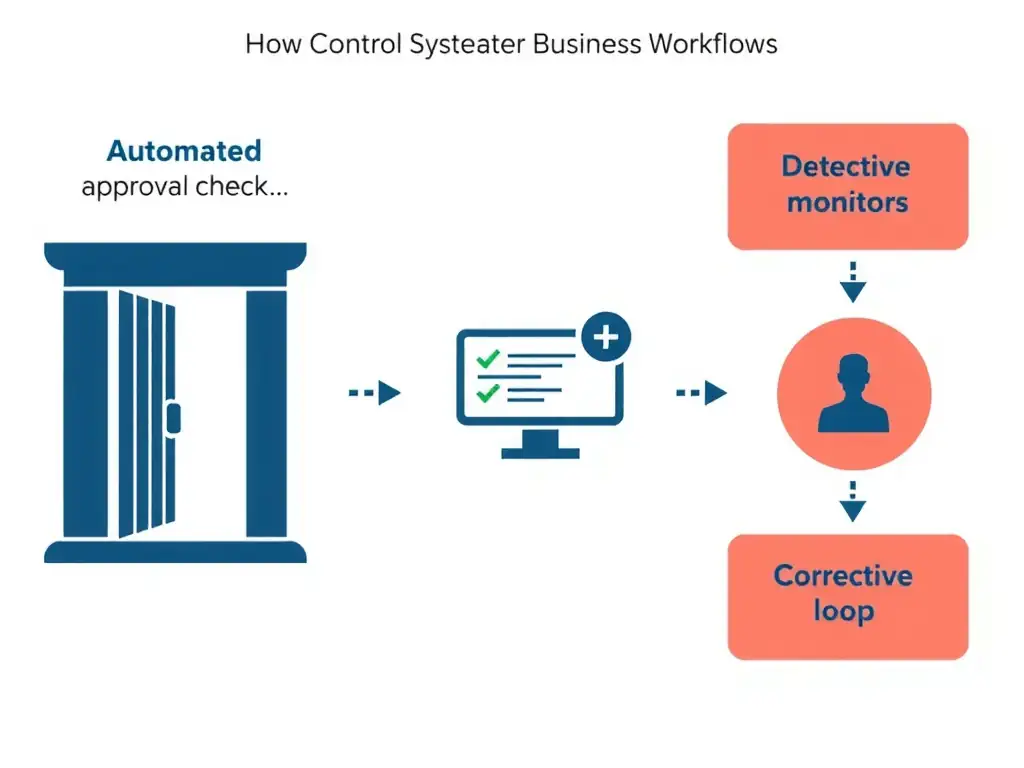
Here's the deal: you split purchase-order approval from payment authorization so no one person can push a bad deal through. That segregation of duties prevents mistakes and fraud, detects them if they happen, and gives you a way to correct the problem before it becomes a compliance mess.
Full Explanation
Internal controls are the systematic measures (such as reviews, checks and balances, methods, and procedures) instituted by an organization to conduct its business in an orderly and efficient manner, safeguard its assets, and ensure compliance with laws and policies. The correct purpose is to establish a proactive defense system that works to prevent errors, operational failures, and non-compliant acts, detect deviations in real-time or post-transaction, and correct weaknesses before they lead to regulatory actions. This three-stage framework (prevent, detect, correct) is standard across COSO and compliance design guidelines. The idea that controls shift the primary legal responsibility for regulatory compliance from management to line employees is incorrect because internal controls do not shift ultimate legal responsibility away from corporate management; the board and executive leadership remain responsible for the compliance program. The idea that controls isolate the legal department from having any involvement in contract negotiations is incorrect because internal controls are designed to integrate and support legal and compliance oversight, not isolate the legal department. The idea that controls intentionally slow down operations to reduce overall transaction volumes is incorrect because while controls can introduce necessary checkpoints, their purpose is risk mitigation and operational integrity, not to intentionally hinder business growth or artificially reduce transaction volumes.