
An employee notices a colleague engaging in insider trading but chooses not to report the violation because they fear they will be demoted or terminated by management. This scenario highlights a significant deficiency in which area of the organization's compliance program?
Select an answer to reveal the explanation.
Short Explanation
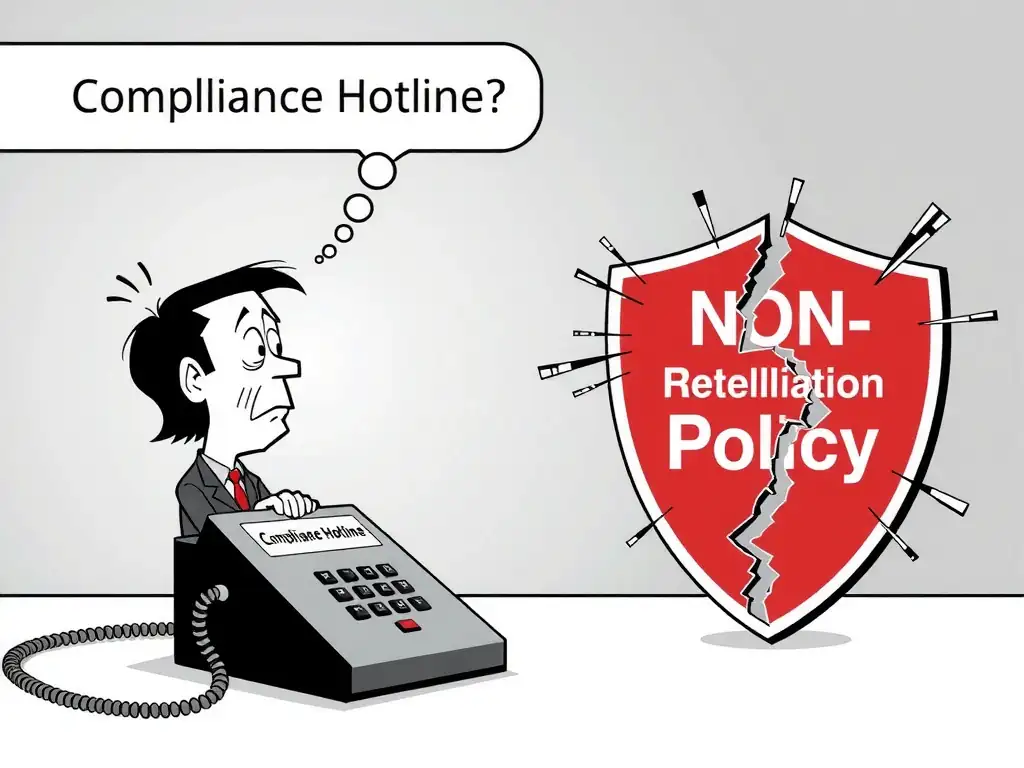
Check this out: if an employee sees insider trading but stays quiet because they fear demotion or termination, your non-retaliation policy and ethical culture are failing. You've got to protect whistleblowers, enforce zero tolerance for retaliation, and make reporting feel safe. Otherwise your compliance program is basically dead in the water.
Full Explanation
Open communication and trust are the foundation of any successful compliance program. Employees must feel safe to report suspected misconduct without fear of negative career consequences. The correct answer is the non-retaliation policy and overall ethical culture because the employee's fear of demotion or termination directly reflects a failure in the organization's commitment to non-retaliation and its ethical culture. Robust non-retaliation policy must not only be written, but also actively enforced, with zero tolerance for managers who retaliate against whistleblowers. If employees believe that reporting misconduct will lead to retaliation, the reporting channels will fall silent, leaving the company blind to internal misconduct. Internal financial and accounting controls are incorrect because they are designed to detect and prevent errors or fraud in financial reporting, such as unauthorized transactions. While insider trading is a financial crime, the failure of an employee to report it due to fear is a cultural and policy issue, not a failure of accounting controls. Third-party vendor due diligence and onboarding is incorrect because it focuses on vetting external vendors, agents, and partners to ensure they do not engage in corruption or bribery on behalf of the company. It does not address internal reporting and retaliation concerns. The organization's risk assessment methodology is incorrect because risk assessment is the process of identifying and prioritizing the organization's key compliance risks. While a poor risk assessment might fail to identify culture as a risk, the actual occurrence of an employee fearing retaliation is a failure of the non-retaliation control and culture itself, rather than the assessment process.