
What is the primary operational purpose of establishing a comprehensive Compliance Management System (CMS) within an organization?
Select an answer to reveal the explanation.
Short Explanation
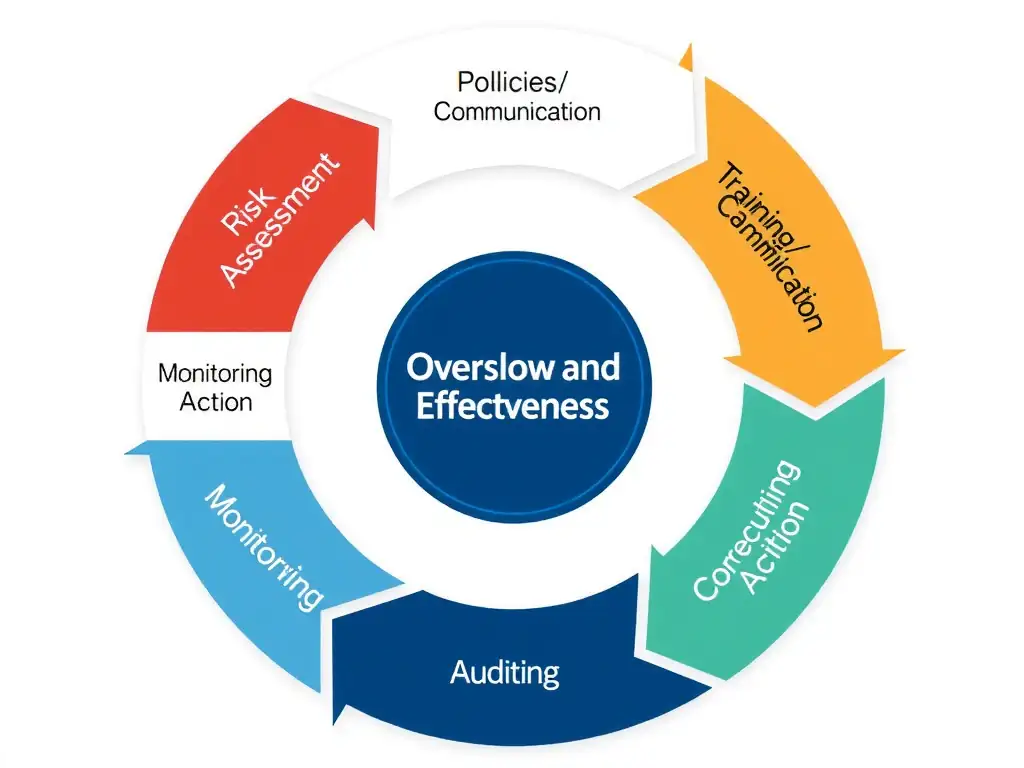
The CMS isn't there to make your business decisions for you, and it's not there to track sales. It's the structured framework you use to identify compliance risks, keep them under control, and prove your program actually works. You still need people to run it.
Full Explanation
The Compliance Management System (CMS) is an integrated, structured framework that enables an organization to align its operations with legal requirements, ethical standards, and internal policies. The complete CMS encompasses several core components: board and management oversight, a formal compliance program (including policies, training, and monitoring), and a consumer complaint response system. The primary goal of the CMS is to manage non-compliance risks proactively and systematically across all business units. Furthermore, the well-documented CMS provides the empirical evidence needed to demonstrate the program's real-world effectiveness to external auditors, stakeholders, and regulators during an inquiry. The goal of fully automating all daily business decisions and operational workflows is incorrect because the CMS does not automate business decision-making; it guides human decisions and monitors outcomes. The goal of organizing and tracking the sales pipeline and customer acquisition metrics is incorrect because sales pipelines and pipeline tracking are managed via Customer Relationship Management (CRM) systems. The goal of eliminating the operational need for a dedicated compliance officer and department is incorrect because the CMS requires active human oversight; it relies on, rather than replaces, the leadership of the designated compliance officer who manages and coordinates the system. The structured CMS is vital for turning static policies into active, defensible compliance operations.