A team member identifies a security breach that violates the company's internal data privacy policy. Under a mature compliance framework, what is the most appropriate first course of action for this employee?
Select an answer to reveal the explanation.
Short Explanation and Infographic
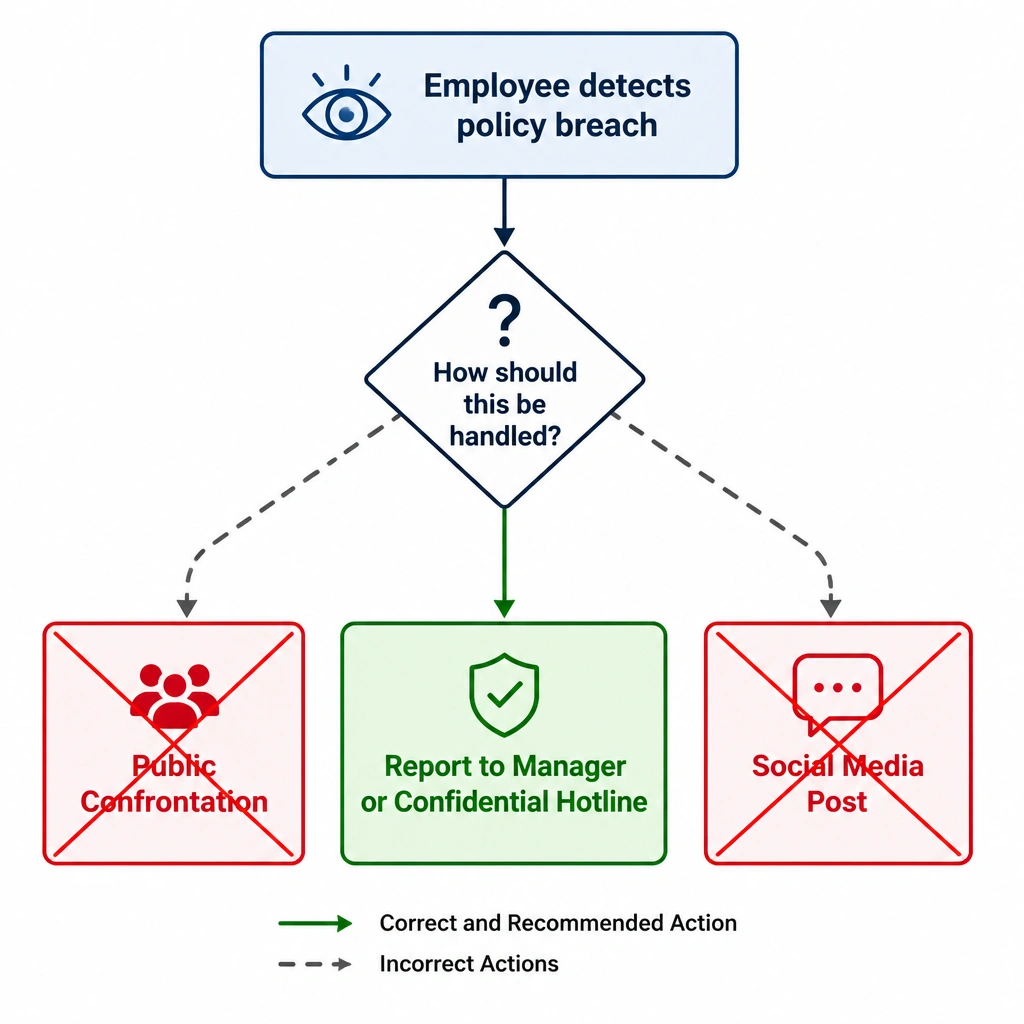
Now, let's say you're working and you notice a serious leak of customer data. What do you do? Here's the deal: time is your absolute enemy when it comes to data breaches. The longer a violation goes unreported, the worse the damage gets—both for your customers and for your company's liability. A strong compliance program relies on employees being active sensors. If you see something, you've got to speak up immediately. The correct route is to notify your manager right away or use the company's secure, confidential hotline. Don't sit on it waiting for some audit team to find it six months from now, and definitely don't start a public flame war on social media or confront the offender yourself. Report it through the proper channels so the incident response team can contain the leak and fix the problem.
Full explanation below image
Full Explanation
A core objective of a compliance program is to establish clear internal reporting pathways that enable rapid detection and remediation of data security breaches. Early detection allows an organization to contain breaches, mitigate legal exposure, and implement corrective controls before regulatory intervention.
Option B is correct because reporting the violation to a direct supervisor or through a confidential reporting channel initiates the organization's formal incident response protocol. This ensures that the breach is investigated by qualified personnel (such as compliance, IT security, or legal) who can legally and technically remediate the issue, notify affected parties, and report to regulators as required by laws like GDPR or CCPA.
Option A is incorrect because waiting for an audit creates unnecessary delays, allowing the breach to continue and significantly increasing the organization's liability and potential penalties.
Option C is incorrect because public disclosure of internal vulnerabilities on social media can violate confidentiality agreements, expose sensitive customer data to malicious actors, and cause severe reputational and financial damage.
Option D is incorrect because confronting the individual publicly can lead to destruction of evidence, alert the individual to cover their tracks, disrupt workplace dynamics, and fail to ensure that the systemic policy breach is resolved.
Best practices for reporting violations include clear training on how to access reporting tools, establishing clear SLAs (Service Level Agreements) for compliance teams to review submissions, and maintaining records of all reports and subsequent investigation files.