
A team member identifies a security breach that violates the company's internal data privacy policy. Under a mature compliance framework, what is the most appropriate first course of action for this employee?
Select an answer to reveal the explanation.
Short Explanation
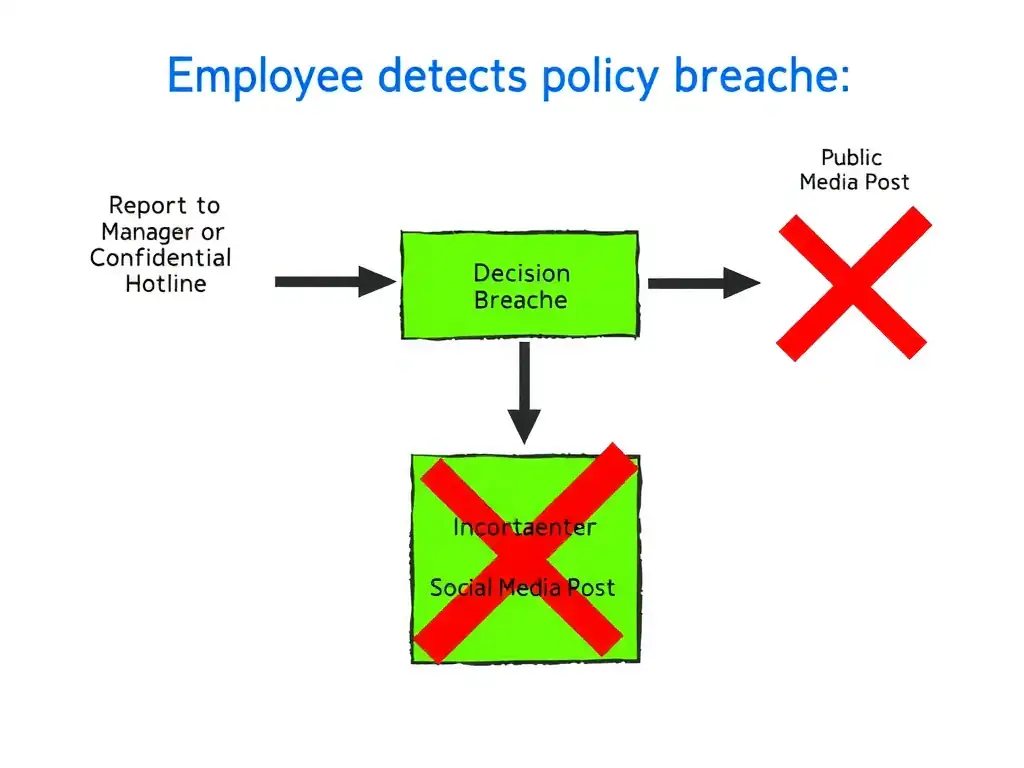
When you spot a data privacy breach, don't wait around—time is your enemy. Escalate it right away to your direct supervisor or use the company's confidential reporting channel so the incident response team can contain it fast.
Full Explanation
A core objective of a compliance program is to establish clear internal reporting pathways that enable rapid detection and remediation of data security breaches. Early detection allows an organization to contain breaches, mitigate legal exposure, and implement corrective controls before regulatory intervention.
Escalating the discovery immediately to the direct supervisor or reporting it through the company's designated confidential reporting channels is correct because it initiates the organization's formal incident response protocol. This ensures that the breach is investigated by qualified personnel, such as compliance, IT security, or legal, who can legally and technically remediate the issue, notify affected parties, and report to regulators as required by laws like GDPR or CCPA.
Maintaining silence and waiting for the quarterly internal audit team to discover the discrepancy is incorrect because it creates unnecessary delays, allowing the breach to continue and significantly increasing the organization's liability and potential penalties.
Posting the details of the breach on public social media forums to warn affected clients immediately is incorrect because public disclosure of internal vulnerabilities on social media can violate confidentiality agreements, expose sensitive customer data to malicious actors, and cause severe reputational and financial damage.
Confronting the individual responsible for the breach in a public meeting to demand corrective action is incorrect because it can lead to destruction of evidence, alert the individual to cover their tracks, disrupt workplace dynamics, and fail to ensure that the systemic policy breach is resolved.
Best practices for reporting violations include clear training on how to access reporting tools, establishing clear SLAs (Service Level Agreements) for compliance teams to review submissions, and maintaining records of all reports and subsequent investigation files.