
An organization is designing its annual compliance training curriculum. To ensure a risk-based approach, how should the compliance department structure the delivery of training content?
Select an answer to reveal the explanation.
Short Explanation
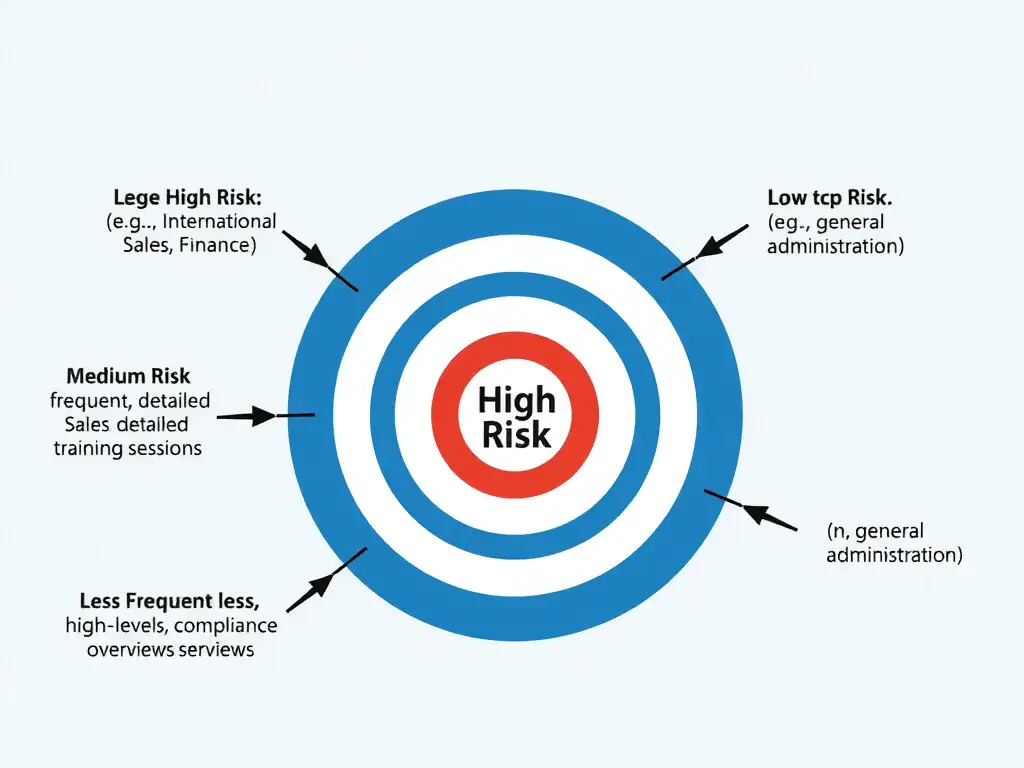
Check this out. If you train everyone on everything, you'll bore people and miss real risks, so you prioritize and tailor topics and frequency to the regulatory risks tied to each job and operational environment. That's how you put training where the fire is most likely to start.
Full Explanation
The risk-based approach is a fundamental principle of modern corporate compliance, particularly emphasized by regulators like the United States Department of Justice. When designing compliance training, the one-size-fits-all model is highly ineffective and inefficient. Employees in different departments face distinct compliance risks. For example, sales professionals operating internationally require rigorous training on anti-bribery requirements, including the Foreign Corrupt Practices Act, and trade sanctions, whereas database administrators need specialized training on data privacy laws, including the General Data Protection Regulation and the California Consumer Privacy Act, and information security protocols. The risk-based training program starts with a risk assessment to identify which roles are exposed to which risks, then designs and delivers training tailored in content, depth, and frequency to those specific exposures.
The approach that mandates every employee, regardless of role, to complete comprehensive training on every corporate policy annually is incorrect because it causes training fatigue and dilutes focus on high-risk areas. Employees are less likely to retain information irrelevant to their day-to-day responsibilities. The standardized, one-size-fits-all training course delivered to all employees at the same interval is incorrect because it disregards the varying risk profiles of different roles, leading to a program that is wide but shallow and failing to address specific vulnerabilities. The approach that limits compliance training exclusively to the compliance and legal departments to protect sensitive regulatory information is incorrect because it leaves the operational workforce, who are on the front lines of business transactions, unaware of compliance standards and unable to spot red flags.
By prioritizing training content and frequency based on risk, the organization optimizes its training budget and builds a more resilient compliance culture where it matters most.