Regulatory agencies, such as the U.S. Department of Justice, place significant emphasis on whether a corporation's compliance department has sufficient resources. Why is allocating adequate resources and funding to the compliance function critical?
Select an answer to reveal the explanation.
Short Explanation and Infographic
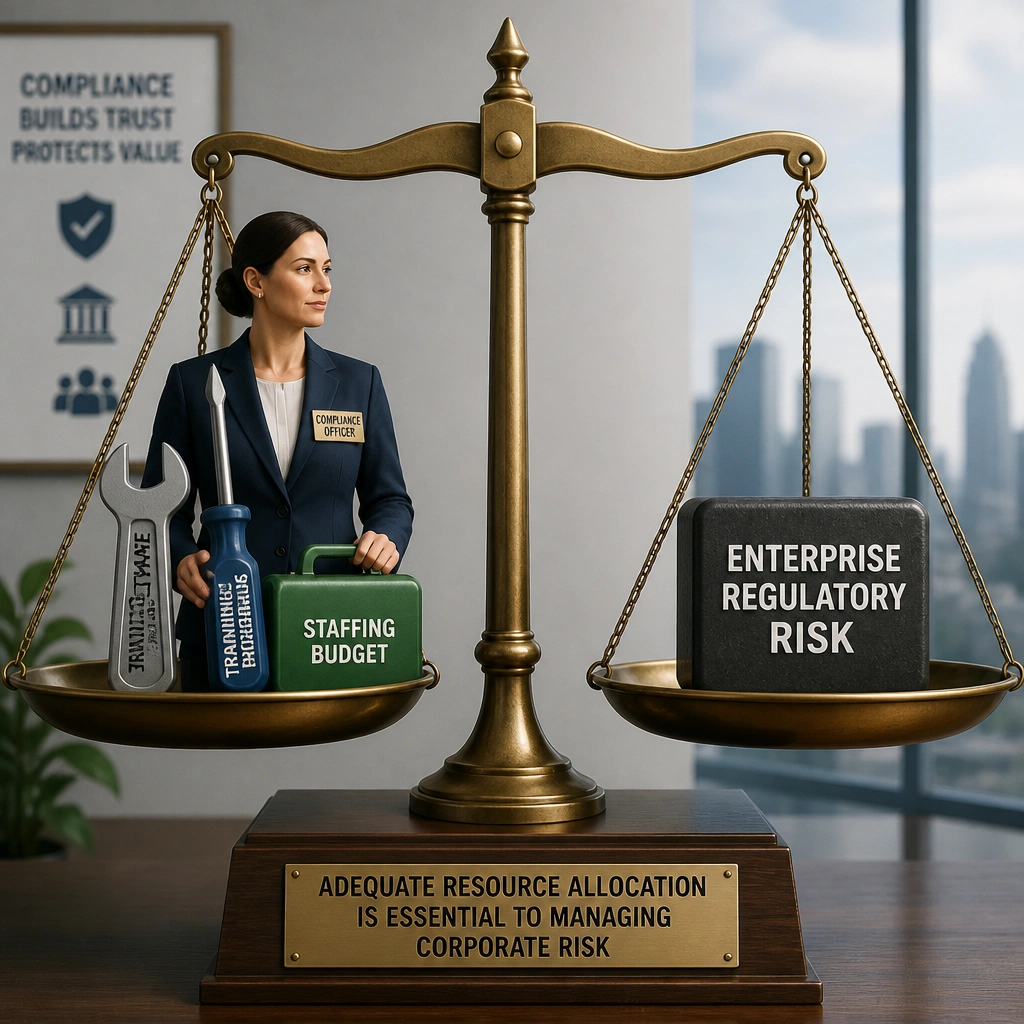
Here's the deal. A compliance program is only as good as its teeth. If a company has a beautiful code of conduct but gives the compliance officer a budget of five dollars and a part-time intern, that's not a real program. It's a paper tiger, and the regulators know it. To actually run audits, update policies, train employees, and investigate hotline tips, you need resources—meaning budget, tools, and staff. Without those, you're just wishing for compliance, not managing it. That's why having adequate resources is what makes the whole machine work, which points directly to B.
Full explanation below image
Full Explanation
A central pillar of an effective compliance program is the adequacy of its resources. Regulatory bodies, such as the U.S. Department of Justice (DOJ), evaluate whether an organization's compliance program is a 'paper program' or if it is implemented in an effective manner. A key indicator of effectiveness is resource allocation. The compliance department must have sufficient budget, staff, and technology to meet the organization's risk profile. Without adequate resources, a compliance team cannot effectively perform essential functions, such as conducting regular risk assessments, updating policies, delivering targeted training, monitoring compliance, and investigating reports of potential misconduct.
Let's examine why the alternative options are incorrect: - Option A is incorrect because compliance is a shared responsibility. The compliance department provides oversight, tools, and guidance, but operational managers remain the first line of defense and are responsible for managing compliance risks within their departments. - Option C is incorrect because compliance does not need to be the largest department in the company. Resource allocation should be risk-based and proportionate to the company's size, industry, and geographic reach. - Option D is incorrect because the goal of resource allocation is to support effective compliance operations, not to hire an unlimited number of staff or consultants, which would represent inefficient corporate management.
By providing the compliance team with sufficient resources (Option B), the organization demonstrates its commitment to compliance and ensures the program can execute its duties successfully.