To comply with anti-bribery regulations like the Foreign Corrupt Practices Act (FCPA), an organization needs to establish preventive controls against illegal payments to foreign government officials. Which of the following actions represents a critical preventive control for this risk?
Select an answer to reveal the explanation.
Short Explanation and Infographic
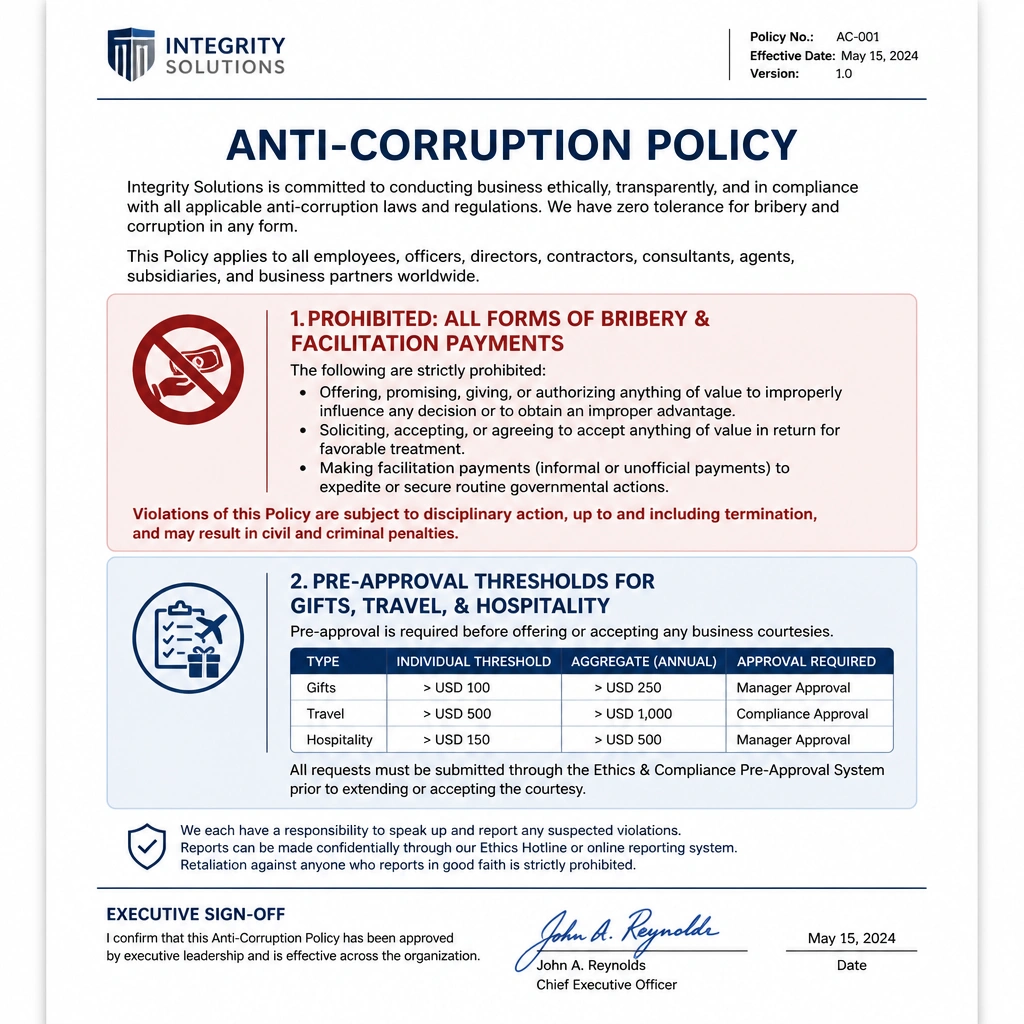
Here's the deal, and pay close attention because this one bites people in production all the time. The FCPA and other anti-bribery laws are dead serious about payments to foreign officials. Some folks think, 'Hey, if I hire a local agent and let them handle the government payments, I'm off the hook.' Wrong! The regulators will look right through that and hand you a massive fine. You can't just outsource your risk. And you definitely shouldn't be paying 'facilitation' or grease payments. What you need is a rock-solid, zero-tolerance anti-corruption policy that clearly defines what's okay and what's not, especially when it comes to gifts, meals, and entertainment. That's a real preventive control. So, D is the answer we want.
Full explanation below image
Full Explanation
Anti-corruption compliance, particularly under the Foreign Corrupt Practices Act (FCPA) and the UK Bribery Act, requires organizations to implement strict preventive controls to prevent bribery of foreign public officials. One of the most effective preventive controls is a formal anti-corruption compliance policy that outlines a zero-tolerance stance on bribery, combined with clear operational procedures and monetary thresholds for gifts, hospitality, travel, and entertainment (GHE). GHE is a common vector for disguised bribes, so establishing a pre-approval workflow for these expenses prevents compliance violations before they occur.
Let's break down why the other choices represent high-risk practices rather than preventive controls: - Option A is incorrect because using third-party intermediaries does not insulate a company from liability. Under the FCPA, companies can be held criminally liable for bribes paid by third parties if they knew or should have known of the misconduct. - Option B is incorrect because paying high commissions without due diligence is a classic 'red flag' of corruption. It increases, rather than mitigates, the risk of bribery. - Option C is incorrect because facilitation payments (often called 'grease payments') are illegal under most domestic anti-corruption laws (such as the UK Bribery Act) and pose a severe compliance risk. Modern compliance best practices prohibit them entirely.
A comprehensive policy that defines acceptable business conduct and requires strict pre-approval for expenses involving public officials (Option D) is the foundation of an effective anti-corruption program.