
Internal controls are a cornerstone of any effective compliance program. What is the fundamental operational purpose of establishing these internal controls within an organization?
Select an answer to reveal the explanation.
Short Explanation
Think of internal controls as guardrails on a winding mountain road. They don't drive the car for you, but they help you prevent mistakes, catch them when they happen, and fix the root cause so they don't keep happening.
Full Explanation
Internal controls are the systematic processes, policies, and checks implemented by an organization to provide reasonable assurance regarding the achievement of objectives in operational effectiveness, reliable financial reporting, and compliance with applicable laws and regulations. The Committee of Sponsoring Organizations of the Treadway Commission framework divides internal controls into three primary operational categories:
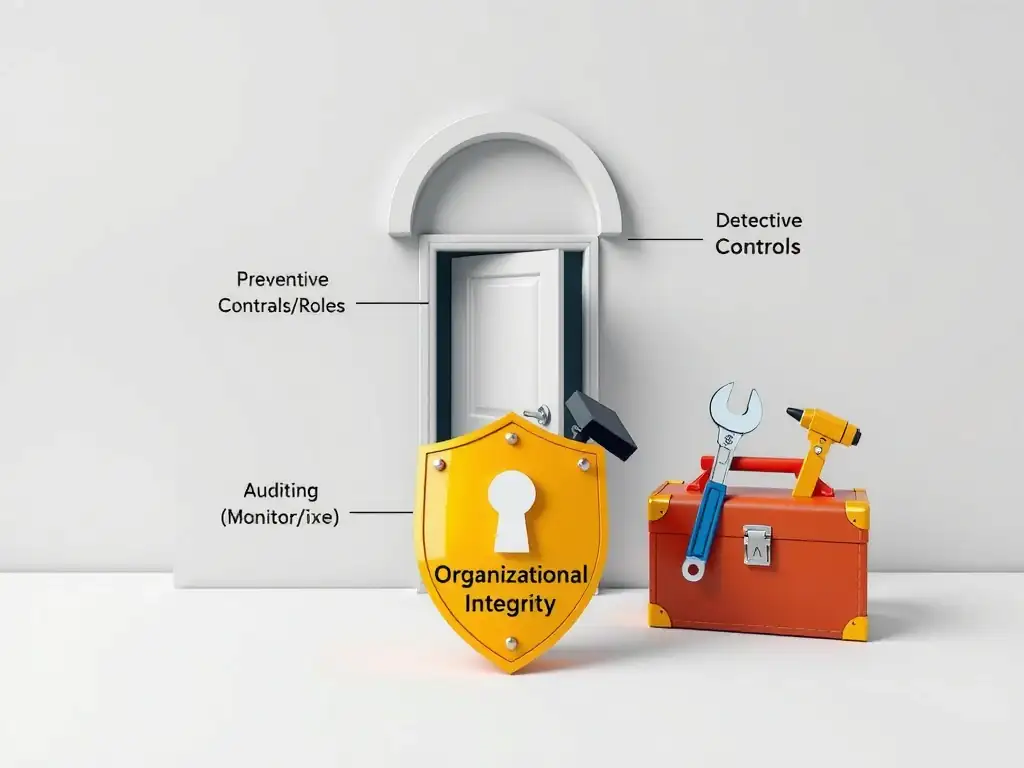
1. Preventive Controls: Designed to deter errors or compliance violations before they occur (e.g., pre-approval requirements, segregation of duties, and access controls). 2. Detective Controls: Designed to identify errors or violations after they have occurred (e.g., reconciliations, physical inventory counts, and internal audits). 3. Corrective Controls: Designed to remediate issues identified by detective controls, adjust processes, and prevent future recurrences (e.g., disciplinary actions and system patches).
The correct operational purpose is the answer choice that says to proactively prevent, continuously detect, and systematically remediate operational errors, policy deviations, and non-compliant acts. That wording matches the preventive, detective, and corrective control cycle that forms the operational backbone of risk management.
Let's review why the other answer choices are incorrect: - The answer choice about replacing business managers as the primary decision-makers for day-to-day operations is incorrect because internal controls are designed to guide and govern business decisions, not to replace the operational decision-making authority of management. Managers remain responsible for driving business activity within the established control framework. - The answer choice about optimizing business processes to maximize short-term profit margins regardless of regulatory risk is incorrect because prioritizing profits at all costs is the antithesis of a compliance control environment. Controls exist to manage and mitigate risks, ensuring that profit generation is sustainable and lawful. - The answer choice about shielding the corporate legal department from external audits and regulatory investigations is incorrect because the purpose of controls is to foster transparency and accountability, not to hide information or insulate the legal department from external scrutiny.
Thus, establishing controls that prevent, detect, and correct errors forms the operational backbone of risk management.