
During a periodic review of a corporate compliance program, the compliance team discovers that while the Code of Conduct explicitly highlights data privacy as a core value, there are no corresponding operational policies or training modules implemented to address data protection. What is the most appropriate next step to remediate this gap?
Select an answer to reveal the explanation.
Short Explanation
Here's the deal: if your Code of Conduct promises data privacy but you've got no policies or training to back it up, you've got a paper program and a big gap. You don't delete the promise, wait for a breach, or fire someone; you run a gap analysis, then build the policies and training to make it real.
Full Explanation
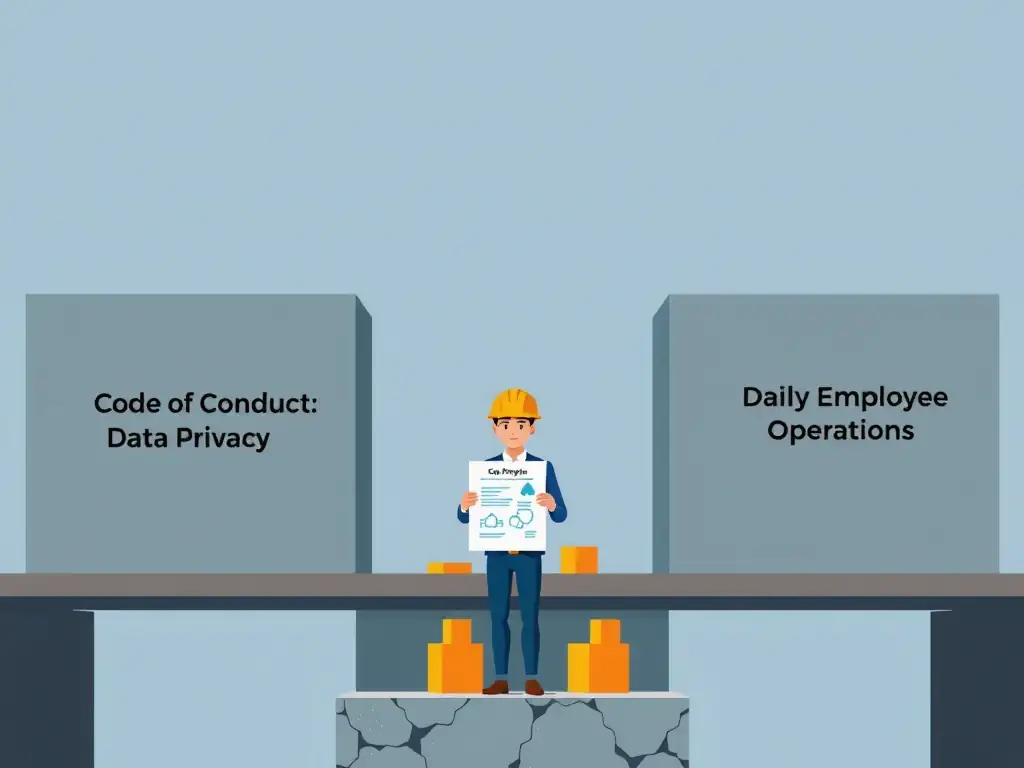
In compliance program management, alignment between high-level standards such as the Code of Conduct and operational controls such as policies, procedures, and training is critical. When a high-level standard exists without supporting operational guidelines or education, it creates a 'paper compliance program'—one that exists on paper but is not functional in practice. Regulators, including the U.S. Department of Justice, view paper programs unfavorably and expect organizations to actively operationalize their codes.
To resolve this issue, the organization must perform a comprehensive gap analysis. This process involves evaluating what the Code of Conduct promises against what is actually practiced, identifying the resources and training needed to bridge the delta, and then actively deploying those controls. Performing a detailed gap analysis, then developing and implementing specific data privacy policies and targeted training sessions is the appropriate remediation because it closes the gap between stated values and operational reality.
The wrong choices fail for different reasons. Deleting the data privacy section from the Code of Conduct to align with current operations is incorrect because it ignores the organization's actual regulatory and ethical risks; in today's regulatory environment, ignoring data privacy is not a viable strategy. Postponing action until a data security incident occurs to gather empirical evidence is incorrect because waiting for an incident is a reactive approach that defeats the preventive purpose of a compliance program, and reactive remediation is far more costly in terms of fines, legal fees, and reputational damage. Immediately terminating the compliance officer for failing to align corporate documents with operational training is incorrect because identifying a gap during a program review is a sign of a functioning monitoring process; termination is an extreme, unjustified reaction that does not address the underlying operational gap.
By executing a gap analysis and implementing corresponding policies and training, the compliance department ensures that the organization's actual practices match its stated values and legal obligations.