
During an internal audit, a compliance officer discovers that several employees suspected a major accounting fraud but chose not to report it to the helpline because they feared immediate termination by their department manager. This scenario highlights a critical weakness in which compliance program element?
Select an answer to reveal the explanation.
Short Explanation
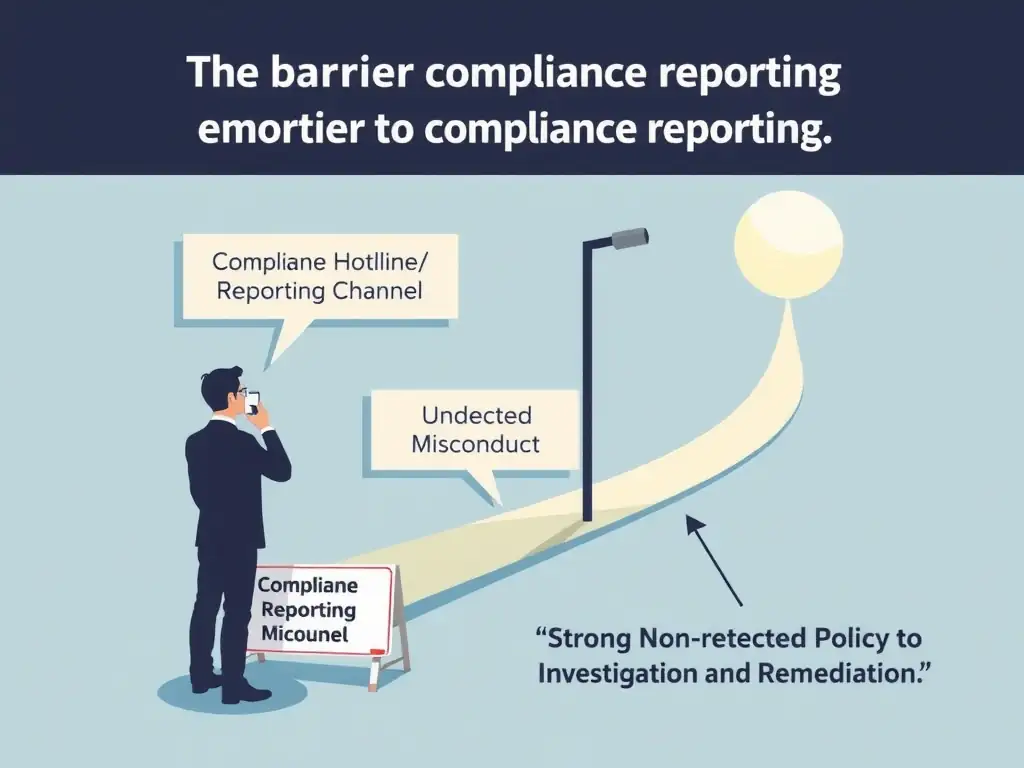
If employees see suspected fraud but stay quiet because they fear their manager will fire them, your non-retaliation policy and ethical culture are failing. Fancy reporting channels mean nothing if people do not trust that speaking up is safe.
Full Explanation
An effective compliance program is built on the willingness of employees to report misconduct without fear of reprisal. A 'speak-up' culture is one of the key indicators of a healthy compliance environment, and it is heavily emphasized by regulatory frameworks globally, including the United States Department of Justice guidelines and the Sarbanes-Oxley Act. If employees observe violations of the code of conduct or legal standards but remain silent due to fear of retaliation, the program's reporting mechanisms are rendered useless.
The correct answer is the organization's non-retaliation policy and overall ethical culture because the fear of termination for reporting misconduct is a direct symptom of a weak non-retaliation policy or a failure to cultivate an ethical culture where employees feel safe speaking up. Organizations must not only publish a non-retaliation policy but also actively enforce it, discipline managers who retaliate, and demonstrate to the workforce that reporting is protected and valued.
The design and implementation of internal accounting and financial controls is incorrect because while accounting fraud itself represents a failure of financial controls, the employee's hesitation to report the observed fraud is a failure of the reporting and ethical culture, not the financial systems.
The scope of the third-party due diligence and vendor vetting processes is incorrect because third-party due diligence deals with managing risks associated with external vendors, suppliers, and agents, which is unrelated to internal employee reporting dynamics.
The methodology used to conduct annual enterprise-wide compliance risk assessments is incorrect because the issue is not the methodology of identifying risks, but rather the cultural barrier preventing employees from utilizing established channels to report active misconduct.