A corporation establishes an anonymous ethics hotline to report misconduct, but fails to promote it during onboarding or include it in periodic training. Consequently, a majority of employees do not know how to access it. This scenario describes a breakdown in which essential element of an effective compliance program?
Select an answer to reveal the explanation.
Short Explanation and Infographic
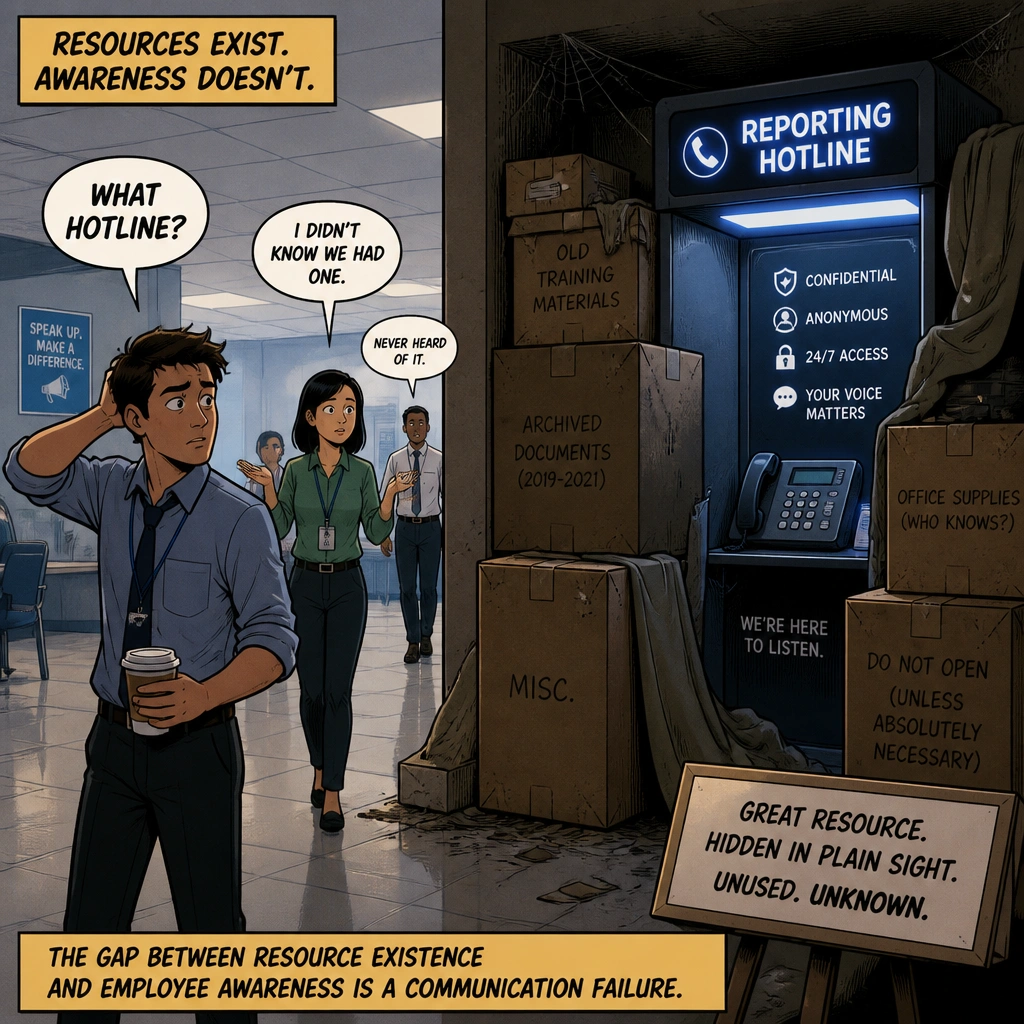
Think of it like this: you spend weeks setting up a state-of-the-art backup server, but you never tell anyone the IP address or how to use it. If the main server crashes, did those backups actually help? Of course not! Having a tool is only half the battle; people actually have to know it exists. If your compliance program has a hotline, but it's hidden away and nobody knows how to find it, that's a classic failure in communication and training. You can't just check a box and say, "Yep, we have a hotline." You've got to market it to your employees. You need to talk about it during onboarding, put it in training modules, and make sure it's front and center on the intranet. Communication is the bridge between having a program on paper and actually running an effective program in real life.
Full explanation below image
Full Explanation
An effective compliance program requires that all its components work in tandem. Simply implementing a tool or resource, such as a whistleblower hotline, is insufficient if employees are unaware of its existence or how to use it. This gap represents a failure in the "Communication, Education, and Training" element of the compliance framework. Under regulatory guidelines (such as the Federal Sentencing Guidelines for Organizations in the United States), compliance policies and mechanisms must be actively communicated to all employees through effective training programs and ongoing communication strategies.
Let's evaluate the incorrect choices to see why they do not fit the scenario: - Option A is incorrect because Risk Assessment involves identifying and analyzing the organization's legal and operational risks. While a lack of awareness is a risk, the root failure here is not the identification of risk but the failure to communicate the control. - Option B is incorrect because Disciplinary Actions involve enforcing consequences for policy violations. While it is important to enforce rules, the failure to publicize the hotline does not relate to disciplinary actions. - Option C is incorrect because Auditing and Monitoring refer to the oversight mechanisms used to detect program effectiveness and identify gaps. While auditing might surface the fact that employees don't know about the hotline, the gap itself lies in training and communication.
To prevent this issue, compliance teams should develop a communications plan that regularly updates employees on available reporting tools, guarantees anonymity, and details the steps of the reporting and investigation process.