
While they are closely related compliance documents, how is a Code of Ethics typically distinguished from a Code of Conduct?
Select an answer to reveal the explanation.
Short Explanation
Here's the deal: a Code of Ethics is the high-level steering wheel of your company's values, while a Code of Conduct is the technical manual with the exact rules. You need the ethics code to inspire the right mindset and the conduct code to lay down the law on the daily grind.
Full Explanation
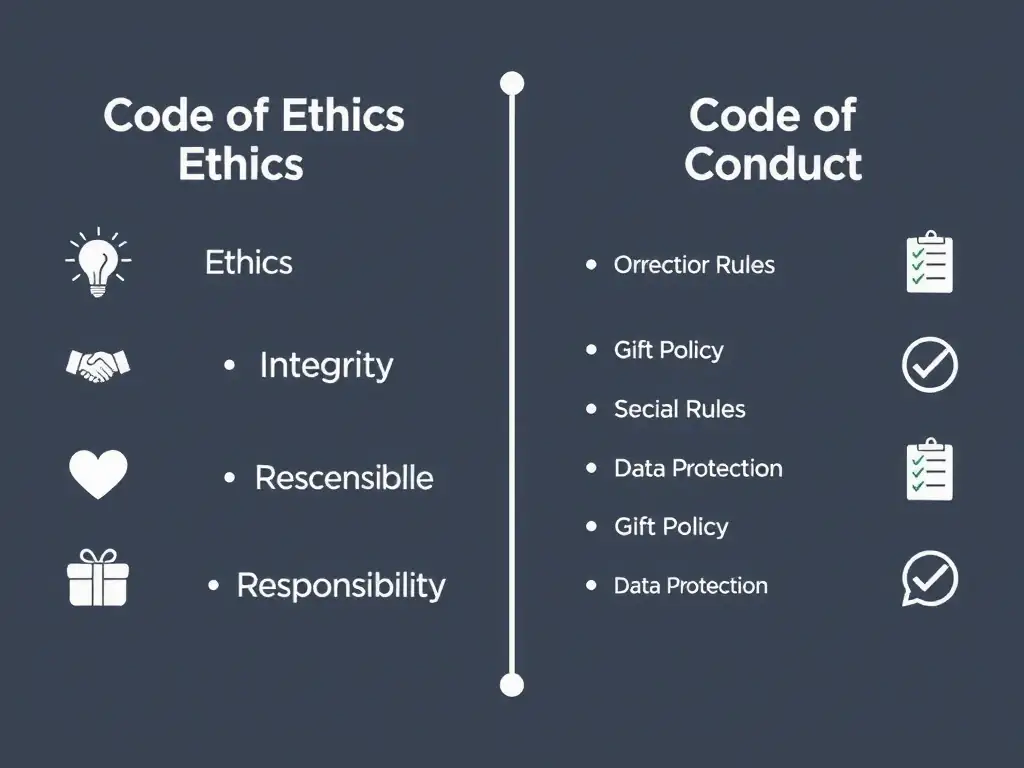
In corporate compliance, understanding the difference between value-based and rule-based standards is key to drafting effective organizational guidelines. A Code of Ethics and a Code of Conduct serve different, complementary functions. A Code of Ethics is a broad, value-based document. It outlines the core ethical principles, moral philosophy, and aspirational values of the organization (such as integrity, respect, and social responsibility). It is designed to guide employee decision-making when faced with gray areas or novel ethical dilemmas that may not be covered by specific policies.
In contrast, a Code of Conduct is a rule-based document. It translates the broad values of the Code of Ethics into specific, concrete guidelines for daily behavior. It details operational rules, prohibited actions, and compliance expectations (such as conflict of interest disclosures, anti-bribery thresholds, and harassment reporting protocols).
Let's look at why the other claims are incorrect: - The claim that a Code of Ethics contains legally binding employment contracts, whereas a Code of Conduct is purely voluntary, is incorrect because a Code of Ethics is not an employment contract, although adhering to it is typically a condition of employment. - The claim that a Code of Ethics is written exclusively for the board and senior executives, whereas a Code of Conduct applies only to entry-level staff, is incorrect because both documents must apply to all employees, executives, and board members equally. Restricting ethical codes to senior management ignores the risk of misconduct at other organizational tiers. - The claim that there is no structural difference between the two and they are identical documents under different titles is incorrect because treating them as identical misses the opportunity to establish both a moral framework (ethics) and a clear set of operational boundaries (conduct).
An effective compliance program integrates both documents to provide a comprehensive framework that addresses both the spirit and the letter of the law.