A financial services firm operates globally, offering wire transfers and wealth management. Which of the following regulatory compliance risks represents the primary threat that the firm's compliance program must be designed to address?
Select an answer to reveal the explanation.
Short Explanation and Infographic
Imagine running a global bank. You've got billions of dollars moving across borders every day. Now, what's the biggest threat that could get your bank shut down by regulators? It's not employees skipping vacation or missing a corporate pizza party! The absolute biggest danger is that bad actors use your systems to clean dirty money or fund terrorism. That's why global financial institutions must build massive Anti-Money Laundering (AML) and Know Your Customer (KYC) programs. If you don't prevent money laundering, the government will come down on you with massive fines and criminal charges. Keep your eye on the ball here—compliance is about managing the threats that can actually destroy the business!
Full explanation below image
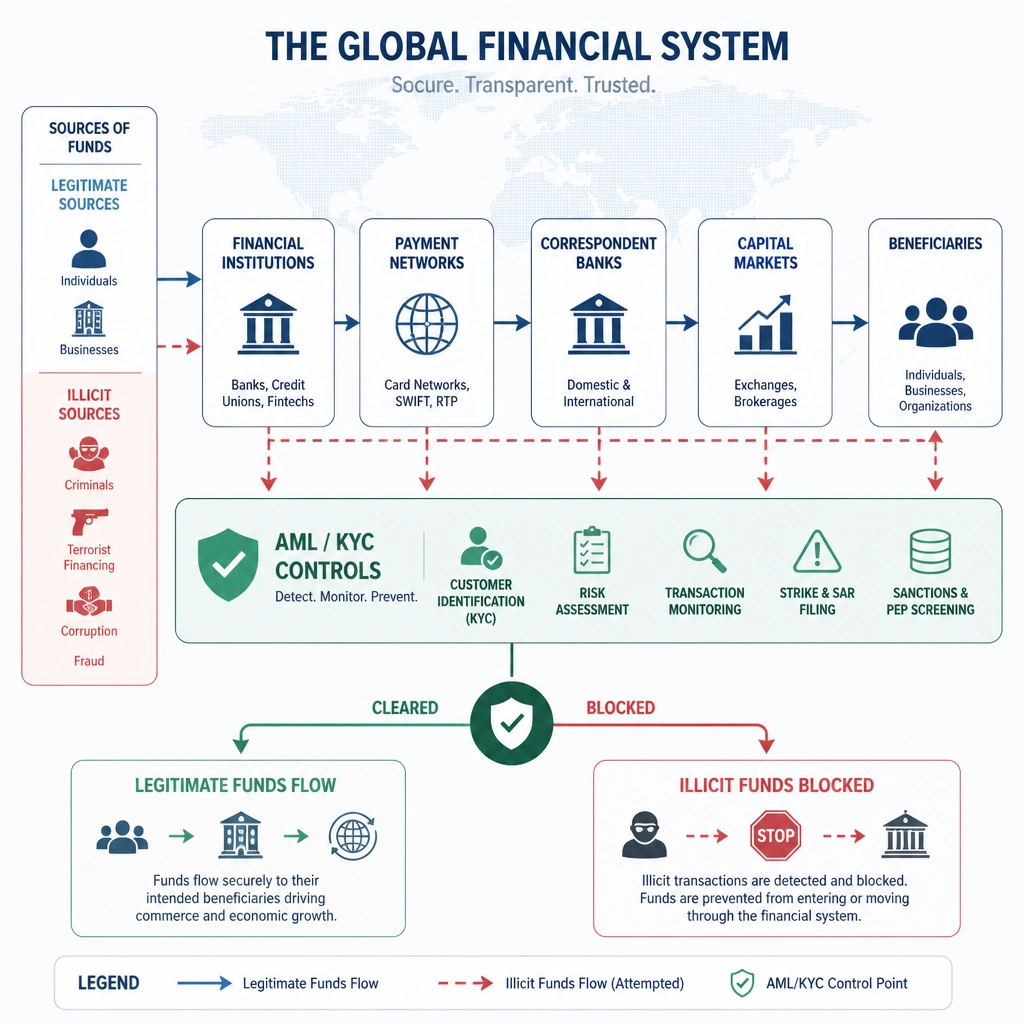
Full Explanation
For global financial services companies, the threat of money laundering and terrorist financing is the most critical regulatory compliance risk. Financial institutions are the primary gateways to the global financial system, making them attractive targets for criminals seeking to legitimize illicit funds or funnel resources to terrorist organizations. Consequently, international bodies (such as the Financial Action Task Force - FATF) and local regulators (such as FinCEN in the US) impose strict Anti-Money Laundering (AML), Counter-Terrorist Financing (CTF), and economic sanctions compliance requirements. Employee vacation utilization is an HR management issue; while important for preventing internal fraud, it is not the primary regulatory compliance focus. Hosting team-building events is an internal culture initiative and carries no regulatory compliance risk. Offering competitive interest rates is a commercial business strategy decision. Failure to maintain robust AML/KYC controls can lead to severe penalties, loss of banking licenses, and criminal prosecution, making it the top priority of a financial compliance program.