A compliance review reveals that the company's internal audit schedule focuses exclusively on financial reconciliations and cash disbursements, entirely omitting regulatory compliance and data protection audits. How should the compliance officer classify this program weakness?
Select an answer to reveal the explanation.
Short Explanation and Infographic
Here's the deal: if your audit team is only checking the cash drawer but ignoring how customer data is handled or whether your sales reps are handing out bribes, you're looking for trouble. The compliance officer has to call this what it is—a scope deficiency in the audit program. You can't just audit the easy stuff or the traditional accounting processes. The audit plan has to be built around a risk assessment that includes all compliance and regulatory requirements. If it doesn't, the scope is broken. Pay close attention to this, because audit scope gaps are a favorite target for regulatory investigators when things go sideways. Trust me on this!
Full explanation below image
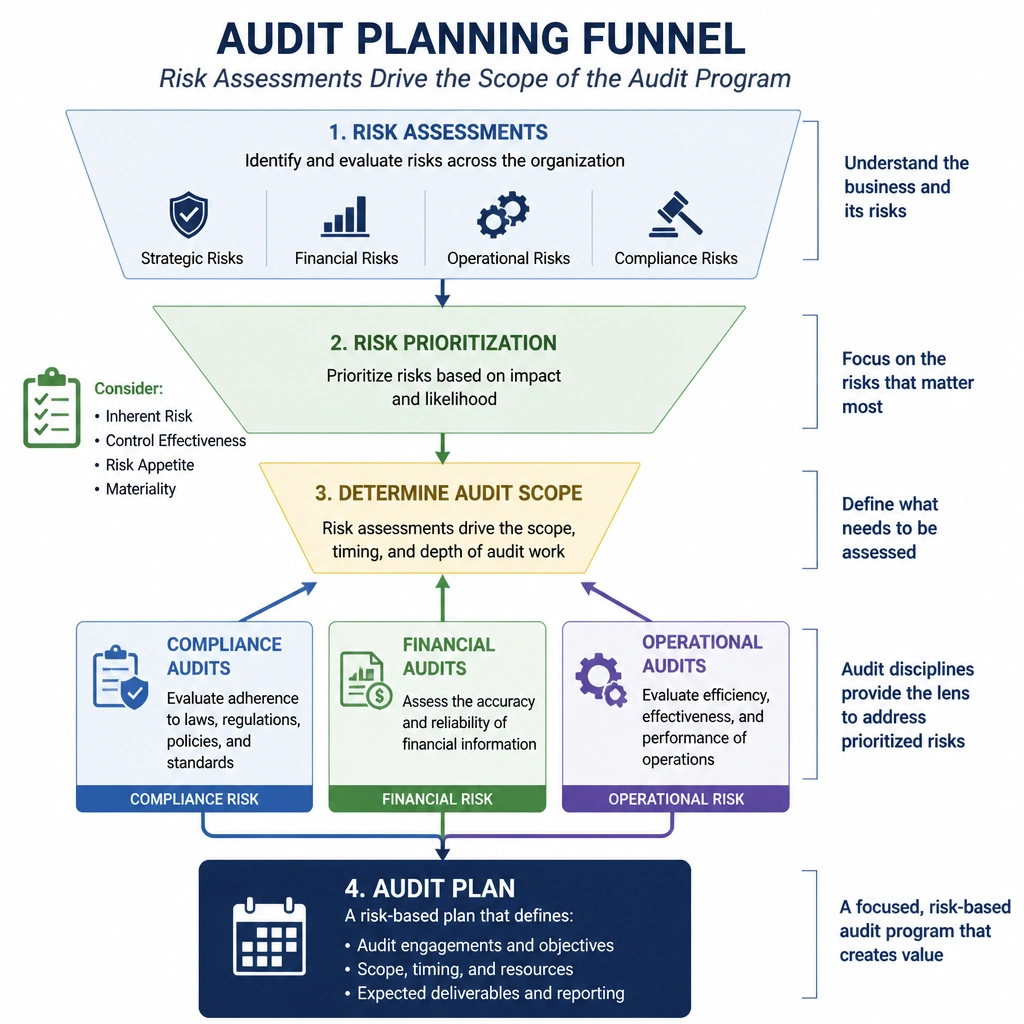
Full Explanation
In compliance management, the internal audit function acts as a critical line of defense by providing independent assurance that internal controls are functioning effectively. When an audit program is designed such that it excludes key compliance and regulatory risk areas, the issue lies in the scope of the audit program. The scope defines the boundaries, risk areas, and processes that the audit department will examine. If it excludes high-stakes areas like anti-corruption compliance or data privacy laws, the audit program cannot fulfill its oversight role. Preventative transaction controls are frontline defenses designed to prevent non-compliance in real-time; a scope issue in auditing is not a failure of a specific preventative control. Corporate commercial strategy focuses on business growth and market positioning; while compliance must align with business objectives, a narrow audit scope is a governance failure, not a strategic commercial failure. External marketing communications refers to how a company advertises and communicates with the public, which has no bearing on the scope of internal audit operations. Therefore, ensuring a risk-based audit scope that encompasses all major compliance and legal domains is the only way to remediate this deficiency.