
An organization completes a major revision of its Code of Conduct to address new digital privacy regulations. When planning the rollout, what is the most significant compliance risk the department must mitigate regarding communication?
Select an answer to reveal the explanation.
Short Explanation
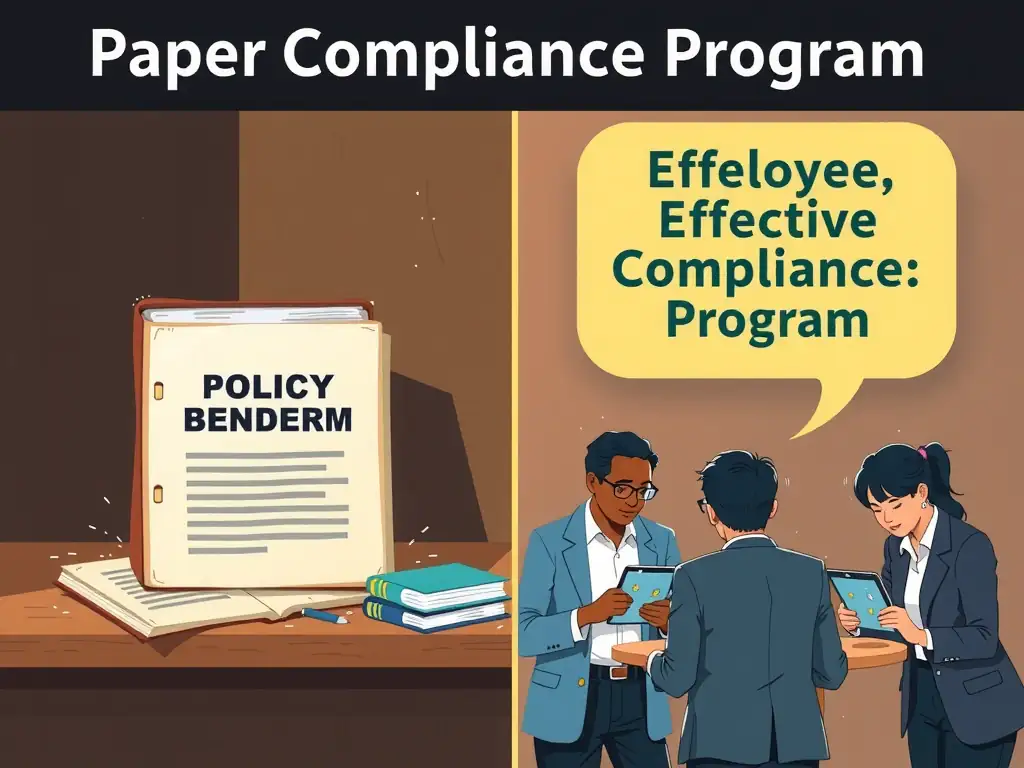
Here's the deal: you can write a legally perfect Code of Conduct, but if employees don't read, understand, or apply the updated standards, your compliance controls fail. The real rollout risk is operational non-compliance, not whether the document feels too similar, too brief, or aesthetically disappointing.
Full Explanation
For a Code of Conduct to serve as an effective control, it must be integrated into daily operations. Under regulatory guidelines, such as those from the US DOJ, a 'paper compliance program'—where policies exist but are not understood or implemented—is ineffective. The primary rollout risk is that employees will not read, comprehend, or apply revised standards. If they remain unaware of updated digital privacy requirements, they may unintentionally violate policy, causing control failure and regulatory liability. The concern that employees will find the new Code too similar to the prior version is minor, because similarity does not itself create compliance failure when updated standards are communicated and applied. The concern that employees will dislike the aesthetic design is administrative, not a direct threat to legal effectiveness or operational integrity. The concern that the Code will be too brief for minor administrative procedures is secondary, because the central risk is understanding and applying substantive updated standards, not covering every minor procedure.