
An annual enterprise compliance risk assessment reveals a significantly elevated risk of commercial bribery within an organization's regional logistics division. Which of the following is the most appropriate and compliant response to this finding?
Select an answer to reveal the explanation.
Short Explanation
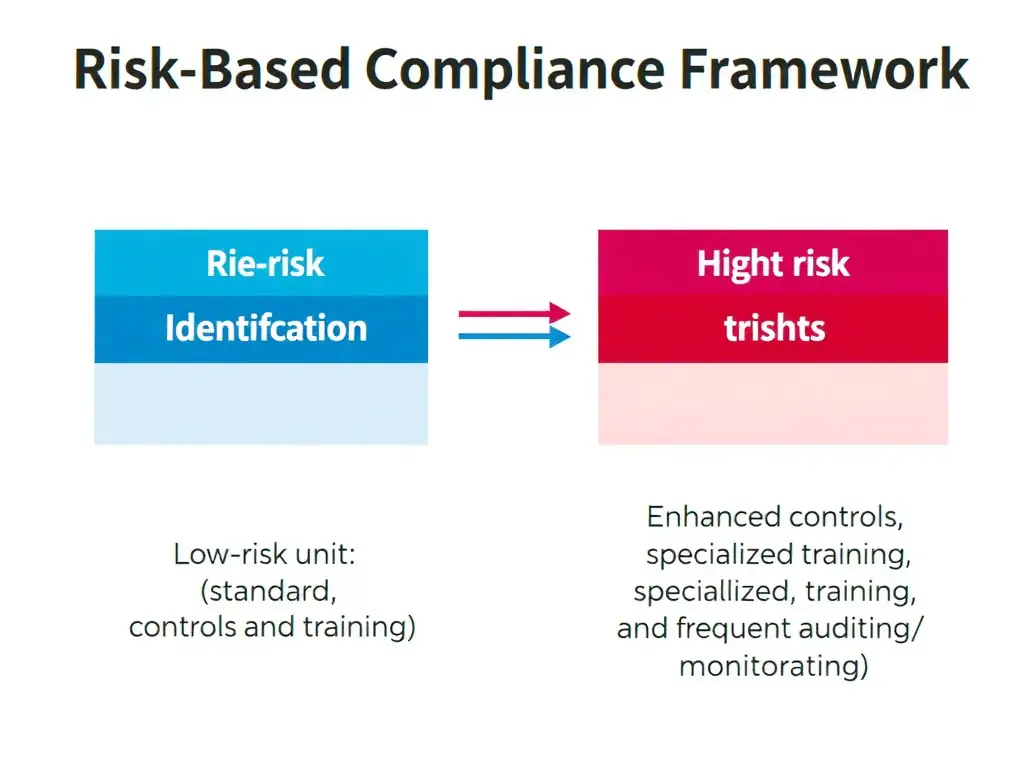
If a risk report flags your logistics division for high bribery risk, you don't shut it down, fire someone without evidence, or ignore it. You apply a risk-based fix: tighten controls, deliver targeted anti-bribery training, and monitor transactions closely. That shows you're managing the risk, which is what regulators expect.
Full Explanation
A core tenet of effective compliance programs, as outlined by the United States Department of Justice and the Federal Sentencing Guidelines, is the application of a risk-based approach. When an organization identifies a high risk of corruption in a specific business unit, it must allocate resources proportionally to mitigate that specific risk. This involves tailoring and implementing more robust internal controls, conducting specialized anti-corruption training for the affected employees, and increasing the frequency of auditing and monitoring in that business unit. The divestiture or immediate shutdown response is disproportionate and commercially impractical as an initial response to an unmitigated risk, unless the risk cannot be managed to an acceptable level. The immediate termination of the regional logistics manager is inappropriate without evidence of personal misconduct or systemic oversight failure, and it does not address the underlying systemic risks. The take-no-action position is a critical compliance failure; failing to act on known risk exposures demonstrates an ineffective compliance program and increases corporate liability in the event of a future violation.