Imagine you're the compliance officer for a fintech startup, and the government has just announced a major overhaul of digital privacy and data protection laws. What is the primary purpose of performing a regulatory risk assessment in response to these upcoming legal shifts?
Select an answer to reveal the explanation.
Short Explanation and Infographic
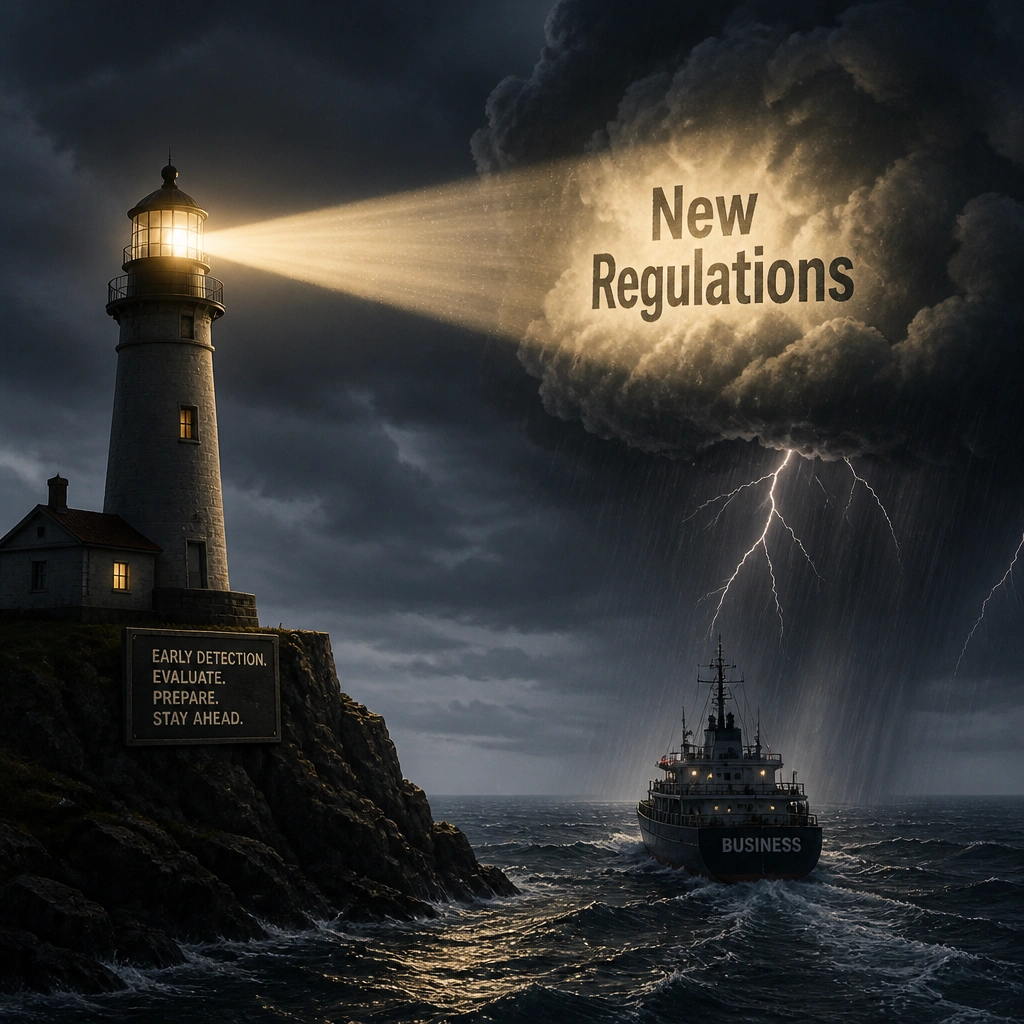
Here's the deal: laws aren't written in stone; they are constantly changing. If you're not paying attention to what congress, the agencies, or international bodies are doing, you're going to get hit with a massive fine for violating a rule you didn't even know existed. A regulatory risk assessment is your radar. It scans the horizon for new laws, changes to old laws, and shifts in how regulators are enforcing them. Once you spot a change, you figure out how it affects your business and what you need to adjust to stay compliant. Don't get caught sleeping! Let's wrap this up.
Full explanation below image
Full Explanation
A regulatory risk assessment is a specialized compliance process focused on monitoring, identifying, and evaluating changes in the legal and regulatory environment. Because compliance is not static, organizations must proactively align their operations with evolving legal requirements to avoid sanctions, fines, and reputational damage. This assessment helps organizations transition from a reactive stance to a proactive posture, anticipating changes rather than responding to enforcement actions.
Let's analyze the choices: - Option B is correct because the primary goal is to map new or changing regulations to the business's existing operations, identify gaps in compliance, and determine the potential operational and financial impact of non-compliance. - Option A is incorrect because a compliance program's goal is adherence to the law, not finding ways to "safely ignore" regulations, which would be a breach of fiduciary and legal duties. - Option C is incorrect because policies should be clear and accessible to employees, not written in complex legalese. Furthermore, writing style is a drafting concern, not the objective of a risk assessment. - Option D is incorrect because a regulatory risk assessment highlights the necessity of the compliance function, rather than serving as a tool to dismantle it.