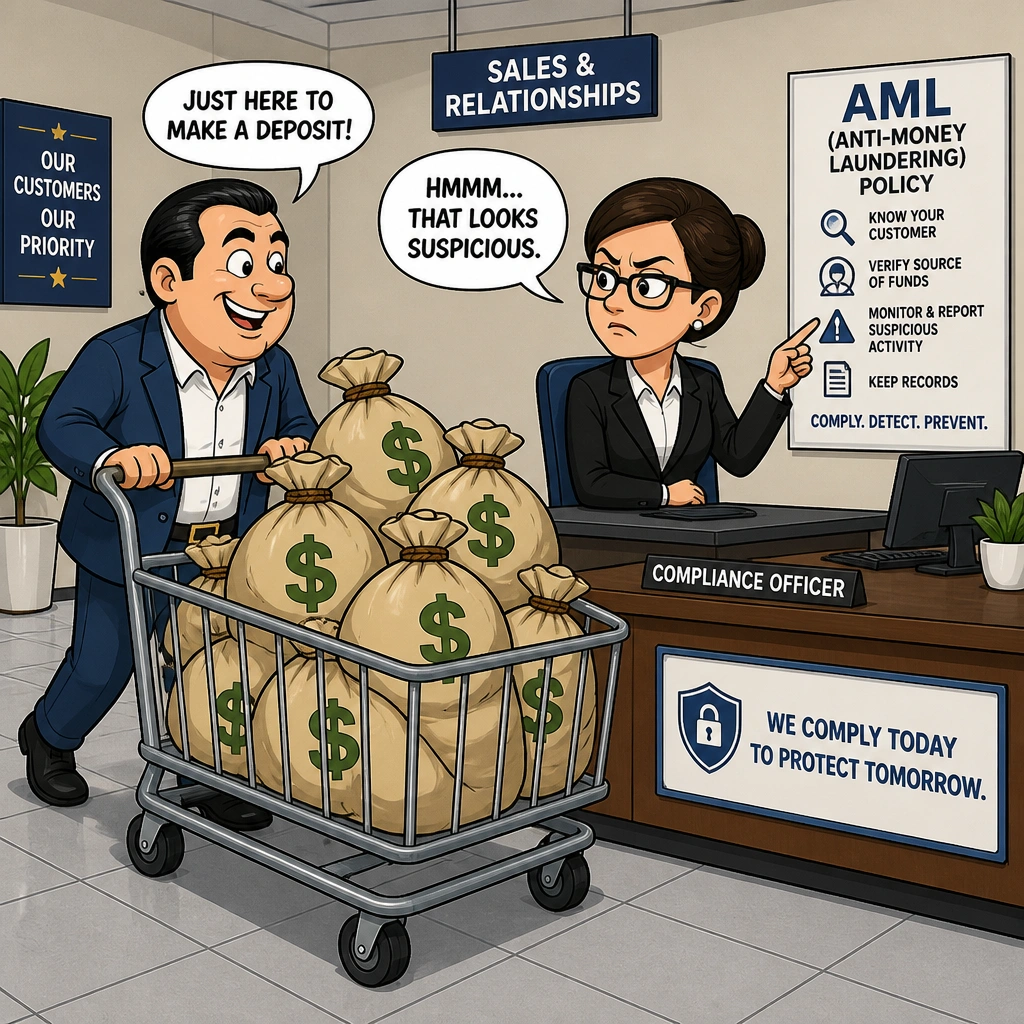
Suppose you're working the compliance desk and a new client walks in wanting to buy a $50,000 piece of equipment. They open a briefcase filled with stacks of hundred-dollar bills and insist on paying entirely in cash, refusing to use a wire transfer or bank check. Why should this make your compliance radar go off?
Select an answer to reveal the explanation.
Short Explanation and Infographic
Here's the deal: in a modern business, nobody walks around with a briefcase full of greenbacks to buy expensive equipment unless they're trying to hide where that money came from. Trust me, cash is anonymous, and that's exactly why money launderers love it. They want to swap dirty physical cash for clean business assets without a bank asking questions. When someone insists on paying for a massive deal in cash and fights you on doing a bank transfer, that's not just a weird customer quirk—it's a giant, flashing red flag. You need to flag it and report it. Got it? Sweet. Let's move on.
Full explanation below image
Full Explanation
In anti-money laundering (AML) compliance, identifying "red flags" is crucial for detecting and preventing financial crime. Money laundering involves three phases: placement, layering, and integration. Placing large amounts of physical cash directly into the legitimate financial system is one of the most vulnerable stages for launderers. Consequently, any customer who insists on using large sums of physical cash for transactions that are normally handled via wire transfers, checks, or electronic payments represents a significant money laundering risk.
Let's analyze the choices: - Option B is correct because physical cash leaves no audit trail within the banking system, allowing individuals to obscure the illegal source of their funds. Insisting on cash to bypass banking reporting requirements (like Currency Transaction Reports) is a primary indicator of illicit activity. - Option A is incorrect because cash payments do not earn credit card points; this option is illogical. - Option C is incorrect because reporting requirements for large cash transactions (such as Form 8300 in the U.S.) are made to tax authorities or financial intelligence units (like FinCEN), not to a chamber of commerce. - Option D is incorrect because while cash eliminates immediate credit risk, it introduces unacceptable regulatory and legal risks that outweigh simple liquidity benefits.