Which of the following actions by a corporate board of directors most effectively demonstrates their active engagement and commitment to the organization's compliance program, as expected by regulatory authorities?
Select an answer to reveal the explanation.
Short Explanation and Infographic
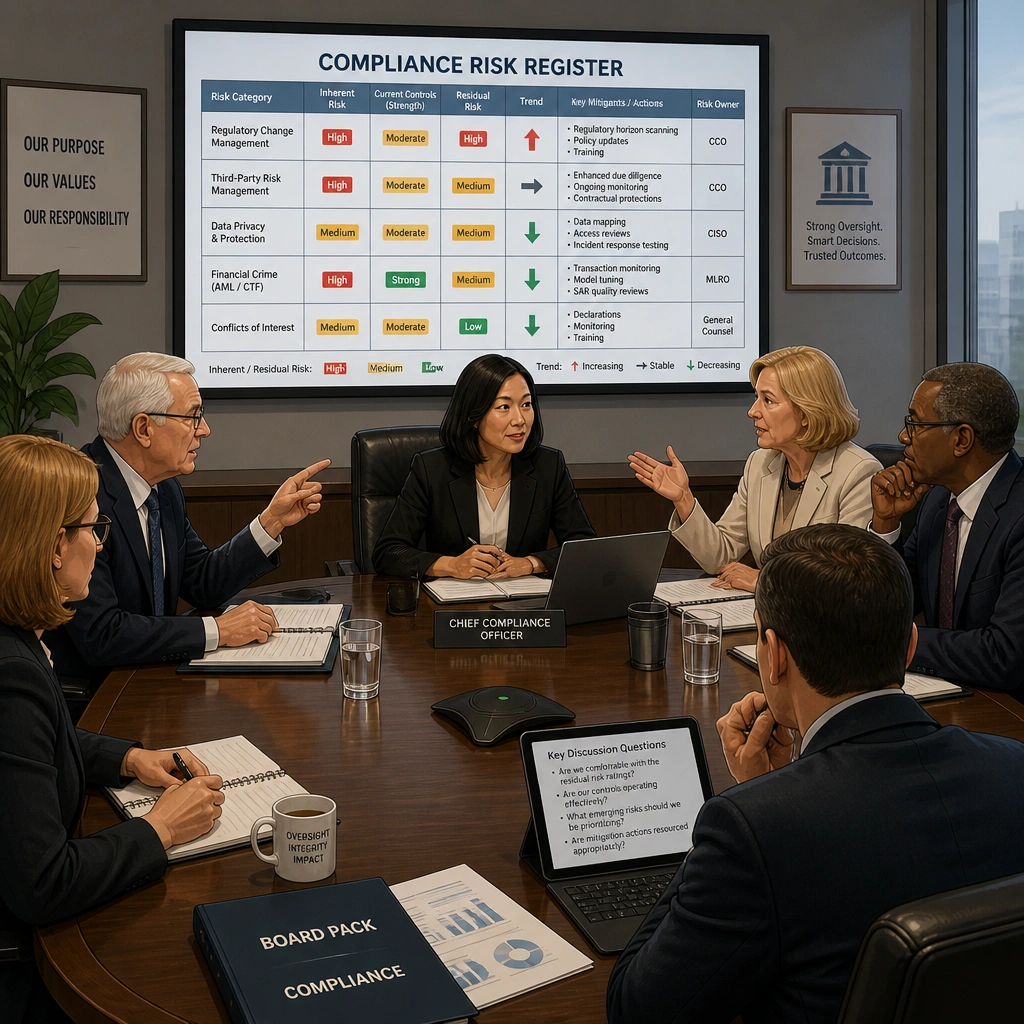
Here's the deal: regulators can spot a 'paper compliance program' from a mile away. If your board of directors just signs off on a compliance report once a year (Option A) or tells the compliance team to dump updates into their inbox weekly without reading them (Option B), they are failing in their oversight duty. True commitment isn't passive; it's active. The board needs to get their hands dirty. They need to sit down with the compliance officer, ask the hard questions like 'Where are our biggest gaps?' and actually fund the strategic initiatives to fix them. The correct answer is D. Delegating everything to legal (Option C) doesn't work either because the board holds ultimate fiduciary responsibility. Trust me, when the board is actively engaged, the rest of the company notices, and so do the regulators!
Full explanation below image
Full Explanation
The correct answer is D. Fiduciary duties and modern regulatory expectations (such as the Delaware Caremark doctrine and DOJ evaluation guidelines) place significant responsibility on the board of directors for compliance oversight. To demonstrate effective oversight, the board must not be passive. They must actively engage with the Chief Compliance Officer (CCO), ask probing questions about risk management, resource adequacy, and compliance culture, and provide the necessary political and financial backing for strategic compliance initiatives. This active engagement is a key indicator of a healthy "tone at the top."
Let's analyze why the other options represent weak or ineffective practices: - Option A is incorrect because an annual review is insufficient to maintain proper oversight of a dynamic risk environment. Compliance reports should be reviewed regularly, typically at every quarterly board meeting. - Option B is incorrect because simply receiving weekly emails does not constitute active engagement or oversight. It encourages a passive checklist approach rather than critical analysis and strategic guidance. - Option C is incorrect because the board cannot delegate its ultimate oversight liability to the legal department or any other function. While management executes the program, the board must retain active oversight and accountability. Regulatory authorities specifically look for evidence that the board has met with the CCO in executive sessions and has actively scrutinized the program's effectiveness.