An organization develops a comprehensive and legally precise Code of Conduct, but fails to communicate it through engaging or accessible training channels. What is the most likely consequence of this implementation gap?
Select an answer to reveal the explanation.
Short Explanation and Infographic
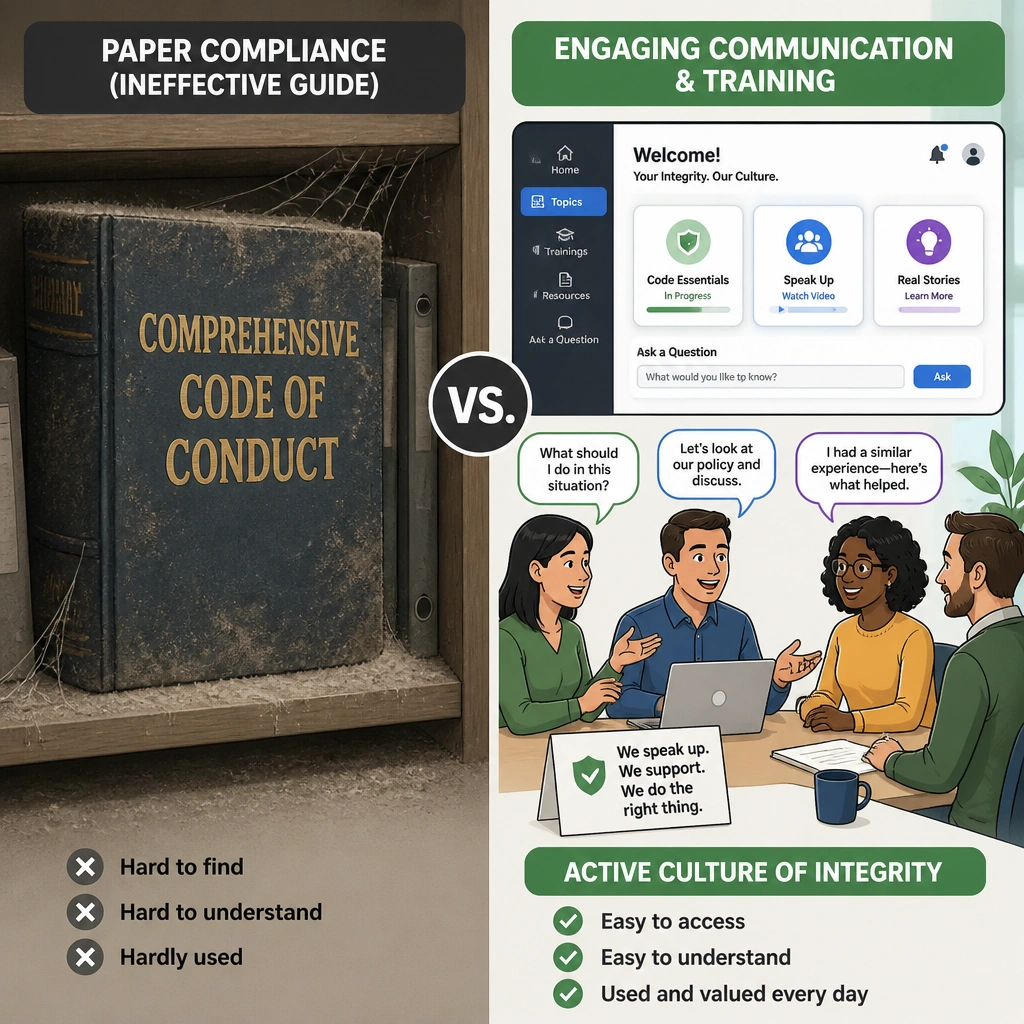
Here's the deal: you can write a masterpiece of a Code of Conduct that would make legal scholars weep with joy. But if you just dump it on your intranet site and never talk about it, nobody is going to read it. It becomes nothing more than a paper shield—a bureaucratic checkbox that employees ignore. In the real world, if you want your policies to actually guide how people act when they're making decisions under pressure, you've got to make those policies relatable, clear, and engaging. Otherwise, you've just wasted your time and a lot of digital ink.
Full explanation below image
Full Explanation
A Code of Conduct is intended to serve as the foundation of an organization's compliance program, outlining its values, standards, and legal obligations. However, the document's effectiveness relies heavily on how it is integrated into the corporate culture. If a company treats the Code as a purely legal document and fails to communicate it in a clear, accessible, and engaging manner, employees are unlikely to understand or apply its principles. Regulators (such as the DOJ in its Evaluation of Corporate Compliance Programs guidelines) look beyond the 'paper program' to see if policies have been effectively integrated and communicated. A dry, uncommunicated Code is often perceived by employees as a 'check-the-box' bureaucratic exercise, rendering it ineffective at preventing misconduct.
- Correct Answer is A because without active, engaging communication, the Code remains a static document that fails to shape employee conduct or influence organizational culture. - Distractor B is incorrect because compliance is not intuitive; employees cannot follow complex regulatory policies or organizational expectations without explicit communication and training. - Distractor C is incorrect because merely possessing a written Code of Conduct does not grant legal immunity. Regulators assess the program's real-world implementation, and a neglected code can be seen as evidence of an ineffective program. - Distractor D is incorrect because while employees may disregard the Code due to poor communication, they are unlikely to coordinate a deliberate, active boycott or create their own formal, alternative guidelines.