Following a significant regulatory breach and subsequent remediation, the Chief Compliance Officer facilitates a 'lessons learned' review with key stakeholders. What is the primary benefit of conducting this session?
Select an answer to reveal the explanation.
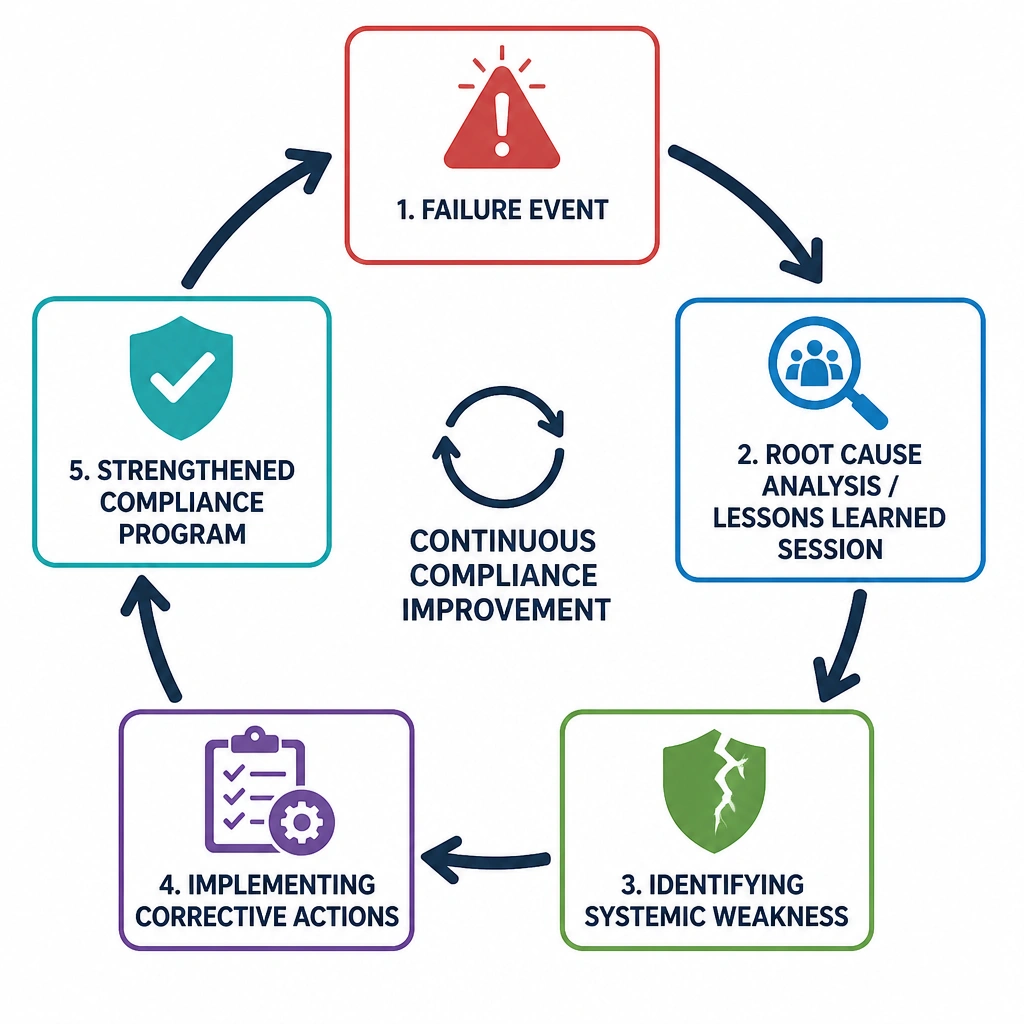
Short Explanation and Infographic
Look, compliance failures are painful and expensive, but they are also a golden opportunity to get better. If you just sweep the issue under the rug or use the meeting to point fingers and blame people, you've learned nothing. A 'lessons learned' session isn't about blaming; it's about looking at the system. You want to figure out where the controls failed, find the systemic weakness, and patch it up so it never happens again. Option D is how we build stronger networks and compliance programs. Let's keep rolling!
Full explanation below image
Full Explanation
A compliance failure indicates that the organization's existing controls, policies, or training were insufficient to prevent or detect the misconduct. An effective compliance program must be dynamic, adapting to new risks and historical failures. A 'lessons learned' session, or root cause analysis, is a standard compliance best practice recommended by the DOJ. Option D is the correct answer because the primary objective of a lessons learned session is to understand the systemic weaknesses that allowed the failure to occur. By analyzing the breakdown in controls, communication, or oversight, the organization can implement specific, target-hardened corrective measures. This continuous improvement loop reduces the likelihood of future compliance failures. Option A is incorrect because public criticism of employees destroys morale, discourages future self-reporting, and does not address the underlying systemic issues that allowed the failure to occur. Option B is incorrect because the goal of the session is to improve the program and prevent future issues, not to justify complacency or resist necessary updates to the compliance framework. Option C is incorrect because selecting outside counsel is an administrative legal function, not the primary objective of reviewing an internal programmatic failure to improve controls.