
A compliance manager is given a substantial budget but is structured to report directly to a regional sales VP whose compensation is heavily tied to short-term revenue targets. What major compliance program risk is most directly created by this organizational reporting structure?
Select an answer to reveal the explanation.
Short Explanation
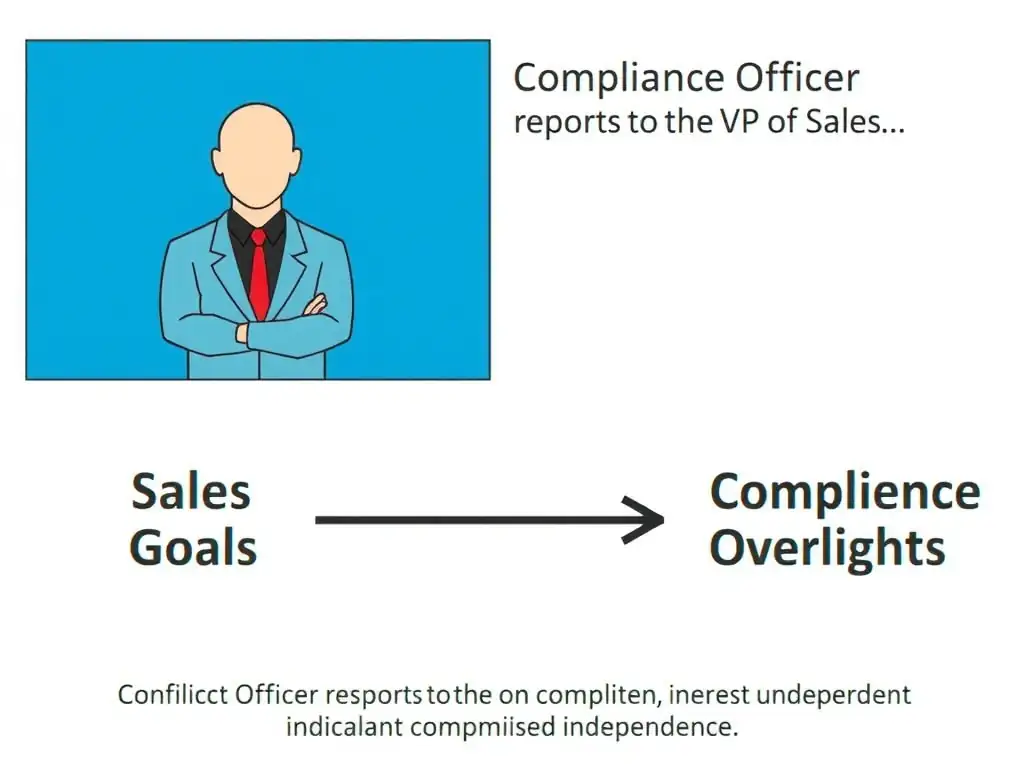
Pay close attention here, because this one bites organizations all the time. If a compliance manager reports to a sales VP whose pay depends on short-term revenue, you're creating pressure to look the other way and rubber-stamp risky deals. The real risk is compliance becoming a cheerleader for sales instead of independent oversight.
Full Explanation
The independence and authority of the compliance function are key metrics evaluated by regulators like the DOJ. The compliance program must have sufficient stature within the organization, which is directly influenced by its reporting structure. If the compliance officer reports to a business unit leader whose primary focus is short-term commercial success, there is an inherent conflict of interest. The correct risk is that this reporting line compromises the compliance function's independence. When compliance reports to a sales leader, the compliance manager is structurally pressured to facilitate sales rather than exercise objective oversight. This dynamic often turns the compliance officer into a 'cheerleader' who justifies questionable business practices to achieve financial targets, rendering compliance secondary to sales goals. The expense-deficit claim is incorrect because having a large budget and reporting to sales does not inherently cause budget deficits. The risk is structural and behavioral, not financial mismanagement of department budgets. The excessive-authority-over-sales claim is incorrect because the reporting structure actually weakens the compliance officer's authority rather than expanding it. They are subservient to sales leadership, making it unlikely they could halt operations unnecessarily. The fast-tracked-promotion claim is incorrect because reporting to a division manager does not automatically lead to rapid promotions. In fact, it may marginalize the compliance career path by keeping the function localized within a business division rather than elevated to corporate-wide executive status.