
Within a corporate compliance framework, the term 'governance' is frequently referenced. Which of the following best defines governance in this context?
Select an answer to reveal the explanation.
Short Explanation
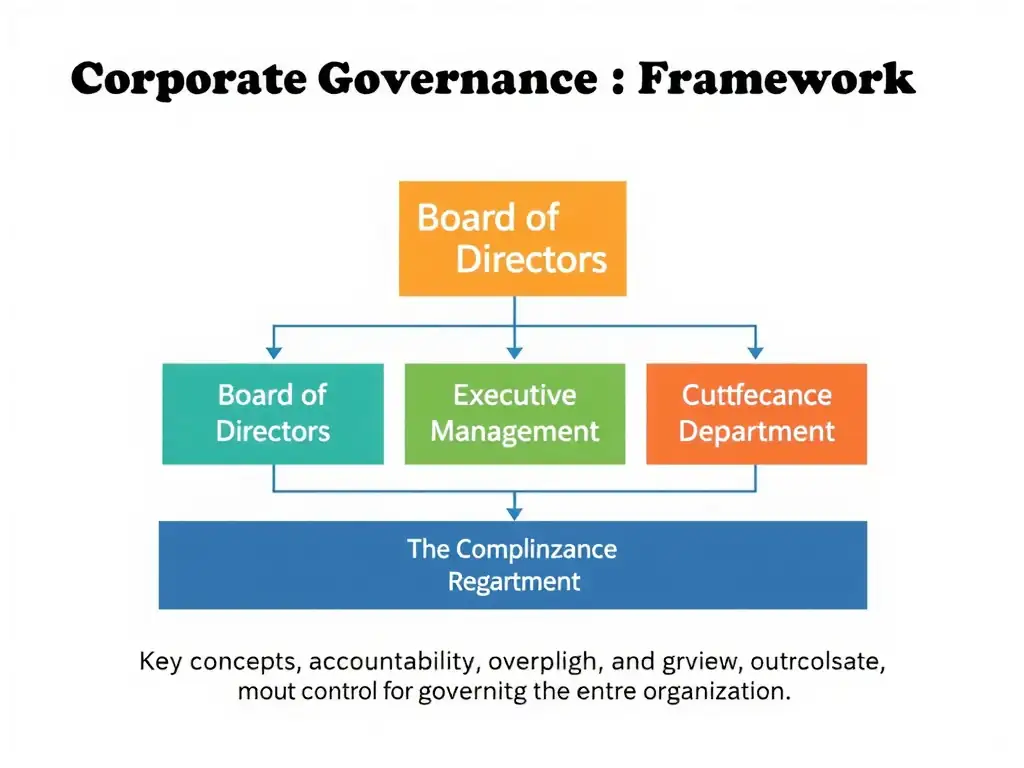
Here's the deal: you'll often confuse governance with day-to-day management, but they're not the same thing. Governance is the framework that directs, controls, and holds the organization accountable, like guardrails on a highway. It keeps the board's oversight and executive decisions aligned with the company's values and legal duties.
Full Explanation
Corporate governance refers to the system of rules, practices, and processes by which a firm is directed and controlled. It involves balancing the interests of a company's many stakeholders, such as shareholders, senior management executives, customers, suppliers, financiers, the government, and the community. In a compliance program, governance provides the structure through which the objectives of the company are set, and the means of attaining those objectives and monitoring performance are determined. The correct answer is the structured framework and processes by which an organization is directed, controlled, and held accountable, because governance is fundamentally the system by which an organization is directed, controlled, and held accountable. It focuses on oversight, accountability, ethical behavior, and risk management, ensuring that the compliance program has the authority and resources to operate effectively under board supervision. The option describing the tactical execution of daily business operations and commercial transaction approvals is incorrect because that activity falls under 'management,' not 'governance.' Management is responsible for executing the strategy within the governance framework set by the board. The option describing the strategic alignment of marketing, brand development, and sales operations to maximize revenue is incorrect because sales and marketing strategies are commercial functions focused on business growth and revenue generation, rather than corporate oversight or accountability systems. The option describing the specific human resource procedure used to recruit and onboard executive-level officers is incorrect because hiring executive officers is a specific task of the board's nominating or compensation committee, which is merely a subset of governance activities, not the definition of governance itself.