
During a periodic review, a compliance director notes that while the company's written anti-bribery policy is comprehensive, it has not been revised or audited in five years. During this period, the organization expanded operations into three developing markets known for corruption risks. In which core program element has the company failed?
Select an answer to reveal the explanation.
Short Explanation
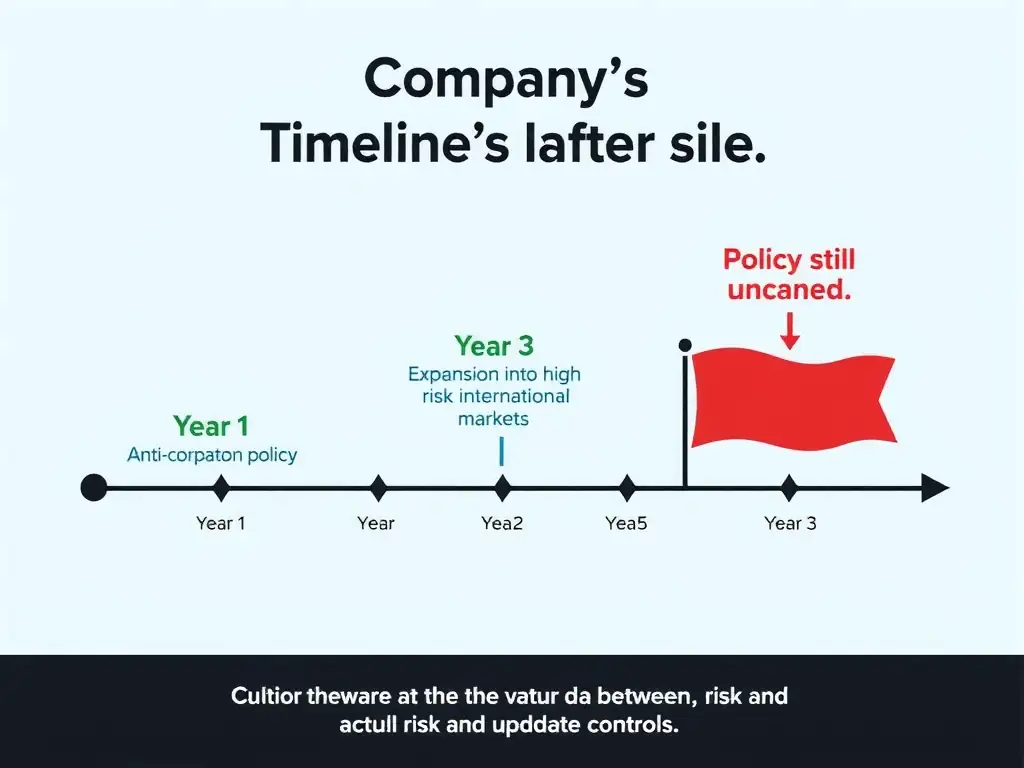
You can't set compliance rules once and walk away. If you expand into high-risk markets and leave the policy untouched for five years, you've failed continuous monitoring, evaluation, and program adaptation.
Full Explanation
The correct answer is continuous monitoring, evaluation, and program adaptation. Compliance programs must be dynamic, living systems. The FSGO and DOJ evaluation guidelines emphasize that organizations must continuously monitor, audit, and adapt their compliance programs to ensure effectiveness. When an organization's business changes—such as expanding into high-risk geographic markets—its risk profile shifts significantly. Programs that remain unchanged for five years under these conditions fail the requirement of ongoing monitoring and adaptation, leaving the company vulnerable to unmitigated risks.
The structured formal reporting channels for third-party vendors element is incorrect because third-party risk management is an important operational risk area, but the root failure in this scenario is the high-level failure to evaluate and update the overall program in response to corporate growth. The localized employee training and communication element is incorrect because training and communication, even if executed regularly, will be ineffective if they are based on outdated policies that do not address the company's current operational realities. The uniform disciplinary measures for ethical breaches element is incorrect because the scenario describes a failure to evaluate, review, and update policy controls in response to geographic expansion, which is a monitoring and adaptation failure rather than a failure of the disciplinary process.