According to the Federal Sentencing Guidelines for Organizations (FSGO), what is a mandatory characteristic of an "effective" compliance program?
Select an answer to reveal the explanation.
Short Explanation and Infographic
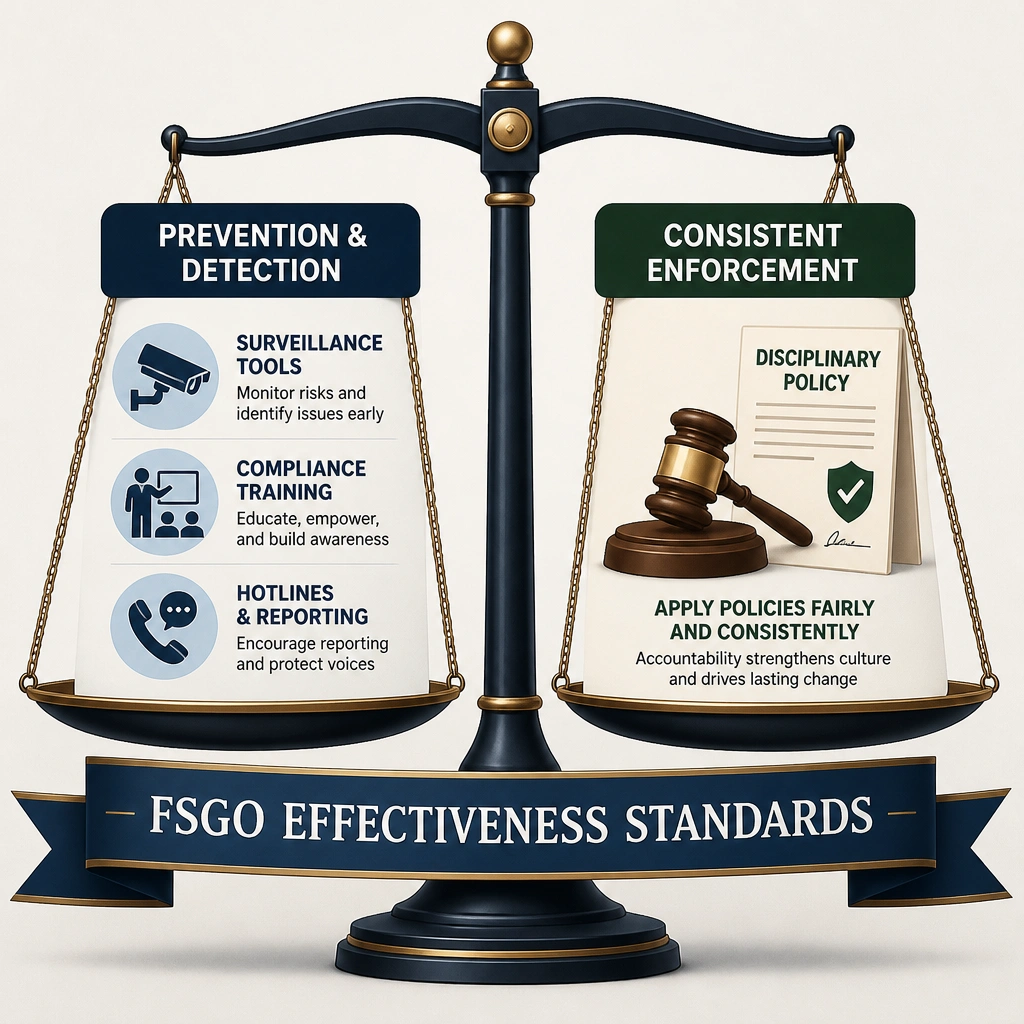
Here's the deal: rules without consequences are just suggestions. Under the FSGO, you can't just write a bunch of nice policies, put them in a binder, and call it a day. That's a static document, and it won't fly. An effective program has to have teeth. That means it's designed to stop and catch criminal behavior, and if someone steps out of line, they get disciplined—consistently. No exceptions. Pay close attention here: without enforcement and clear consequences, a compliance program is just window dressing, and the regulators know it.
Full explanation below image
Full Explanation
The Federal Sentencing Guidelines for Organizations (FSGO) establish specific criteria that a compliance program must meet to be considered effective. Among these requirements is the consistent enforcement of the program standards throughout the organization, including the implementation of appropriate disciplinary mechanisms for individuals who engage in or fail to prevent or detect misconduct. Option D is correct because an effective program under the FSGO is not merely a theoretical framework; it must actively prevent and detect criminal behavior and be backed by consistent, organization-wide disciplinary measures for non-compliance. Option A is incorrect because the FSGO explicitly states that the occurrence of an infraction does not automatically mean the program is ineffective, recognizing that no system can prevent all violations. Option B is incorrect because a static program that does not evolve is ineffective; compliance programs must adapt to changing regulations and risk profiles. Option C is incorrect because legal perfection in drafting does not constitute operational effectiveness if the policies are not actively enforced and integrated into employee conduct.