
Under the Federal Sentencing Guidelines for Organizations (FSGO), what are companies recommended to do to maintain an "effective" compliance and ethics program?
Select an answer to reveal the explanation.
Short Explanation
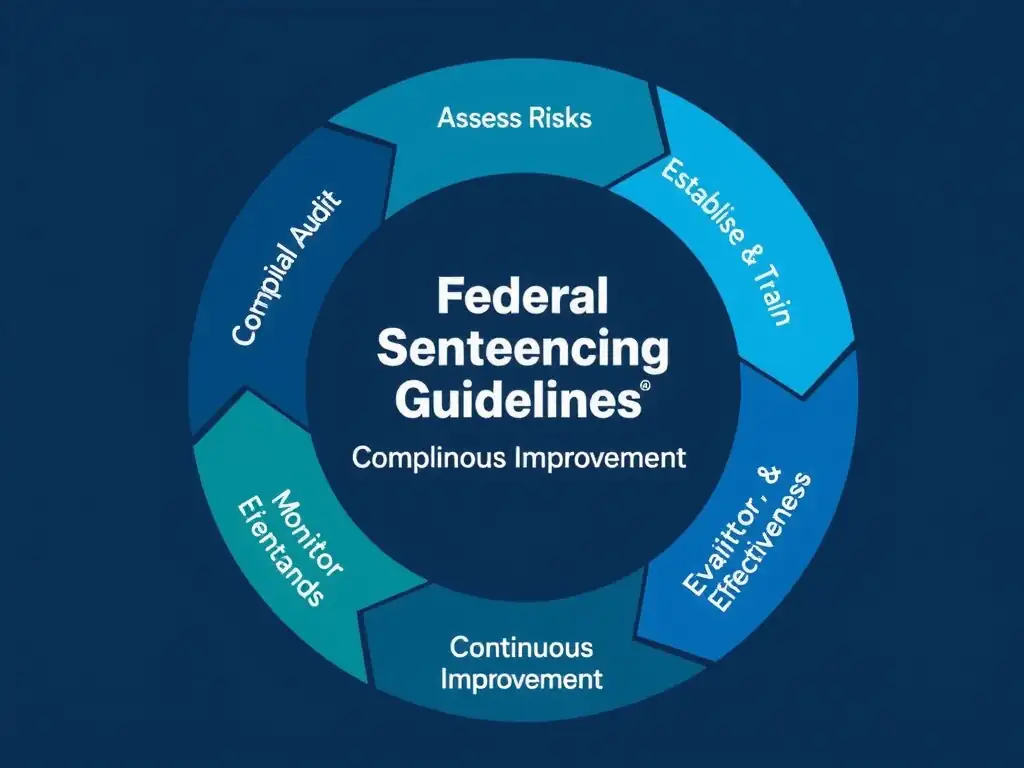
Here's the deal: the FSGO doesn't care about a paper program; it wants you to keep checking whether your compliance program actually works. You've got to monitor, audit, and periodically evaluate it so regulators can see it's active, not just written. That's the only approach that earns real credit.
Full Explanation
The Federal Sentencing Guidelines for Organizations (FSGO) establish the criteria for what constitutes an effective compliance and ethics program. One key requirement under these guidelines is that organizations must take reasonable steps to ensure their compliance program is followed, including monitoring and auditing to detect criminal conduct. Additionally, organizations must periodically evaluate the overall effectiveness of their program to ensure it adapts to new risks and operational changes.
The recommendation to periodically monitor, audit, and evaluate the program's overall effectiveness and implementation is correct because the FSGO explicitly requires organizations to use monitoring and auditing systems to detect non-compliance and to regularly evaluate the program's performance to ensure it is not just a 'paper program' but is active and effective.
The recommendation to rely on individual workers to define their own personal guidelines and moral standards for business transactions is incorrect because the guidelines require the organization to establish and communicate clear, uniform organizational standards of conduct, rather than letting employees set their own rules.
The recommendation to fully outsource all operational compliance oversight and governance tasks to third-party consultants is incorrect because while organizations can use external consultants for support, governing authority and operational responsibility for the compliance program must remain with the company's governing authority and high-level personnel.
The recommendation to postpone the creation of any formal compliance policies until after a major regulatory violation has been prosecuted is incorrect because the entire point of the FSGO compliance framework is to be proactive. Having a program in place before a violation occurs is what allows an organization to qualify for reduced fines and penalties.