When a compliance officer receives a credible report of potential policy violation or misconduct, what should be the immediate next step in the process?
Select an answer to reveal the explanation.
Short Explanation and Infographic
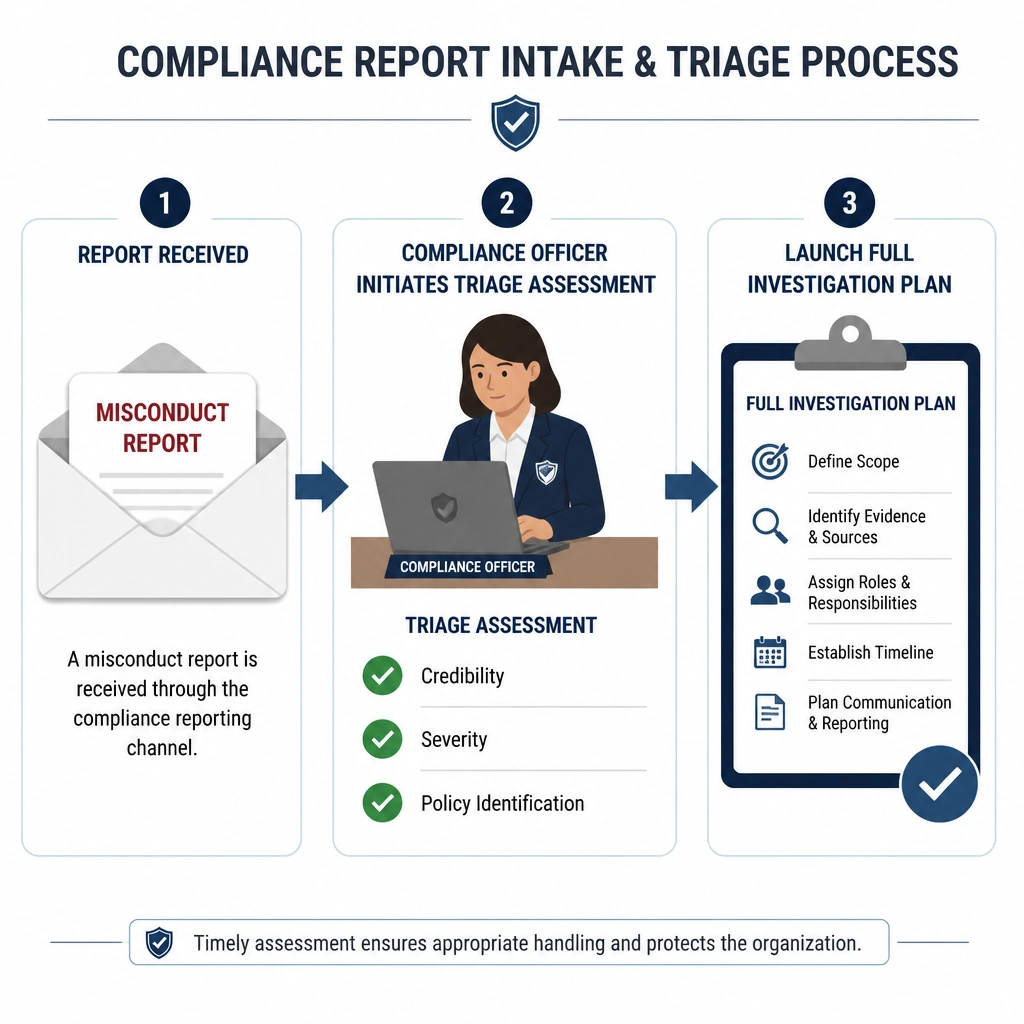
Check this out: when a hot report lands on your desk, you can't just panic, and you definitely can't ignore it. You have to take action immediately. But before you go calling in the cavalry or firing anyone, you need to do a preliminary assessment. Think of it like triage in a hospital. You need to look at the report and ask: 'Is this credible? What policies or laws might have been broken? Who needs to be involved, and do we need to secure any files or emails right now before they disappear?' This first check sets your strategy for the whole investigation. Ignore it or mess it up, and you could lose key evidence or face a massive retaliation lawsuit. Got it? Sweet. Let's keep rolling.
Full explanation below image
Full Explanation
When an organization receives a credible report of misconduct, the immediate requirement is to conduct a prompt, preliminary assessment (triage). This initial phase determines whether the allegation falls under compliance jurisdiction, identifies the specific policies or regulations involved, assesses the potential severity/risk to the organization, and establishes the scope of any subsequent investigation. It also ensures that immediate protective measures, such as securing evidence or suspending access to sensitive systems, are taken if necessary.
Let's review the options to see why the correct answer is correct and the distractors are incorrect: - Option D is correct because a preliminary assessment allows the compliance team to determine if there is a factual basis for the complaint, secure critical evidence, and decide on the resources and expertise required to investigate the matter. - Option A is incorrect because firing the whistleblower is a direct act of retaliation. This is illegal under many jurisdictions and violates the core principles of an ethical compliance program. - Option B is incorrect because ignoring a credible report can lead to ongoing harm, exacerbate financial and legal liability, and suggest to regulators that the company's compliance program is ineffective or collusive. - Option C is incorrect because sharing details of an ongoing allegation publicly violates confidentiality, compromises the integrity of the investigation, damages reputations without due process, and could lead to privacy lawsuits.