
To ensure that a whistleblower reporting hotline is highly effective and widely used by employees, which operational feature is most critical?
Select an answer to reveal the explanation.
Short Explanation
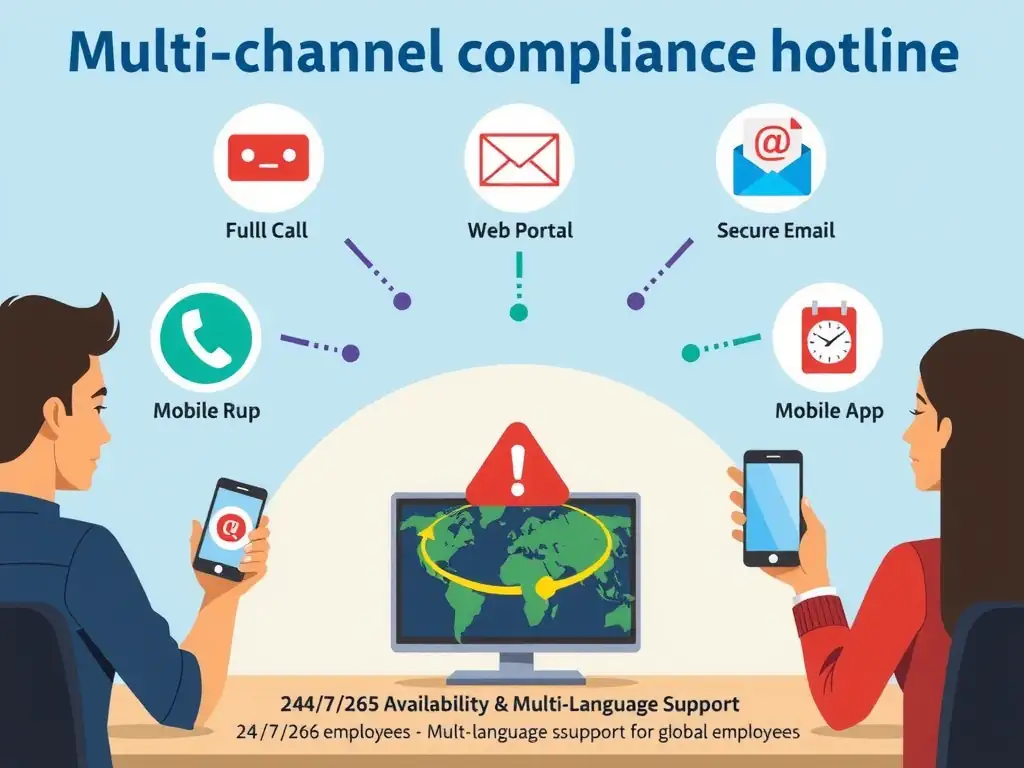
Here's the deal: if you make it hard for employees to report misconduct, they won't. Your hotline has to be open 24/7 and offer phone, web, and email options so night-shift workers and nervous reporters can actually reach you. Lock the door or give them one channel, and you'll miss the signals that could save your company—got it?
Full Explanation
Effective whistleblower hotlines must be designed to minimize barriers to reporting. Misconduct can occur at any time, in any time zone, and employees have different preferences for how they communicate sensitive information. Therefore, modern compliance reporting systems must be accessible 24 hours a day, 7 days a week, and offer multiple intake channels (such as toll-free telephone lines, web-based portals, email, and mail). The correct feature is providing round-the-clock, multi-channel intake options that are easily accessible to all staff. Round-the-clock availability ensures that employees across all shifts and global locations can report concerns when they arise. Offering multiple channels (phone, web, etc.) accommodates different comfort levels and technical access, maximizing the likelihood that misconduct will be reported. Limiting operations to standard business hours to control staffing budgets is incorrect because restricting the hotline to office hours excludes employees working non-traditional shifts or in different time zones, and forces individuals to make reports during their working hours when they may fear being overheard. Requiring every caller to submit physical, notarized documentation before an investigation can begin is incorrect because requiring notarized or physical evidence up front would deter the vast majority of whistleblowers, who often report based on suspicions or observations and may not have immediate access to physical documents. Routing all incoming hotline calls directly to the Chief Financial Officer's personal office line is incorrect because routing all reports to the Chief Financial Officer (or any single executive) creates a conflict of interest, particularly if the report involves financial misconduct or senior leadership. Reports should go to a neutral, trained compliance function or an independent third-party intake provider.