When a multinational organization designs and implements a global compliance program, which of the following represents one of their most significant ongoing challenges?
Select an answer to reveal the explanation.
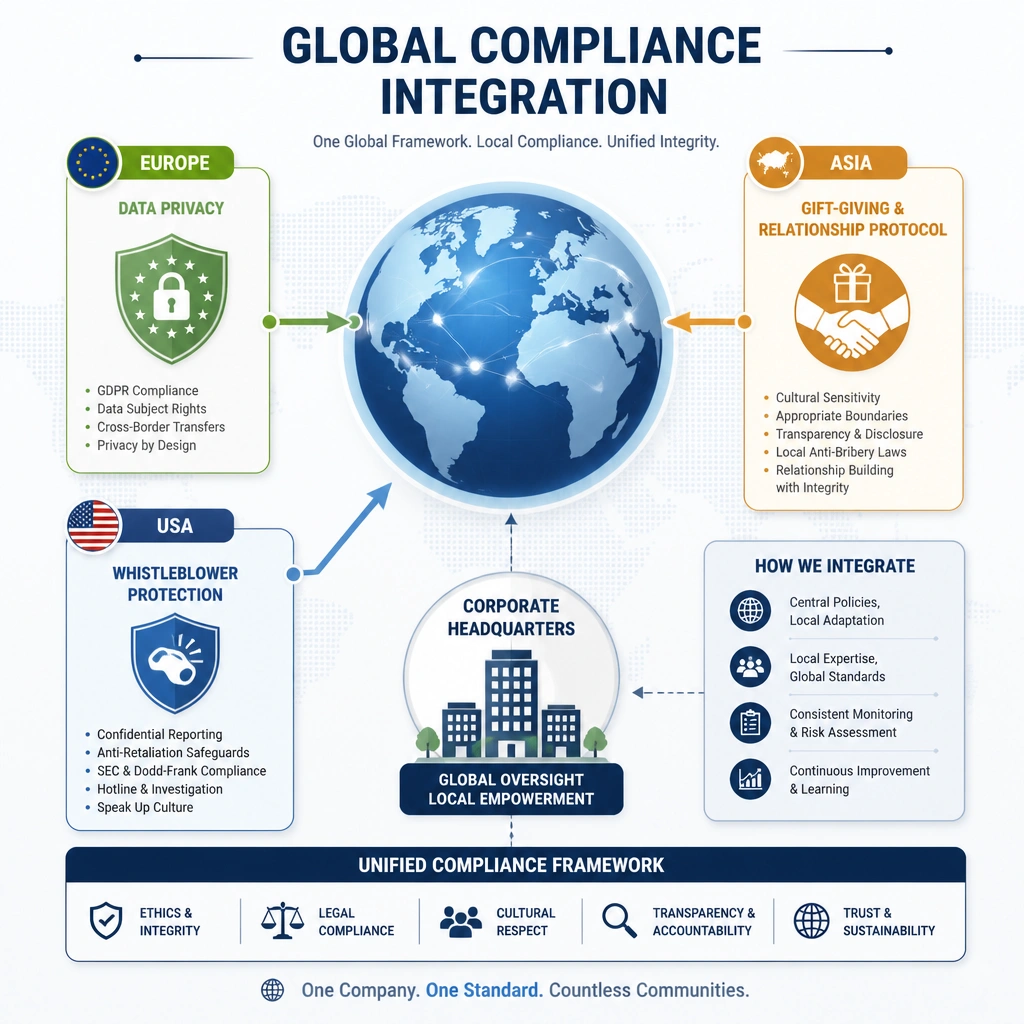
Short Explanation and Infographic
Check this out: running a business in one state or country is hard enough. But when you go global, you're dealing with a whole different ballgame. You can't just take a compliance program built for New York, translate it into Spanish or Japanese, and expect it to work. Think of it like trying to drive on the left side of the road in London using US traffic laws—it's going to end in a crash. You have to respect and comply with local laws, like GDPR in Europe or specific anti-bribery rules in Asia, while keeping your core values intact. Finding that sweet spot between a global standard and local compliance is a massive tightrope walk, but it's what separates the pros from the amateurs. Got it? Sweet. Let's keep rolling.
Full explanation below image
Full Explanation
A global compliance program must navigate the complex and often conflicting landscape of international jurisdictions. The primary challenge for compliance officers in multinational corporations is balancing consistency in corporate values with local adaptations. What is legally compliant or culturally acceptable in one country may be prohibited or highly offensive in another. For example, data privacy laws (like GDPR in the European Union) are far more stringent than in many other regions, and customs regarding gift-giving and hospitality vary widely globally.
Let's evaluate the options to see why the correct answer is correct and the distractors are wrong: - Option C is correct because global compliance requires a program that is flexible enough to comply with local laws and respect local cultural norms while maintaining the organization's core ethical standards. This requires regular legal updates, localized training, and regional compliance oversight. - Option A is incorrect because avoiding international business is not a viable strategy for a global corporation, and the goal of compliance is to enable compliant global business, not shut it down. - Option B is incorrect because basing a global program strictly on US law ignores local statutory requirements (e.g., local labor laws, tax regulations, and privacy rules), which can lead to severe legal penalties abroad. - Option D is incorrect because creating a different program for every employee is administratively impossible and would destroy the consistency needed for corporate policy enforcement.