
In corporate governance, what is the primary objective of establishing and enforcing a comprehensive "Conflict of Interest" policy?
Select an answer to reveal the explanation.
Short Explanation
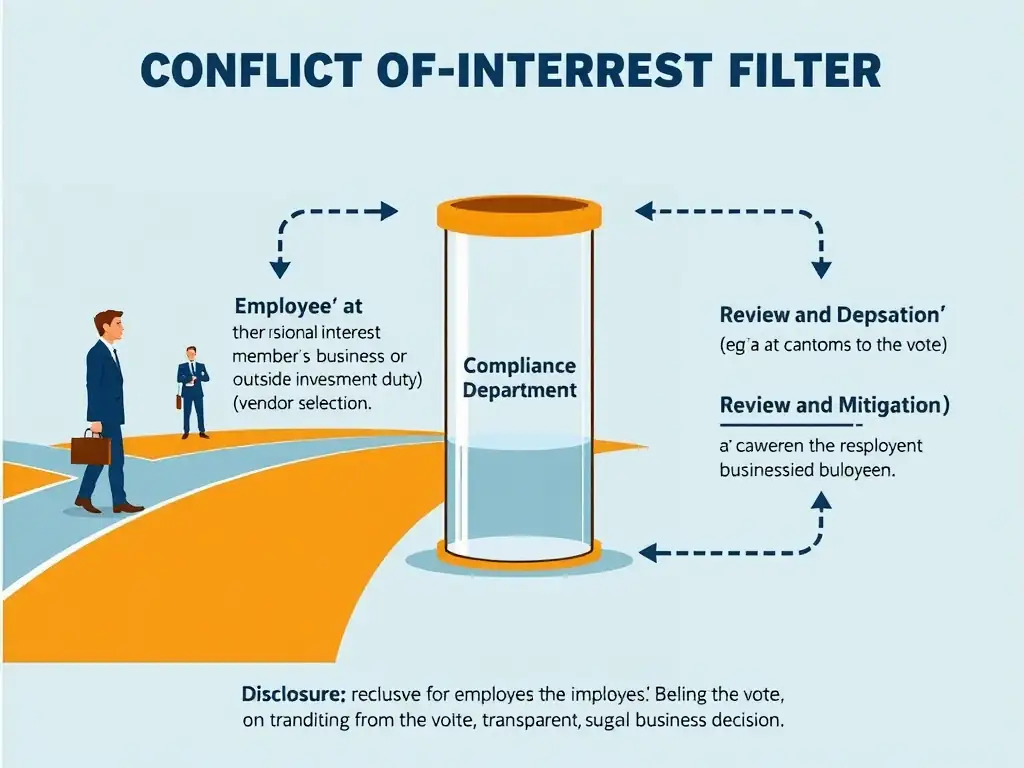
Here's the deal: a conflict of interest policy isn't about banning employees' outside lives; it's about spotting, disclosing, and managing situations where personal interests could cloud professional judgment. That keeps decisions transparent and protects both the employee and the company. Got it?
Full Explanation
The main objective of a Conflict of Interest policy is to ensure that employees, officers, and board members act in the best interests of the organization and do not allow their personal relationships, investments, or outside activities to compromise their professional objectivity. The policy establishes clear guidelines for identifying potential conflicts, mandates the disclosure of these situations, and outlines procedures for managing or mitigating them, such as recusal from decision-making processes.
The correct objective is to identify, disclose, and manage situations where an employee's private activities or relationships could compromise their professional judgment. The core purpose is to manage situations where personal interests could bias or appear to bias an employee's duty of loyalty to their employer. By requiring disclosure, organizations can evaluate risks and implement controls to protect decision-making integrity.
The idea that the policy legally prevents employees from owning any external financial assets, personal investments, or secondary properties is incorrect because the policy does not seek to forbid employees from owning any external financial assets or investments. Instead, it requires disclosure and management if those assets overlap with the company's business or suppliers.
The idea that the policy isolates employees from external business contacts and prohibits them from attending industry networking events is incorrect because organizations do not want to isolate employees from external contacts or industry networking. Networking and external communication are vital for business growth and are not prohibited by conflict of interest policies.
The idea that the policy mandates that all employee personal relationships, friendships, and household budgets be approved by the human resources department is incorrect because a conflict of interest policy is not an invasive tool designed to control employees' private lives, budgets, or friendships. It only intervenes when a specific personal relationship or activity intersects with and threatens to compromise professional duties.