What is the primary regulatory and ethical objective of implementing a corporate 'Gifts and Entertainment' policy?
Select an answer to reveal the explanation.
Short Explanation and Infographic
Here's the deal: business decisions should be made on merit—pricing, quality, service. Not because someone got treated to a luxury golf trip or got handed a gold watch. That's called bribery, and it's a huge compliance risk! A Gifts and Entertainment policy sets the ground rules. It's not about being a killjoy and banning a vendor from buying you a cup of coffee (Option A)—it's about stopping people from using lavish hospitality to corrupt a business decision. It keeps everything fair and transparent. Options B, C, and D are very different things; this policy is all about avoiding conflicts of interest and staying on the right side of the law. Got it? Sweet.
Full explanation below image
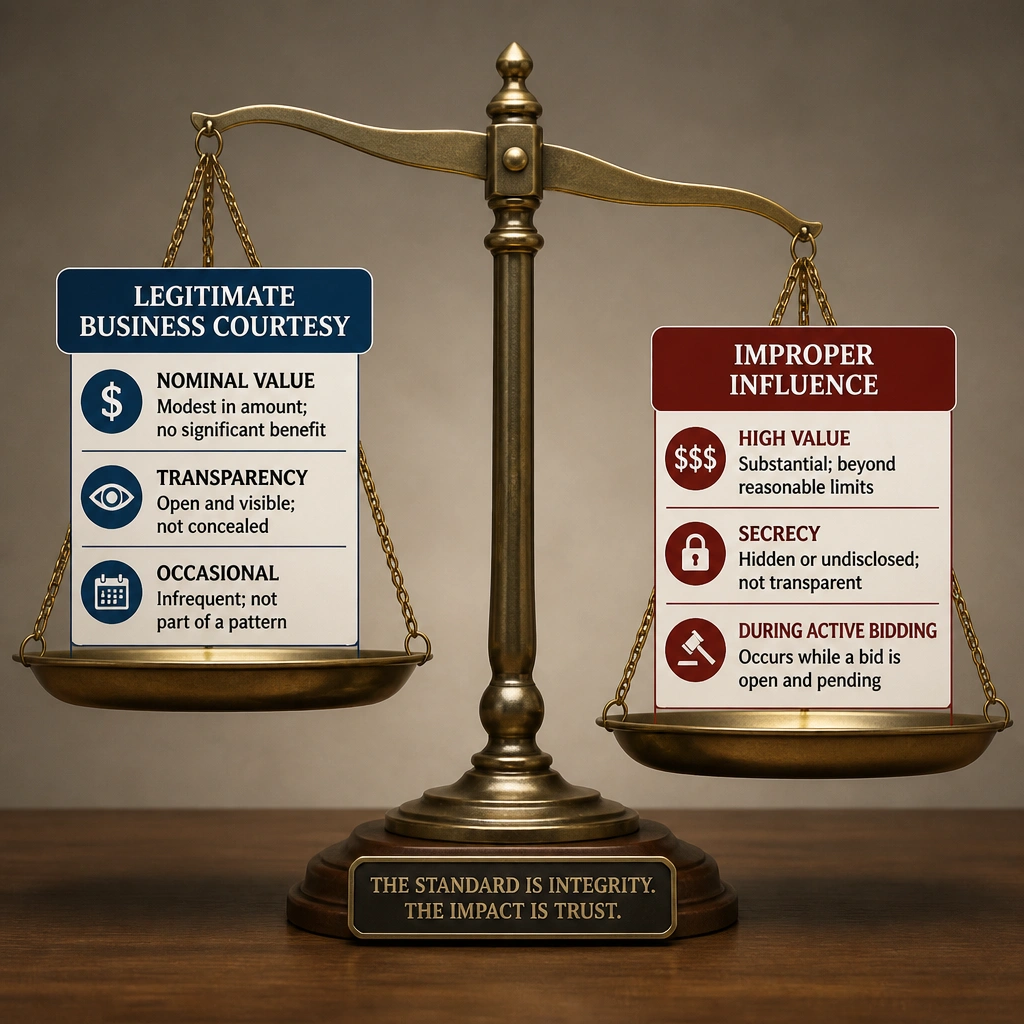
Full Explanation
Corporate 'Gifts and Entertainment' policies are designed to manage conflicts of interest and prevent violations of anti-bribery laws, such as the FCPA and the UK Bribery Act. Offering or accepting items of value can create an obligation—or the appearance of one—that compromises an employee’s objectivity.
Let’s analyze the differences between these options: - Option D is correct because the policy establishes boundaries (such as monetary thresholds, pre-approval workflows, and prohibited categories like cash or adult entertainment) to ensure that business interactions remain ethical. The goal is to prevent third parties or employees from using hospitality to inappropriately influence a procurement decision, contract award, or regulatory approval. - Option A is incorrect because most corporate policies do not implement a complete, zero-tolerance ban on all items. Instead, they typically allow for nominal, customary, or branded promotional items (e.g., pens or mugs) that do not create a conflict of interest, provided they are disclosed or fall below a specified threshold. - Option B is incorrect because internal employee rewards or promotional materials are managed under HR programs, not policies designed to regulate external commercial gifts and hospitality. - Option C is incorrect because general corporate event logistics and holiday parties are managed by facilities or HR, whereas gifts and entertainment policies regulate business courtesies exchanged with external clients, vendors, or government officials.
By implementing clear rules and transparency (like a gift registry), organizations ensure that hospitality is never misconstrued as a bribe.