
Which statement best describes the fundamental purpose and role of a corporate compliance and ethics program within an organization?
Select an answer to reveal the explanation.
Short Explanation
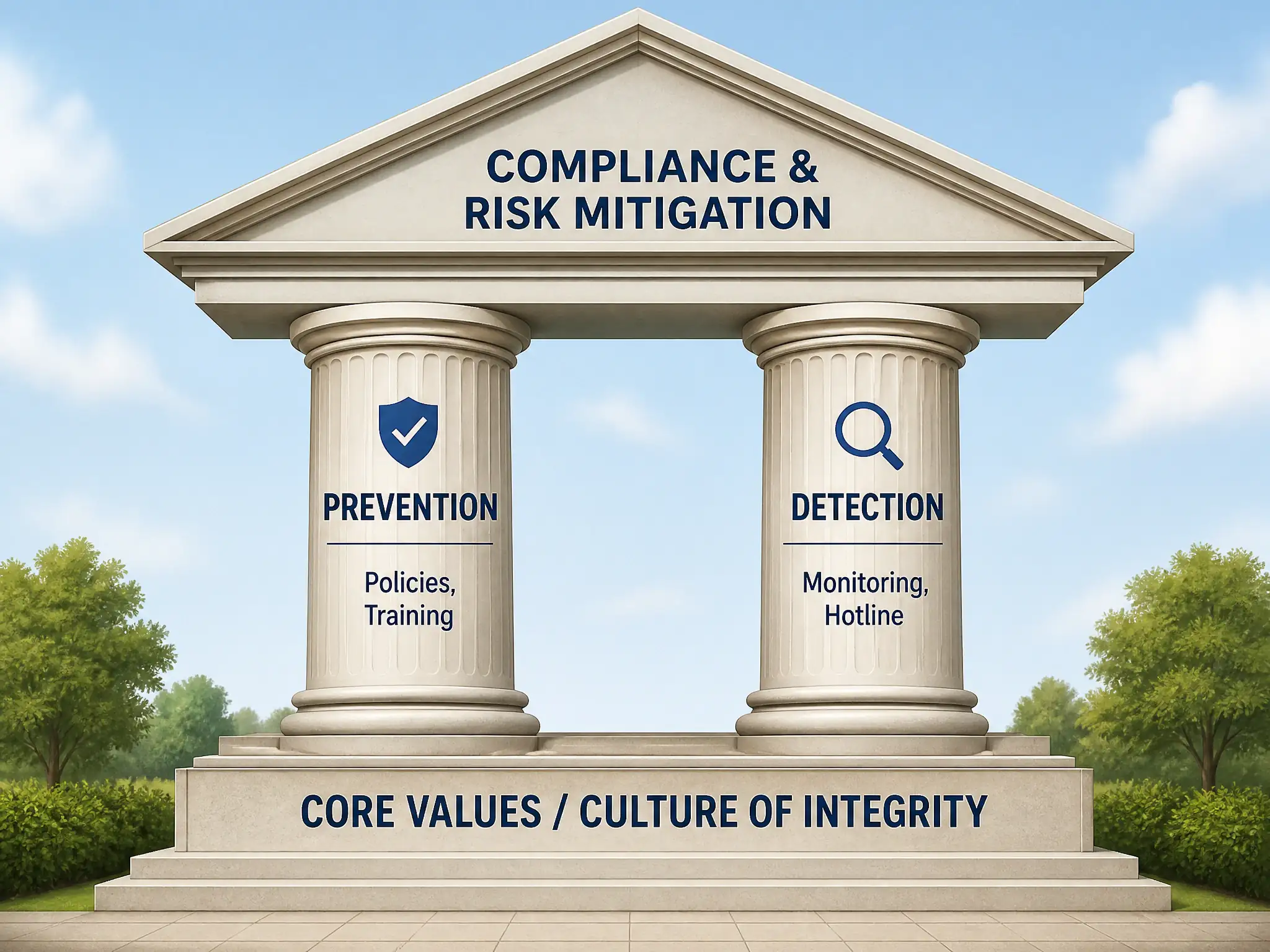
Think of it like this: a great compliance and ethics program isn't there to be the police force waiting for you to make a mistake. Its real job is to build a culture where everyone knows how to do the right thing, not pass the buck, isolate the team, or hammer people for mistakes. Think of network security protocols: you don't just want to detect a hack after it happens; you want to prevent it by educating users and securing the perimeter.
Full Explanation
The fundamental role of a compliance and ethics program is defined by standard frameworks, such as Chapter 8 of the Federal Sentencing Guidelines for Organizations (FSGO). These guidelines state that a program must be reasonably designed, implemented, and enforced so that it is generally effective in preventing and detecting criminal conduct. However, compliance is not just about avoiding legal penalties; it is about building an ethical corporate culture.
Let's break down the statements: - The structured prevention and detection framework designed to promote an organizational culture of integrity and legal compliance is correct because it captures the dual role of compliance: prevention through policies, training, and clear guidance, and detection through monitoring, auditing, and reporting channels. When combined, these efforts foster a 'culture of compliance' where employees feel safe reporting issues and understand their ethical responsibilities. - The isolated administrative unit that functions independently without collaborating with core business divisions is incorrect because a siloed compliance department that does not interact with other business units is ineffective. Modern compliance must be integrated into operational workflows, such as procurement, sales, and HR, to understand and mitigate real-world risks. - The disciplinary tool designed primarily to punish employees for operational errors or performance issues is incorrect because while discipline is a component of enforcement, the primary goal of the program is prevention and ethical alignment, not punitive retaliation or policing operational mistakes. - The legal mechanism used by executive management to transfer personal liability for regulatory infractions onto line-level staff is incorrect because a compliance program cannot be used to shift legal liability from officers or directors to employees. In fact, regulators evaluate whether executive leadership has actively overseen the program and set the appropriate 'tone at the top.'
Ultimately, a successful compliance program serves as a business enabler, protecting the organization's reputation and driving sustainable growth.