
During negotiations with a foreign business partner in a high-risk jurisdiction, which of the following scenarios should be treated as a significant regulatory 'red flag' for corruption or bribery?
Select an answer to reveal the explanation.
Short Explanation
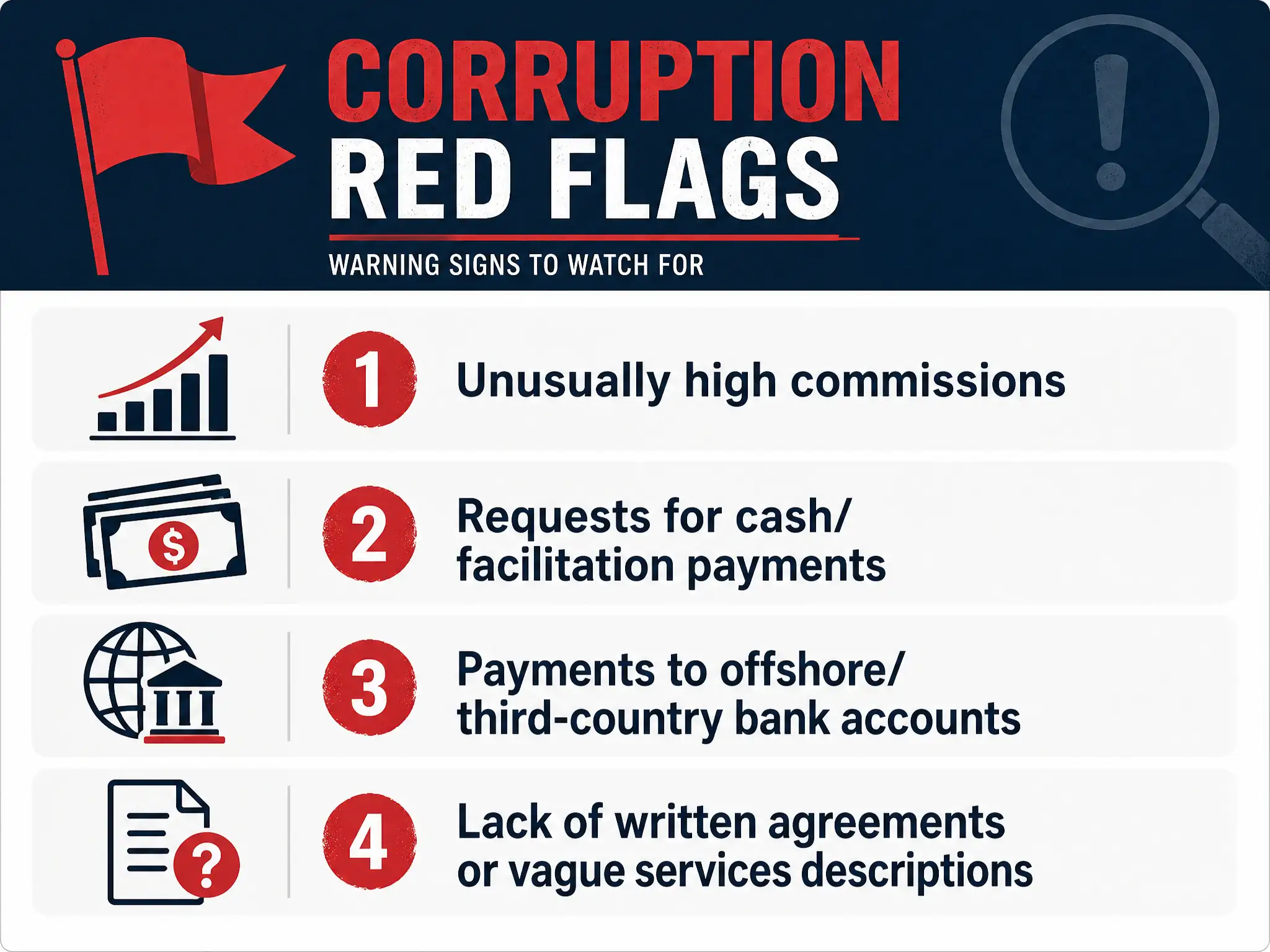
When you're working internationally, watch for an intermediary demanding an unusually high commission or an undocumented 'facilitation fee' to speed approvals. That's a classic bribery red flag. Reputable law firms, logged negotiations, and receipted expenses are normal controls, not traps.
Full Explanation
In the context of international trade and anti-corruption compliance (such as enforcement of the FCPA), organizations must train employees to recognize 'red flags'—circumstances that suggest a high probability of illegal activity, specifically bribery or corruption. Intermediaries, agents, and distributors are frequently used as conduits for bribes paid to foreign officials. The request by an intermediary for an atypically high commission or an undocumented 'facilitation fee' to expedite approvals is correct because requests for unusually high commissions, success fees that exceed market rates, payments to offshore bank accounts, or requests for cash 'facilitation payments' to secure government action are classic indicators of potential corruption. Facilitation payments (often called 'grease payments') are illegal under most domestic laws (like the UK Bribery Act) and present severe compliance risks under the FCPA. When these red flags appear, they must be formally investigated and resolved before proceeding. The involvement of a globally recognized, independent law firm to draft the commercial agreements is incorrect because retaining a reputable, independent law firm to draft contracts is a standard risk-mitigation practice that enhances transaction transparency, not a red flag. The highly transparent, written negotiation process that is fully logged in the company's CRM system is incorrect because transparency and documentation are the exact opposites of corruption; a documented negotiation process is a key control in preventing bribery. The standard, itemized business expense that is backed by receipts and complies with corporate policies is incorrect because well-documented, legitimate, policy-compliant expenses do not suggest improper influence or under-the-table payments. Failing to investigate and address known red flags can lead to corporate liability, as regulators interpret deliberate ignorance as a form of intent.