A compliance committee decides to perform a formal 'gap analysis' of their organization's current ethics and compliance program. What is the primary objective of this exercise?
Select an answer to reveal the explanation.
Short Explanation and Infographic
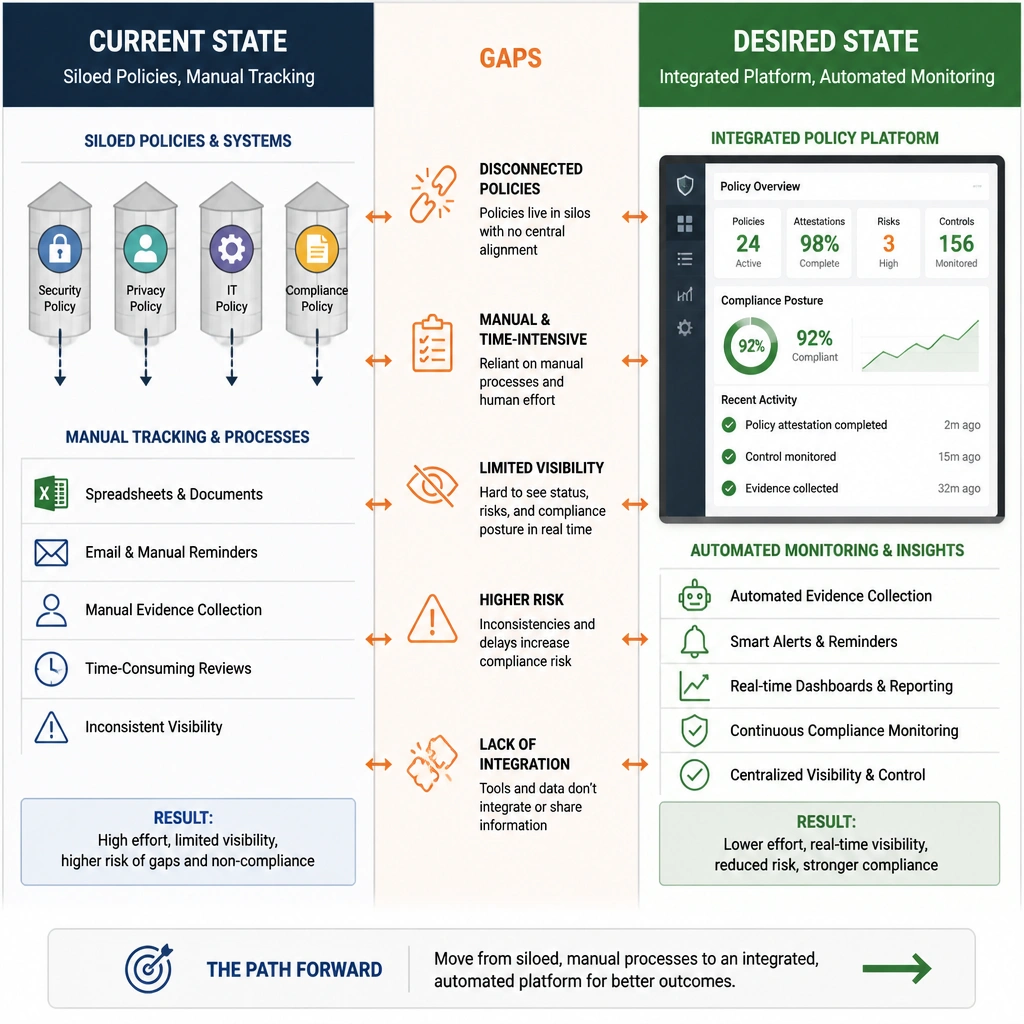
Here's the deal: before you can plan a route on a map, you have to know two things: where you are right now, and where you're trying to go. That's exactly what a gap analysis does. Think of it like comparing your current network security to a top-tier security standard like ISO 27001. You look at what you have, check it against where you need to be, and find the "gaps"—the missing policies, the untrained employees, or the weak controls. It's a reality check that shows you exactly what needs fixing. It's not about trying to calculate an exact ROI (Option A), listing every employee (Option C), or just bragging about what you're doing right (Option D). It's about finding your weaknesses so you can build a stronger defense. Simple as that.
Full explanation below image
Full Explanation
A gap analysis is a strategic evaluation tool used by compliance professionals to assess the maturity and completeness of an ethics and compliance program. This process involves comparing the current "as-is" state of the program's policies, procedures, controls, and training against a defined "to-be" target state, which is typically derived from regulatory guidelines, industry best practices, or legal frameworks (such as the DOJ guidelines or the ISO 37301 compliance management systems standard).
Let’s analyze why the other options do not represent the primary purpose of a gap analysis: - Option B is correct because the primary value of a gap analysis lies in identifying vulnerabilities, omissions, and operational deficiencies. By mapping existing controls against the desired benchmark, the compliance team can create a prioritized roadmap for remediation and program enhancement. - Option A is incorrect because compliance programs are cost centers focused on risk mitigation, legal compliance, and avoidance of penalties. Calculating a precise financial ROI is notoriously difficult and is not the purpose of a gap analysis, which focuses on program design and execution rather than direct financial returns. - Option C is incorrect because creating a personnel directory or census is an administrative HR function, not a compliance program evaluation tool. - Option D is incorrect because while identifying strengths is a byproduct of the assessment, a gap analysis specifically targets "gaps" (weaknesses or missing components) to drive improvement, rather than focusing solely on documenting strengths for promotional purposes.
Conducting periodic gap analyses helps organizations ensure that their compliance efforts remain aligned with evolving legal expectations and business growth.