
When developing an annual compliance training curriculum, which methodology is most effective for ensuring employees understand and apply corporate policies in their daily work?
Select an answer to reveal the explanation.
Short Explanation
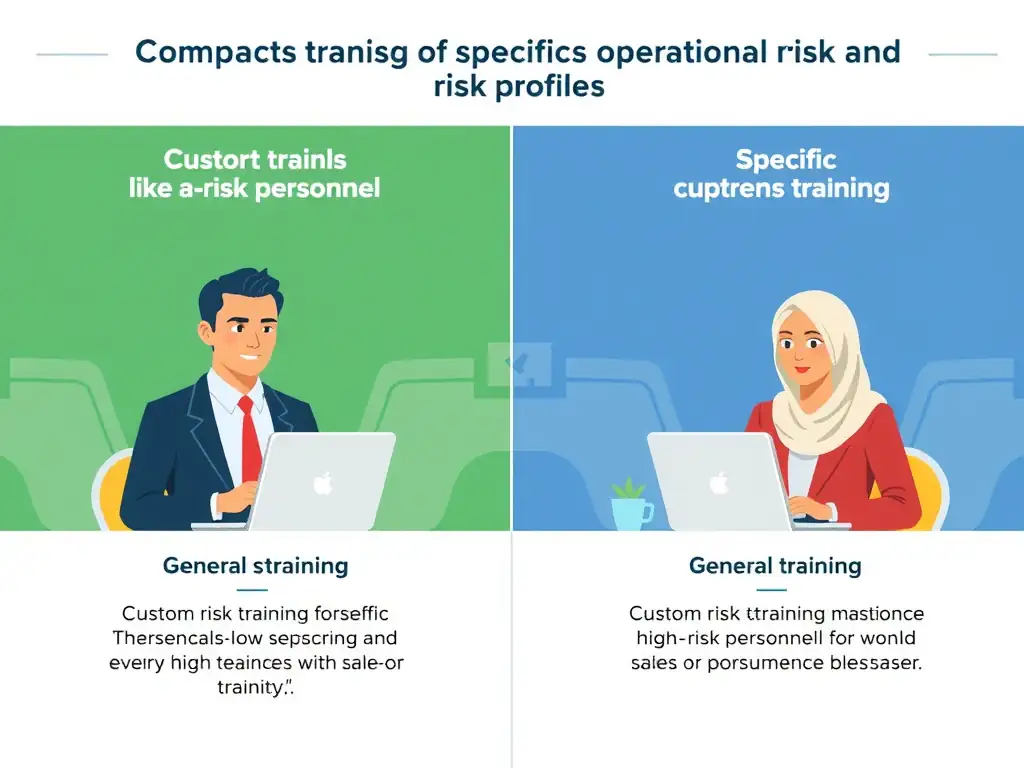
You've got to tailor compliance training to the specific roles and risks your people actually face. If you force a software developer who never interacts with customers to sit through three hours on foreign customs bribery while a sales rep bidding on government contracts in South America needs deep FCPA guidance, they'll tune out. Tailored scenarios keep employees engaged, help them apply policies daily, and reduce exposure where it matters most.
Full Explanation
Effective compliance training must be risk-based and tailored to the job functions of the participants. The U.S. Department of Justice (DOJ) guidance on evaluating corporate compliance programs explicitly asks whether training is tailored to the audience's specific risk profile. High-risk employees, such as those in procurement, international sales, or finance, require specialized training on corruption, trade controls, and financial integrity, whereas general employees may only need baseline training on workplace behavior and the code of conduct.
Customizing the training content and scenarios to align with the specific operational roles and risk exposures of the target audience is correct because tailoring the training to specific audience roles ensures relevance, which in turn drives engagement, retention, and behavioral alignment with corporate policies.
Administering a comprehensive, academic exam covering all corporate regulations to every staff member is incorrect because passing a difficult academic test does not guarantee behavioral compliance or practical understanding of day-to-day risks. It often results in temporary memorization rather than long-term cultural change.
Designing complex modules with extensive technical legal citations to ensure complete legal compliance is incorrect because overly complex training with excessive legalese is often confusing and counterproductive to employee engagement. Employees must understand the practical application of rules.
Delivering a single, mandatory all-hands training session once a year with no follow-up resources is incorrect because a single annual presentation without role-specific tailoring or continuous, bite-sized learning reinforcements is less effective at maintaining compliance awareness.