
What is the primary role of executive leadership and senior management in ensuring the success of an organization's compliance and ethics program?
Select an answer to reveal the explanation.
Short Explanation
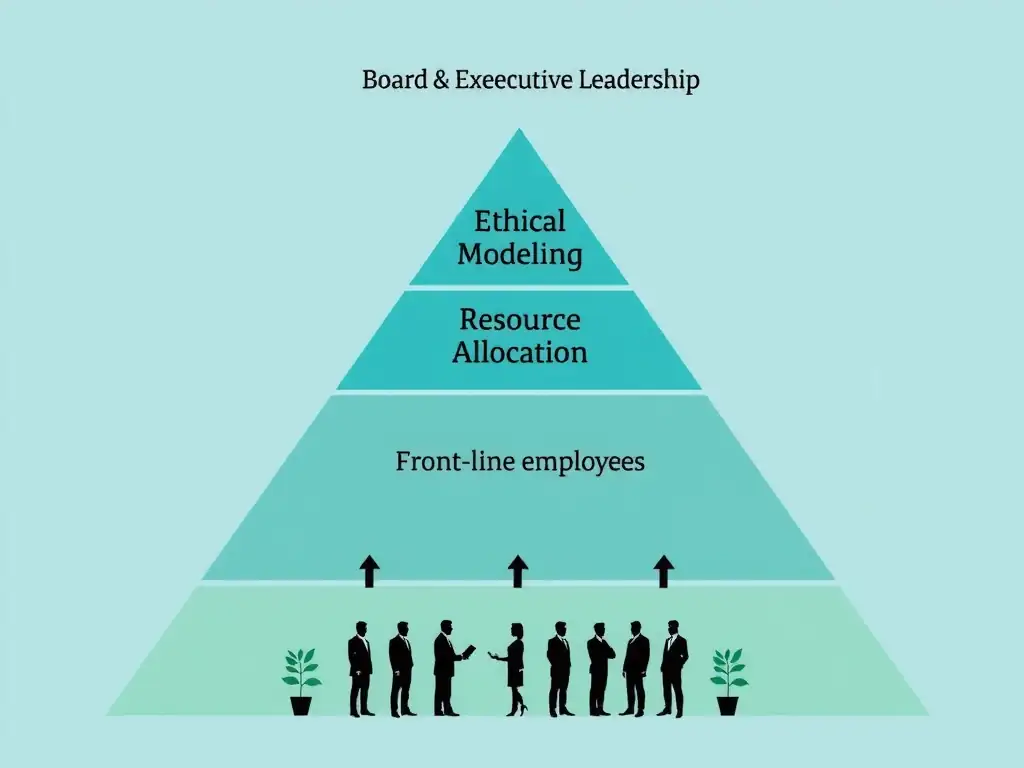
Let's be real here: if your CEO and top executives treat compliance like a checkbox annoyance, the rest of the company will do the exact same thing. You need leadership to set the tone at the top by modeling ethics, funding the compliance team, and backing the rules even when it hurts sales. If the boss says to just get the deal done no matter how, your program is dead in the water.
Full Explanation
The leadership and commitment of senior management are critical to the success of an organizational compliance and ethics program. This concept is widely known as setting the 'tone at the top.' Executive management and the board of directors must not only authorize the creation of a compliance program but also actively champion it. They do this by modeling ethical decision-making, communicating the importance of compliance, allocating adequate resources, and ensuring the compliance officer has direct access to the board. The DOJ's guidelines place significant emphasis on whether leaders have created a corporate culture of compliance, noting that actions speak louder than written policies. Without this active leadership, any compliance program is likely to be viewed by employees as a mere bureaucratic formality rather than a core value of the organization. The correct choice is the one about establishing the 'tone at the top' by modeling ethical behavior and actively supporting the compliance program's initiatives, because the primary role of management is to define the ethical standard of the company and provide active, visible advocacy for the compliance program. The choice about delegating complete operational and legal accountability to the compliance officer to shield management from liability is incorrect because senior management and the board cannot delegate away their ultimate oversight responsibility; while the compliance officer manages the day-to-day operations, executive leadership remains accountable for the program's oversight. The choice about remaining hands-off and intervening only when a significant compliance crisis or regulatory investigation occurs is incorrect because a reactive approach indicates an ineffective, passive compliance framework, and effective compliance requires proactive, continuous leadership involvement. The choice about treating the compliance program as a secondary concern until a formal violation has been documented is incorrect because ignoring compliance until violations occur undermines the preventive nature of the program and signals to employees that ethical standards are not an organizational priority.