
When an organization conducts a "root cause analysis" after detecting a compliance failure, what is it primarily trying to achieve?
Select an answer to reveal the explanation.
Short Explanation
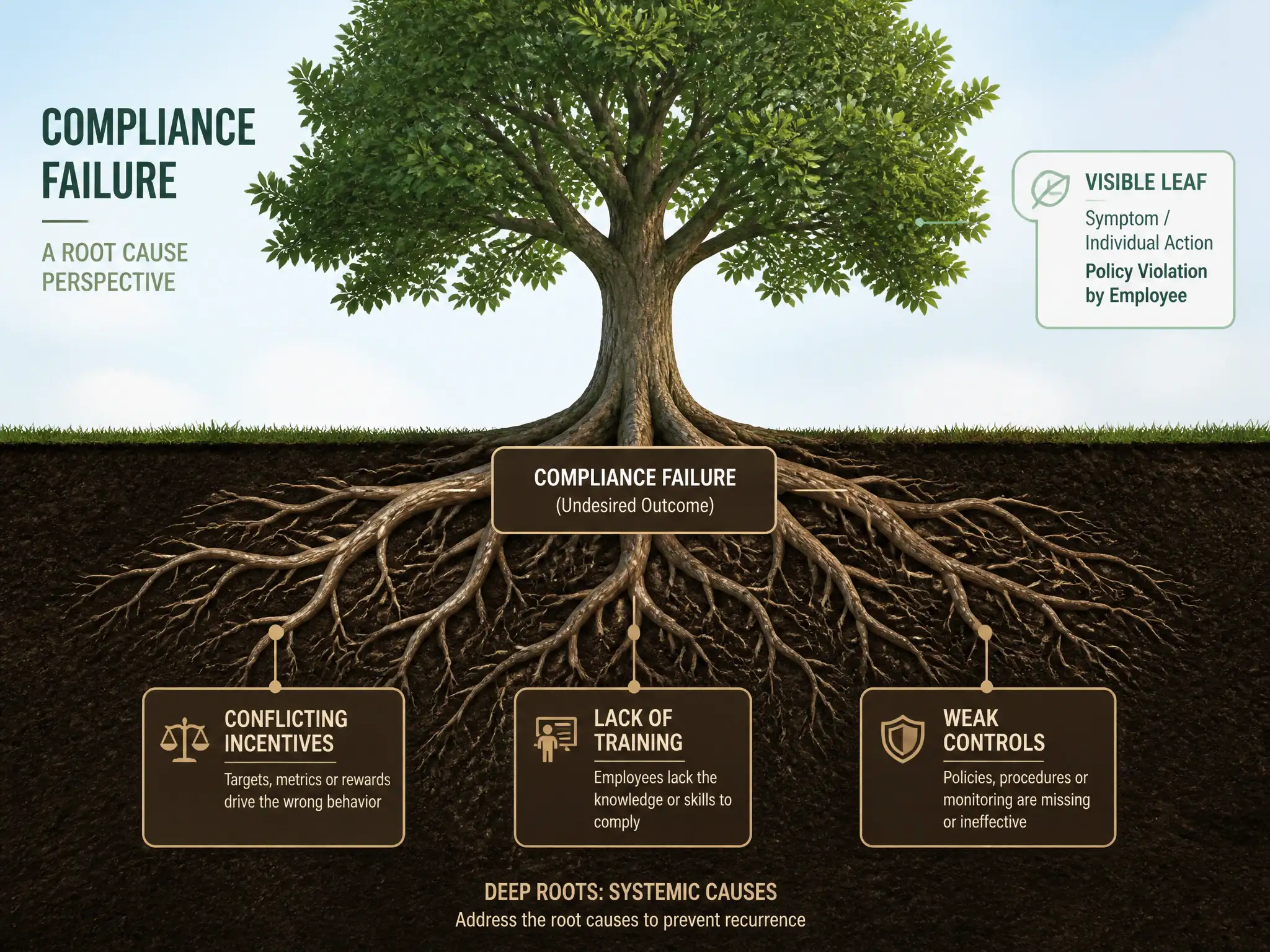
When compliance fails, you don't just mop up the water—you find the cracked pipe. Root cause analysis is about uncovering the systemic, structural, or cultural weaknesses that let the failure happen, so you can fix it for good. Blaming one person or dressing up the program doesn't cure the disease.
Full Explanation
The correct answer is the option stating that the organization is trying to uncover the systemic, structural, or cultural weaknesses that allowed the failure to occur so they can be corrected. A root cause analysis is a structured, investigative problem-solving method used to identify the initiating causes of a compliance failure. Regulatory bodies, such as the US Department of Justice in its Evaluation of Corporate Compliance Programs guidelines, expect companies to investigate not just the superficial details of what happened, but the deep-seated reasons why it happened. A root cause analysis looks past individual human error to examine systemic weaknesses, such as policy gaps, inadequate training, poor internal controls, conflicting performance incentives, or cultural deficiencies.
The blame-and-terminate option is incorrect because focusing solely on individual blame, sometimes called the 'bad apple' theory, prevents organizations from fixing the systemic issues that allowed the behavior to occur in the first place. This often leads to repeated failures by other employees operating under the same broken systems.
The budget-justification option is incorrect because while a root cause analysis may highlight a need for more resources or staff, its primary objective is process improvement, risk mitigation, and operational remediation, not budget justification.
The no-flaws option is incorrect because the purpose of a root cause analysis is to identify flaws so they can be corrected, rather than pretending the program is perfect and requires no modifications.
By understanding the root cause, compliance officers can implement targeted corrective actions—such as updating control gates, revising policies, or changing incentive structures—to ensure the issue does not recur.