
When a compliance officer designs a third-party due diligence program, what is the ultimate objective of this process?
Select an answer to reveal the explanation.
Short Explanation
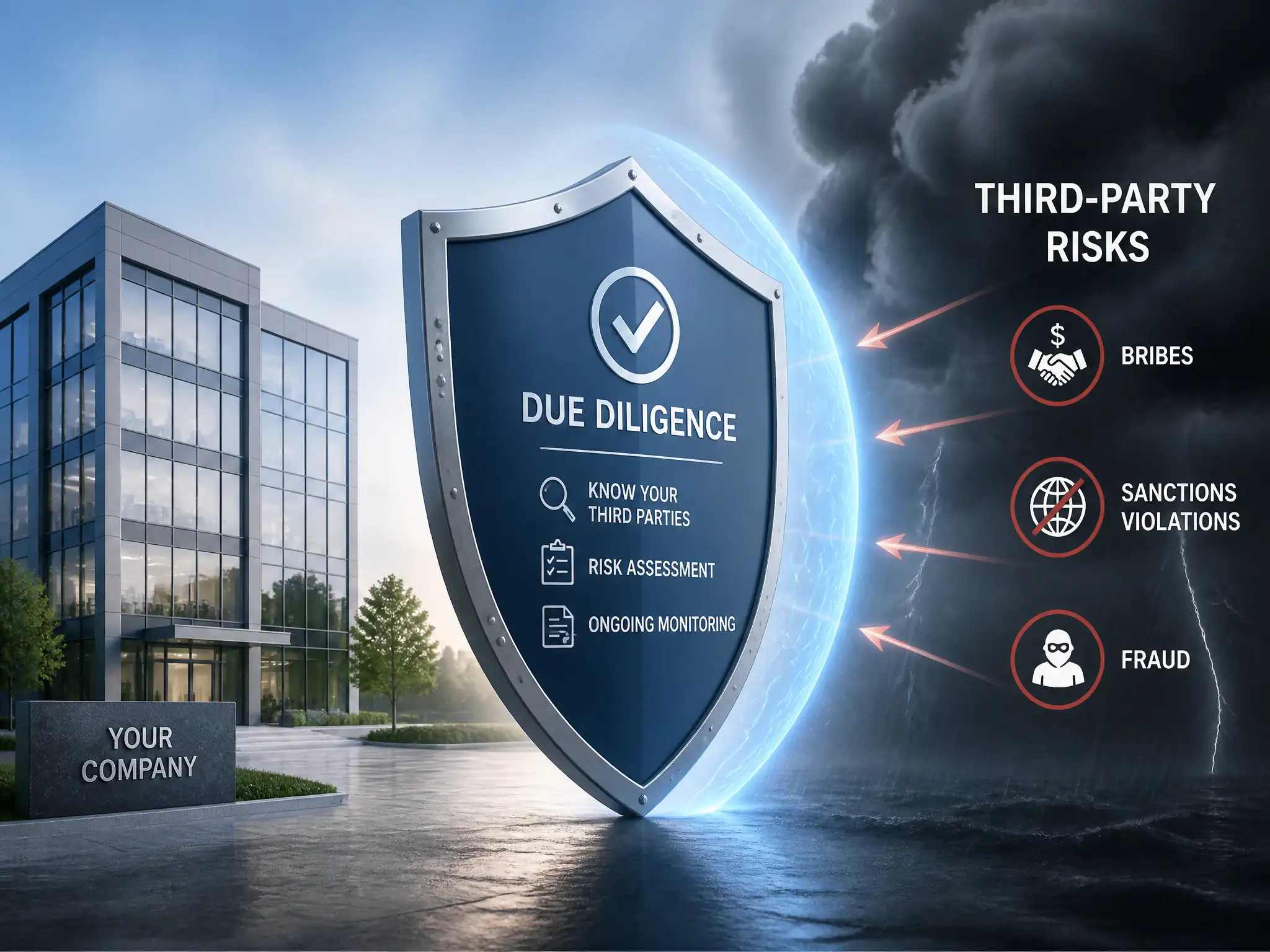
Imagine hiring an overseas distributor who decides to bribe local officials to get your product through customs faster. Even if you didn't know about it, regulators are going to knock on your door, not just theirs. You run third-party due diligence to put up a shield against legal fines and brand damage, not to avoid partners or manage sales margins.
Full Explanation
The ultimate objective is to protect the organization from legal liability, regulatory penalties, and reputational damage caused by third-party misconduct. Under major international legal frameworks like the US Foreign Corrupt Practices Act (FCPA), the UK Bribery Act, and various global anti-money laundering regulations, companies can be held civilly and criminally liable for the corrupt actions of their third-party agents, distributors, and joint venture partners. The primary objective of third-party due diligence is to identify potential compliance red flags and implement safeguards to protect the organization from joint liability, heavy regulatory fines, and catastrophic brand damage caused by partner misconduct.
Let's dissect the incorrect choices: - Eliminating reliance on external vendors, suppliers, and business partners is incorrect because modern business operations require third-party relationships, such as supply chains, logistics, and localized sales networks. The goal is not to eliminate these partnerships, which would be commercially paralyzing, but to manage the risks they introduce. - Guaranteeing a fixed financial return and commercial profitability from the business relationship is incorrect because due diligence is a compliance risk mitigation function, not a commercial pricing or profit-guaranteeing mechanism. - Verifying that the third-party partner has never faced any civil litigation or minor commercial dispute is incorrect because demanding zero history of minor civil disputes or employee misdemeanors is unrealistic and outside the scope of compliance due diligence. The focus is on material, systemic risks, such as bribery, corruption, sanctions list matches, and human rights violations.
By establishing a robust screening and monitoring program, an organization demonstrates to regulators that it took reasonable steps to prevent and detect third-party misconduct, which serves as a powerful defense during regulatory inquiries.