Within the framework of an international compliance and ethics program, what does the process of "due diligence" primarily require an organization to do?
Select an answer to reveal the explanation.
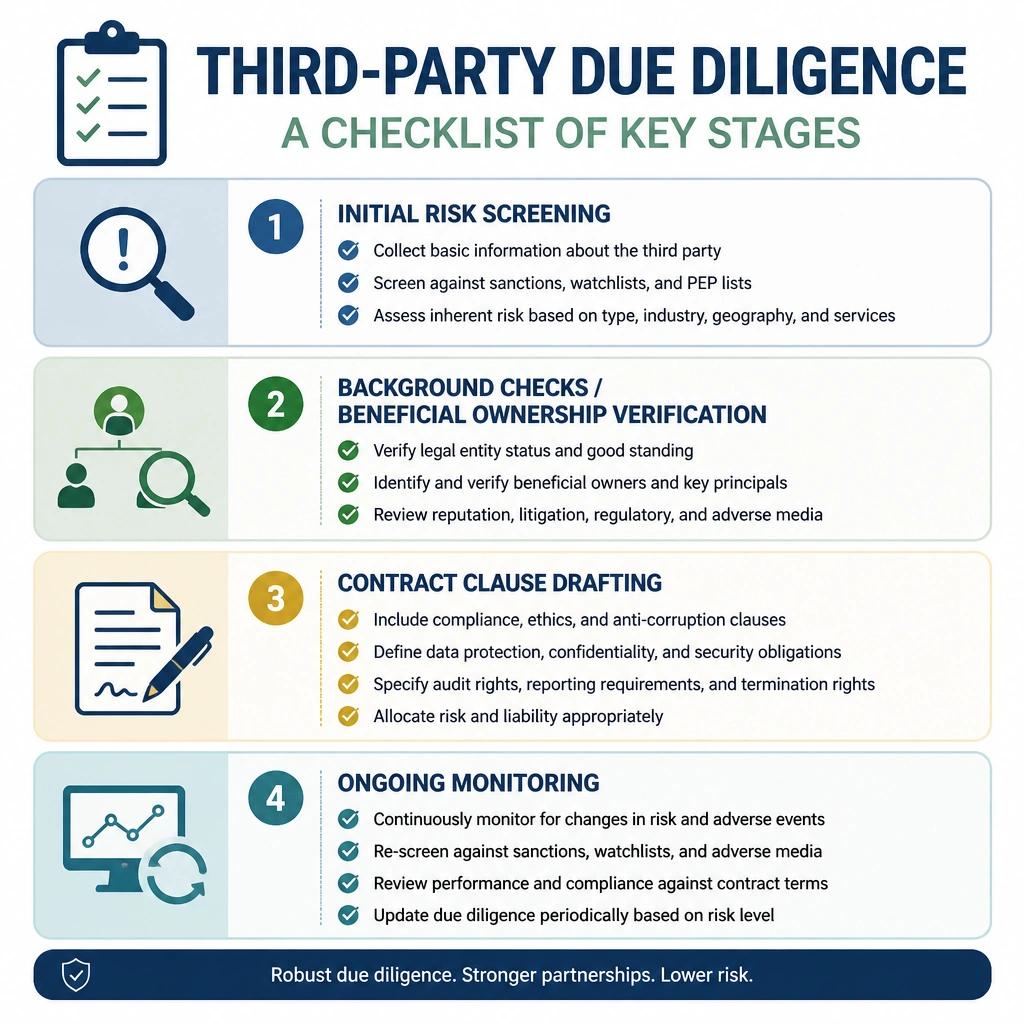
Short Explanation and Infographic
Look, you wouldn't buy a used car without checking the history report and taking it to a mechanic first, right? Well, in compliance, we call that due diligence. Before you sign a contract with a new partner, distributor, or agent—especially overseas—you've got to dig into their background. Are they bribing government officials? Do they have a history of money laundering? If you don't check, their legal problems will quickly become your legal problems, and trust me, regulators won't accept 'we didn't know' as an excuse. The correct answer is C. Option A is just blind trust, B is a shortcut to jail (facilitation payments are highly risky under the FCPA and UK Bribery Act), and D is just running away from global business. Do your homework first!
Full explanation below image
Full Explanation
The correct answer is C. Due diligence in a compliance context refers to the proactive, risk-based investigation and assessment of third parties—such as suppliers, agents, distributors, joint venture partners, and acquisition targets—before formalizing a business relationship. The goal is to identify potential legal, financial, or reputational risks, such as corruption, money laundering, sanctions violations, or human rights abuses, and to implement controls to mitigate those risks. International frameworks, such as the US Department of Justice (DOJ) guidelines and the UK Bribery Act Adequate Procedures, emphasize that due diligence must be risk-based and continuous.
Let's examine why the other options are incorrect: - Option A is incorrect because administrative rubber-stamping based solely on executive approval is the opposite of due diligence. True due diligence requires an objective, independent review process based on established risk criteria rather than internal hierarchy. - Option B is incorrect because paying facilitation fees or unverified commissions is a significant compliance risk, frequently violating anti-bribery laws like the US Foreign Corrupt Practices Act (FCPA) and the UK Bribery Act. - Option D is incorrect because avoiding all international business is a commercial restriction rather than a compliance strategy. Organizations can operate globally as long as they manage risks through rigorous, risk-based due diligence.
Effective due diligence involves screening against sanctions lists, checking beneficial ownership, reviewing historical compliance track records, and structuring contracts with clear audit rights and compliance covenants.