
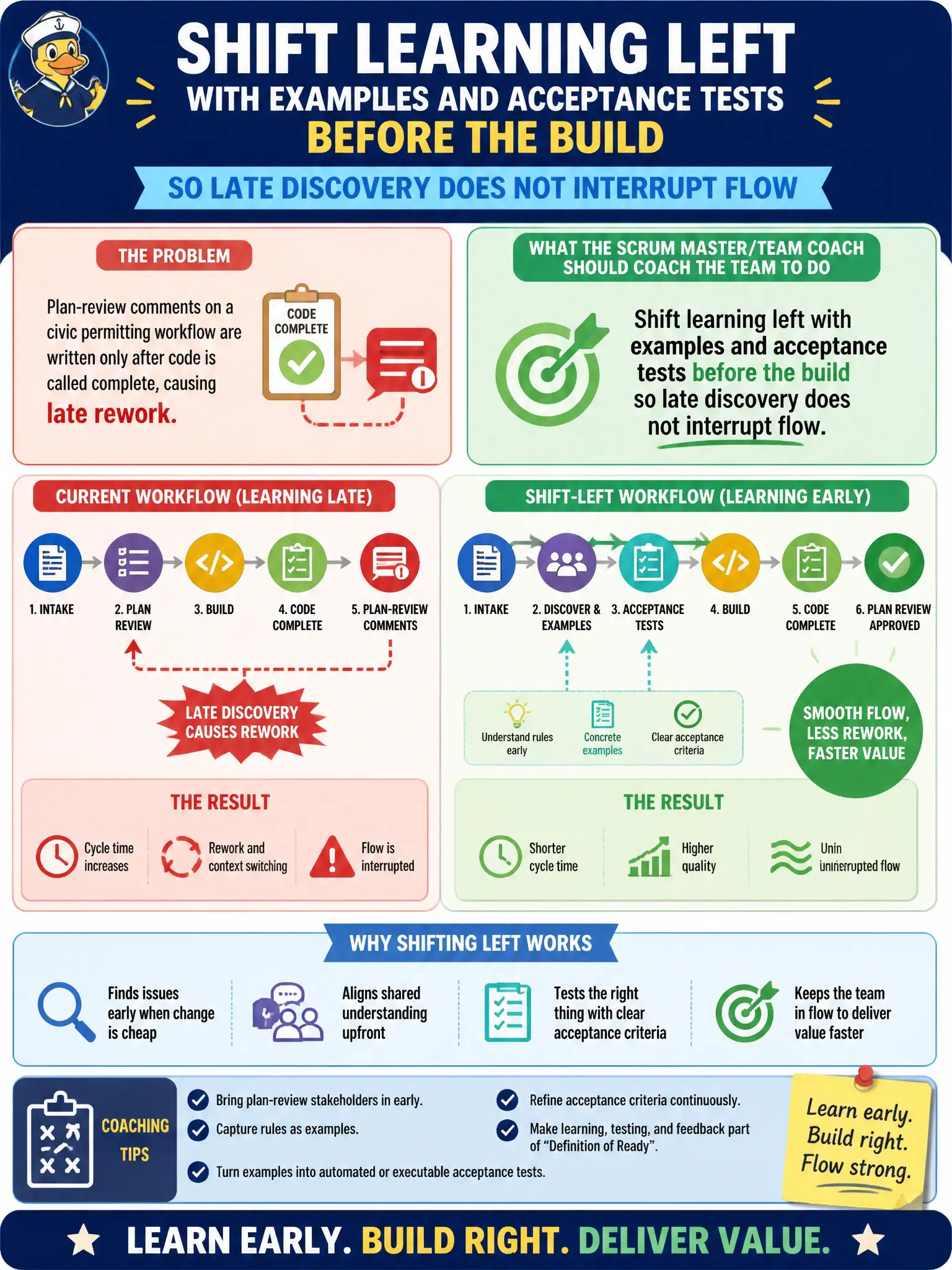
Plan-review comments on a civic permitting workflow are written only after code is called complete, causing late rework. What should the Scrum Master/Team Coach coach the team to do?
Select an answer to reveal the explanation.
Short Explanation
Writing plan-review notes after the permit workflow is coded is like redlining the blueprint after the concrete is poured. Get examples and acceptance tests in first. That is shifting learning left, not adding another inspection week.
Full Explanation
Shifting learning left prevents late plan-review rework from interrupting flow. When plan-review comments on a civic permitting workflow arrive only after code is called complete, discovery is late and expensive. The Scrum Master/Team Coach should coach examples and acceptance tests before the build so reviewers and builders share intent early and late interruption shrinks.
Keeping comments until the end so reviewers see a finished product fails by concept: finished-looking work with late comments maximizes rework. Skipping acceptance examples and relying on a final plan-review meeting fails by concept by concentrating learning in one late event. Freezing code for an extra inspection week after every story fails by concept because it adds a mini waterfall after each item instead of preventing defects.
Exam caveat: SAFe and agile quality practices prefer early examples/ATDD-style clarity; late inspection is a flow anti-pattern especially on permitting workflows where rule interpretation matters. Early examples do not replace needed reviews—they make reviews cheaper and faster.
Operational check: write acceptance examples with plan-review stakeholders before building the next permitting slice, validate against those examples during development, and compare rework rate versus the old comment-after-complete pattern.