
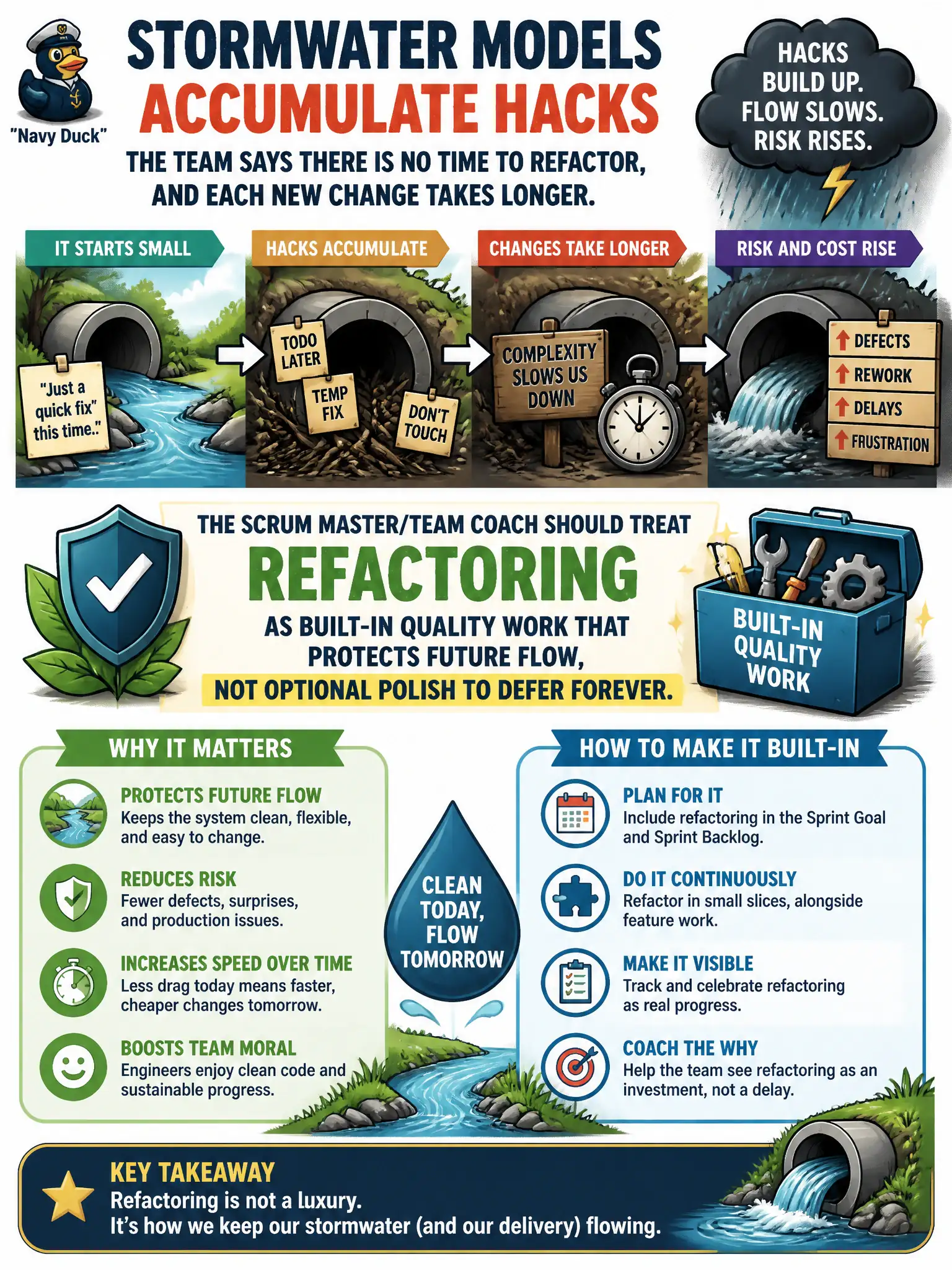
Stormwater models accumulate hacks because the team says there is no time to refactor, and each new change takes longer. How should the Scrum Master/Team Coach treat refactoring?
Select an answer to reveal the explanation.
Short Explanation
Stormwater code full of hacks is a culvert packed with debris: every new storm moves slower. Refactoring is clearing the pipe, not hanging a pretty sign after the flood. Budget it as quality that keeps flow moving.
Full Explanation
Refactoring is built-in quality that protects future flow. Stormwater models that accumulate hacks because “there is no time to refactor” make each new change slower—technical debt compounds until civic modeling work crawls. The Scrum Master/Team Coach should treat refactoring as necessary quality work inside the flow, not optional polish deferred forever.
Leaving cleanup only for leftover slack after the PI fails by concept: slack rarely appears, so debt keeps growing. Treating refactoring only as a separate capital project awaiting new budget fails by concept by postponing continuous improvement of the working system. Stopping visualization until the codebase is perfect fails by concept because hiding work does not reduce debt or restore flow.
Exam caveat: SAFe built-in quality includes design/code health practices that keep flow sustainable; refactoring is not a luxury epic after public deadlines. Balance purposeful refactoring with delivering resident-facing outcomes—neither endless rewrite nor endless hack piles.
Operational check: reserve capacity each iteration for targeted stormwater-model refactoring tied to active stories, track change lead time on touched modules, and show leadership that faster subsequent changes—not cosmetic cleanup—are the payoff.