
The emergency-shelter coordinated-entry team flips methods every iteration because a consultant likes novelty. What should the SM/TC coach?
Select an answer to reveal the explanation.
Short Explanation
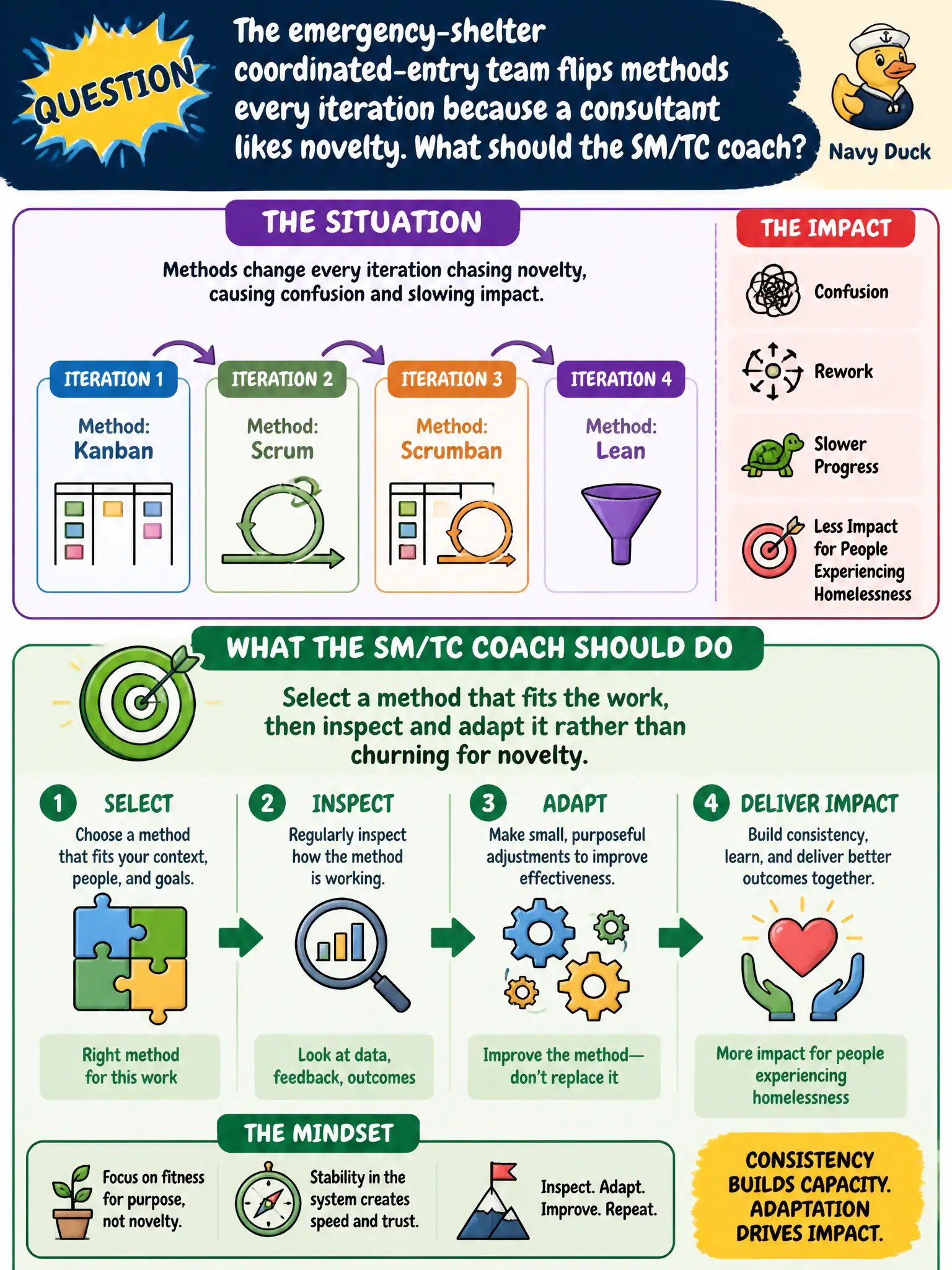
Changing the shelter's playbook every two weeks is not inspect-and-adapt; it is a magic show. Pick a method that matches coordinated-entry work, run it long enough to learn, then improve it. Novelty is not a strategy.
Full Explanation
For method stability on a civic team (for example shelter operations), the SM/TC should select a method that fits the work, then inspect and adapt it rather than churning for novelty. Changing the playbook every two weeks is not Inspect and Adapt; it is a magic show that prevents habits from forming and problems from becoming visible. Fit, then improve, beats novelty theater.
Keep flipping methods so the team never forms habits fails because constant change hides whether practices work and exhausts the team. Adopting whatever the consultant demonstrated most recently fails because contract theater is not evidence-based method fit. Freezing the method forever and skipping retrospectives that might change practices fails because rigidity without inspection is the opposite of empiricism.
Exam caveat: inspect-and-adapt changes practices based on evidence; it does not mean recreational method hopping or never changing. Operational check: choose Scrum or Team Kanban from arrival and planning evidence, run it long enough to learn, use retrospectives for targeted changes, and refuse consultant-of-the-week or permanent-freeze extremes. Shelter and other human-services teams especially need stable working agreements so staff can learn the system instead of relearning labels every iteration.