
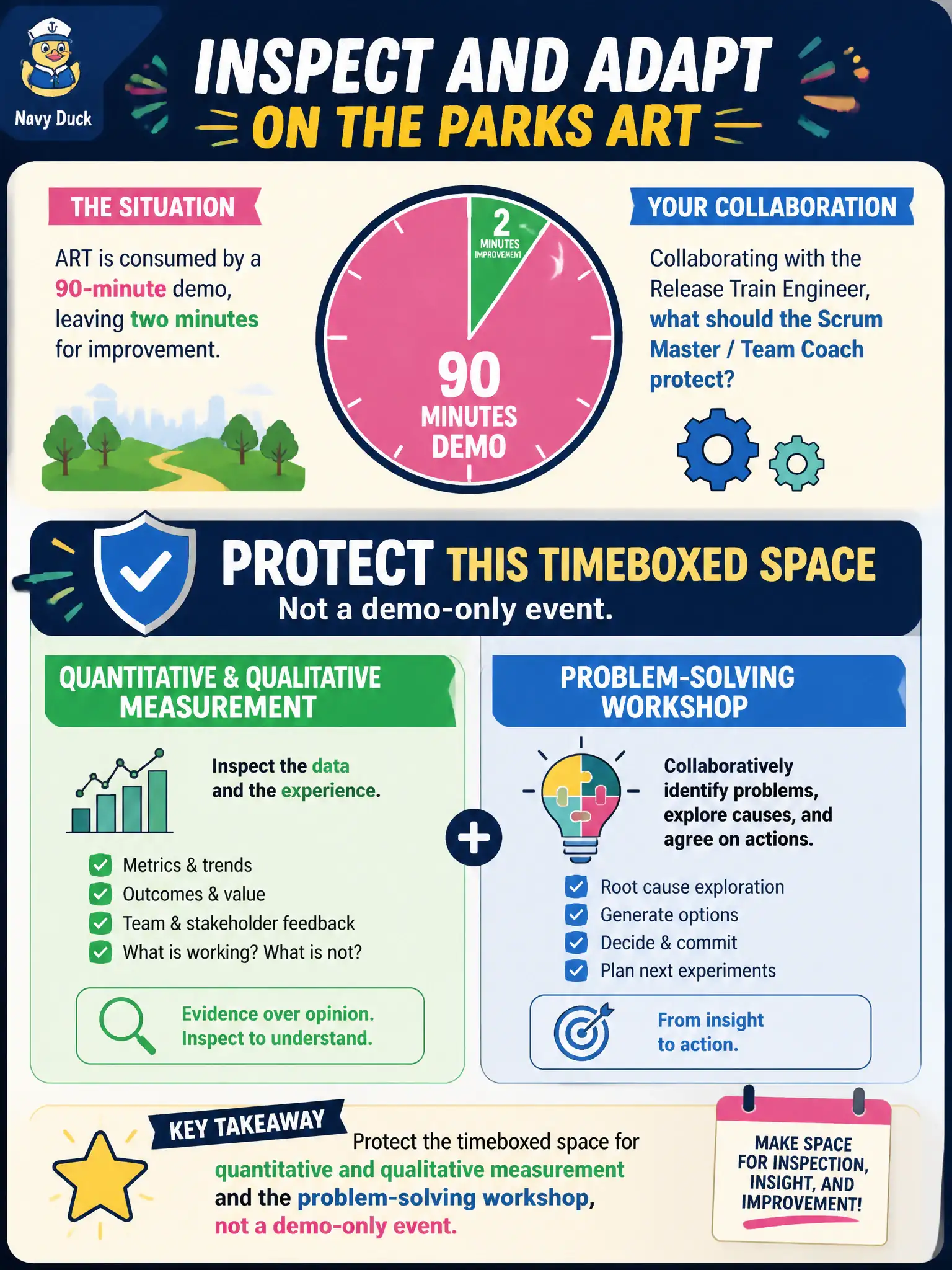
Inspect and Adapt on the parks ART is consumed by a 90-minute demo, leaving two minutes for improvement. Collaborating with the Release Train Engineer, what should the Scrum Master / Team Coach protect?
Select an answer to reveal the explanation.
Short Explanation
A demo that eats the clock is a concert with no encore for learning. Parks still need measures and a problem-solving workshop. Protect those timeboxes; do not turn Inspect and Adapt into show-and-tell.
Full Explanation
I&A timeboxes must protect measurement and problem-solving, not only a long demo. When parks I&A burns 90 minutes on demo and leaves two minutes for improvement, collaboration with the RTE should rebalance the agenda. The Scrum Master / Team Coach protects structured space for quantitative and qualitative review and the workshop so parks services actually improve.
Letting the demo run as long as it needs pushes improvement to “next year.” Cutting measurement and problem-solving so every team gets a full slide deck optimizes show over change. Moving problem-solving to an optional lunch that few attend deletes the workshop in practice.
Exam caveat: all I&A parts need protected time. Operational check: set parks I&A agenda with hard timeboxes for demo, measures, and workshop—and enforce them with the RTE.
Municipal ARTs feel Inspect and Adapt choices as safer shelter intake, fairer elections, cleaner water data, and clearer permits for the public. Keep facilitation transparent, include the whole Agile Team, and verify improvement items enter real backlogs with owners and check dates. After the event, confirm the next iteration planning agenda references the agreed experiments so civic delivery actually changes.