
The 311 team's Innovation and Planning iteration is hijacked by production firefighting that was predictable. How should the Scrum Master / Team Coach treat that?
Select an answer to reveal the explanation.
Short Explanation
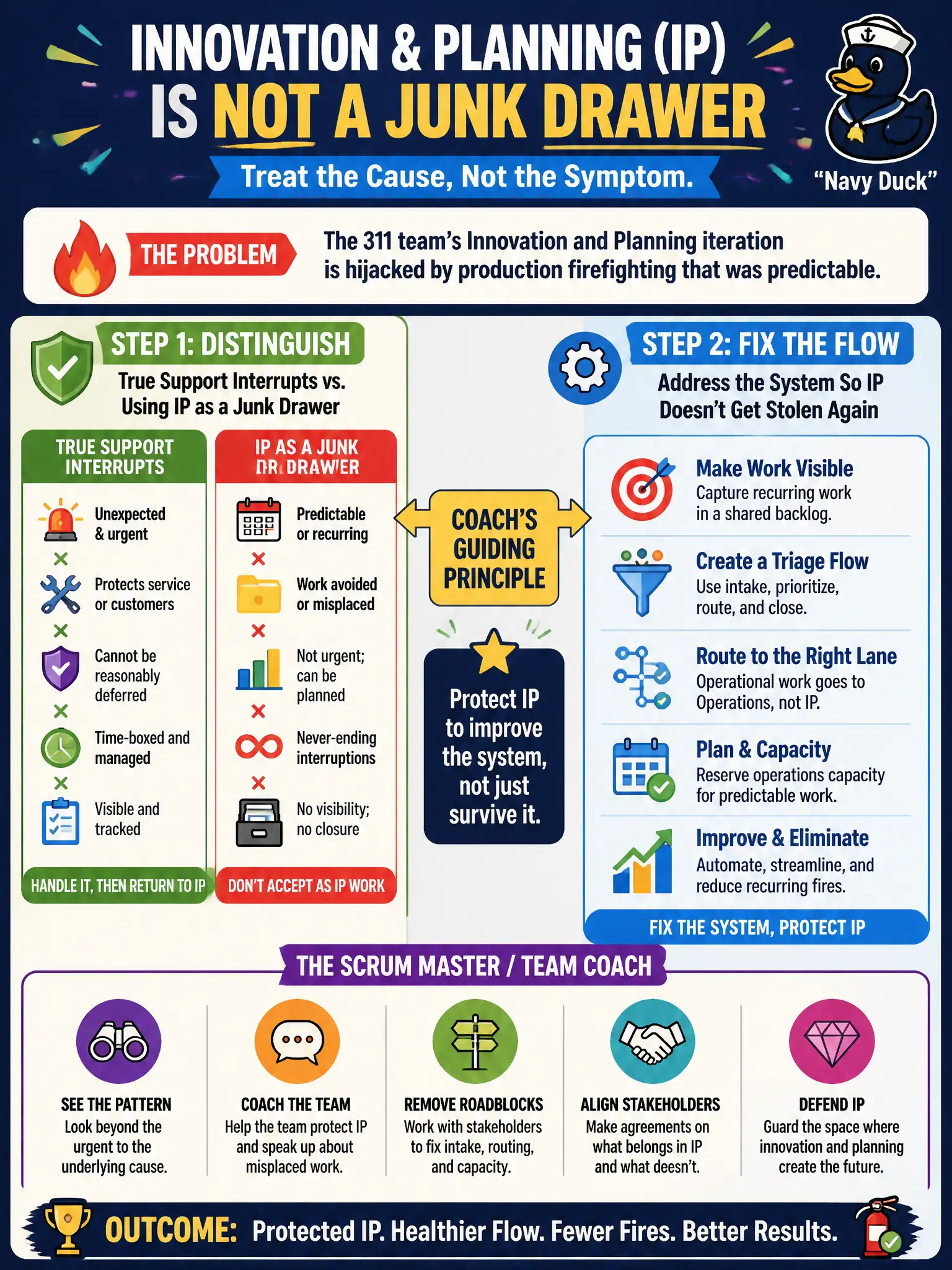
Predictable 311 fires parked in IP are not emergencies; they are a junk drawer. Real interrupts happen, but chronic overflow is a flow problem. Fix the pipeline instead of stealing the buffer every PI.
Full Explanation
True support interrupts differ from using IP as a junk drawer for predictable production firefighting. When a 311 team’s IP is hijacked by chronic, foreseeable production work, the ART is stealing buffer instead of fixing flow. The Scrum Master / Team Coach distinguishes emergencies from systemic overflow and drives flow fixes so IP can serve innovation, learning, and planning prep. Otherwise every PI loses its shock absorber.
Accepting IP as the official overflow bucket institutionalizes bad flow. Freezing the 311 backlog until the next PI so firefighting finishes in IP pauses value creation without repairing causes. Staffing a permanent IP firefighting crew so other teams keep buffer concentrates the anti-pattern.
Exam caveat: IP may absorb true variability; it must not become planned delivery overflow. Operational check: classify 311 IP interrupts—if predictable, create capacity in delivery iterations or fix root causes.
In municipal ARTs, residents experience these coaching choices as faster or slower public services—licensing lines, housing decisions, water bills, snow routes, and emergency response—so keep events and buffers tied to inspect-and-adapt outcomes. Record the decision, the owner, and the next inspection date so the team can verify civic impact.