
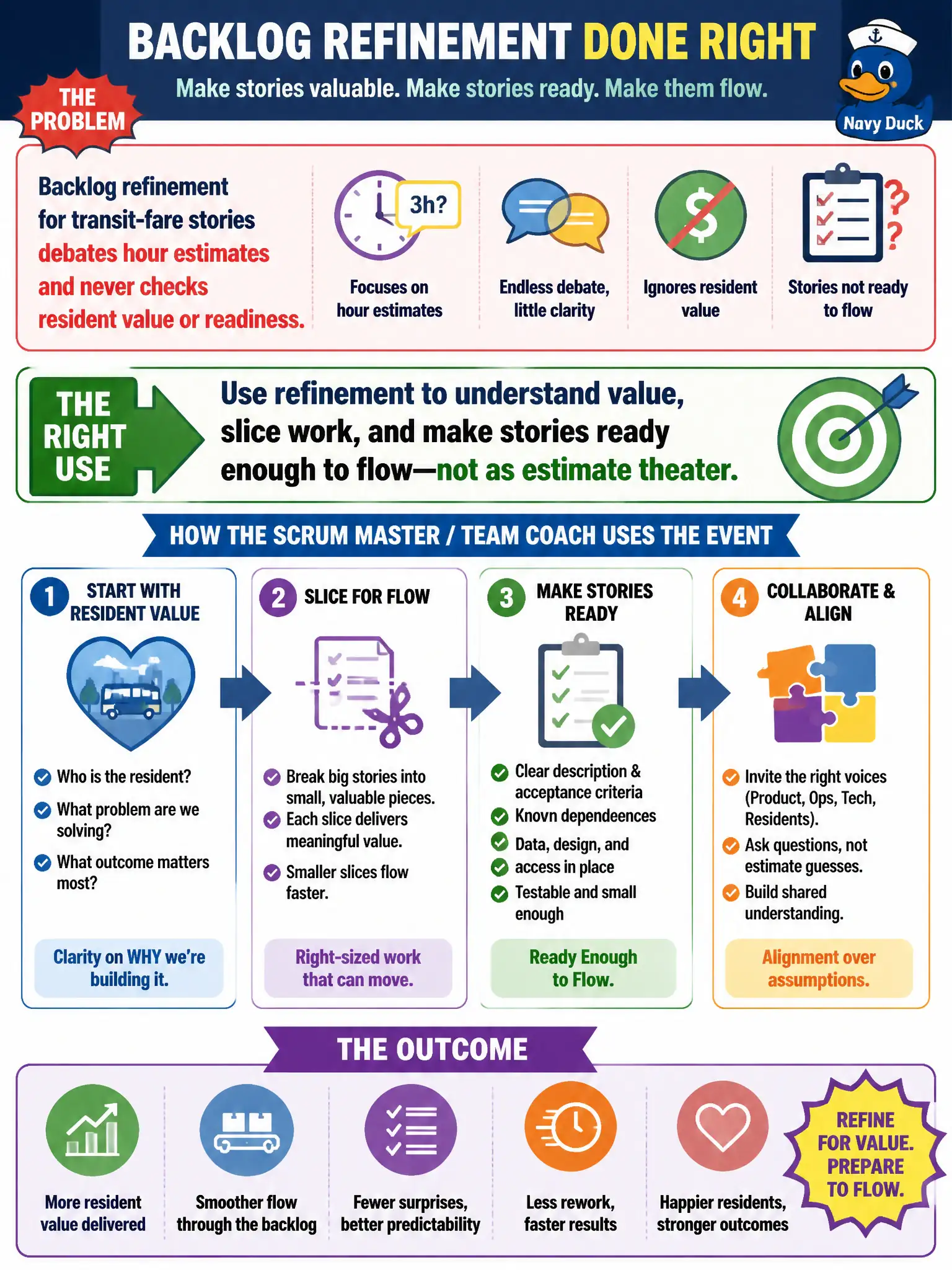
Backlog refinement for transit-fare stories debates hour estimates and never checks resident value or readiness. How should the Scrum Master / Team Coach use the event?
Select an answer to reveal the explanation.
Short Explanation
Hour-estimate theater is a spreadsheet hobby. Transit-fare stories need to be understood, sliced, and ready enough to move. If refinement never talks value or readiness, the board will stall next iteration.
Full Explanation
Backlog refinement exists to understand value, slice work, and make stories ready enough to flow—not as estimate theater. Transit-fare stories that debate hours without resident value or readiness produce false precision and unready work. The Scrum Master / Team Coach uses the event so fare changes can be understood, split, and clarified with acceptance criteria before planning. Riders experience readiness as working fare rules, not as estimate debates.
Keeping hour debates until every story has a precise forecast mistakes estimation for refinement purpose. Skipping refinement and planning unready fare stories injects thrash into the iteration. Handing estimating to the Release Train Engineer removes team discussion of value and readiness.
Exam caveat: estimates may appear, but refinement’s primary test is readiness and understanding. Operational check: leave transit refinement only when stories have clear value, slices, and enough readiness to pull—not merely hour numbers.
In municipal ARTs, residents experience conflict outcomes as delayed permits, missed benefits, unsafe shelter conditions, or opaque public data—so the Scrum Master / Team Coach keeps facilitation tied to service flow, safety, and transparent inspection rather than positional wins. Document the chosen frame or strategy, the evidence used, and the next check date so the team can see whether the intervention improved civic delivery.