
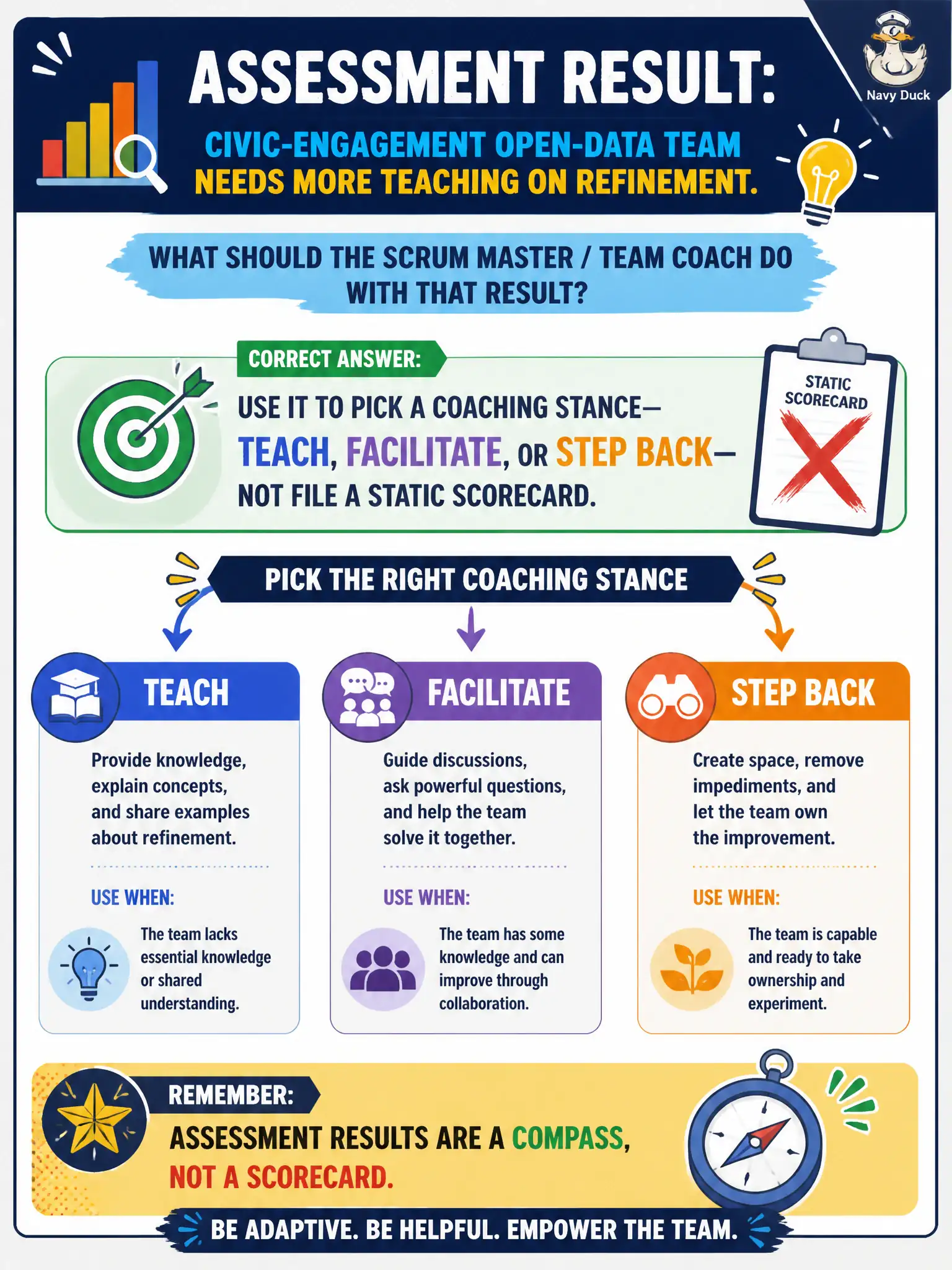
Assessment results for the civic-engagement open-data team show they need more teaching on refinement. What should the Scrum Master / Team Coach do with that result?
Select an answer to reveal the explanation.
Short Explanation
A scorecard that goes in a drawer is a museum piece. The open-data assessment is a hint about the next coaching stance—teach, facilitate, or get out of the way. File it and nothing changes.
Full Explanation
When assessment shows a civic-engagement open-data team needs more teaching on refinement, the Scrum Master / Team Coach should use that result to pick a coaching stance—teach, facilitate, or step back—not file a static scorecard. Assessment exists to change how the coach helps next on municipal open-data work, not to decorate a binder. Filing the scorecard and leaving the stance unchanged until next year wastes the signal and leaves weak refinement in place. Sending the score to the Release Train Engineer as the team's official ART grade turns developmental data into train judgment theater. Converting the result into individual Human Resources ratings weaponizes a team skill gap and chills honesty in future assessments. Exam caveat: SASM links assessment to coaching stance selection; static filing, ART grading, and HR conversion are misuse of measure-and-grow style results. Operational check: choose an explicit teach-heavy stance for refinement on the open-data team, schedule modeled refinement sessions with clear learning outcomes, define what "good enough to step back" looks like, and reassess after a few iterations whether facilitation or stepping back is now appropriate. Keep the scorecard as a living coaching input, not an annual artifact gathering dust.