
The code-enforcement team looks "slow" this PI because they pulled a large compliance enabler. How should the Scrum Master / Team Coach read the throughput?
Select an answer to reveal the explanation.
Short Explanation
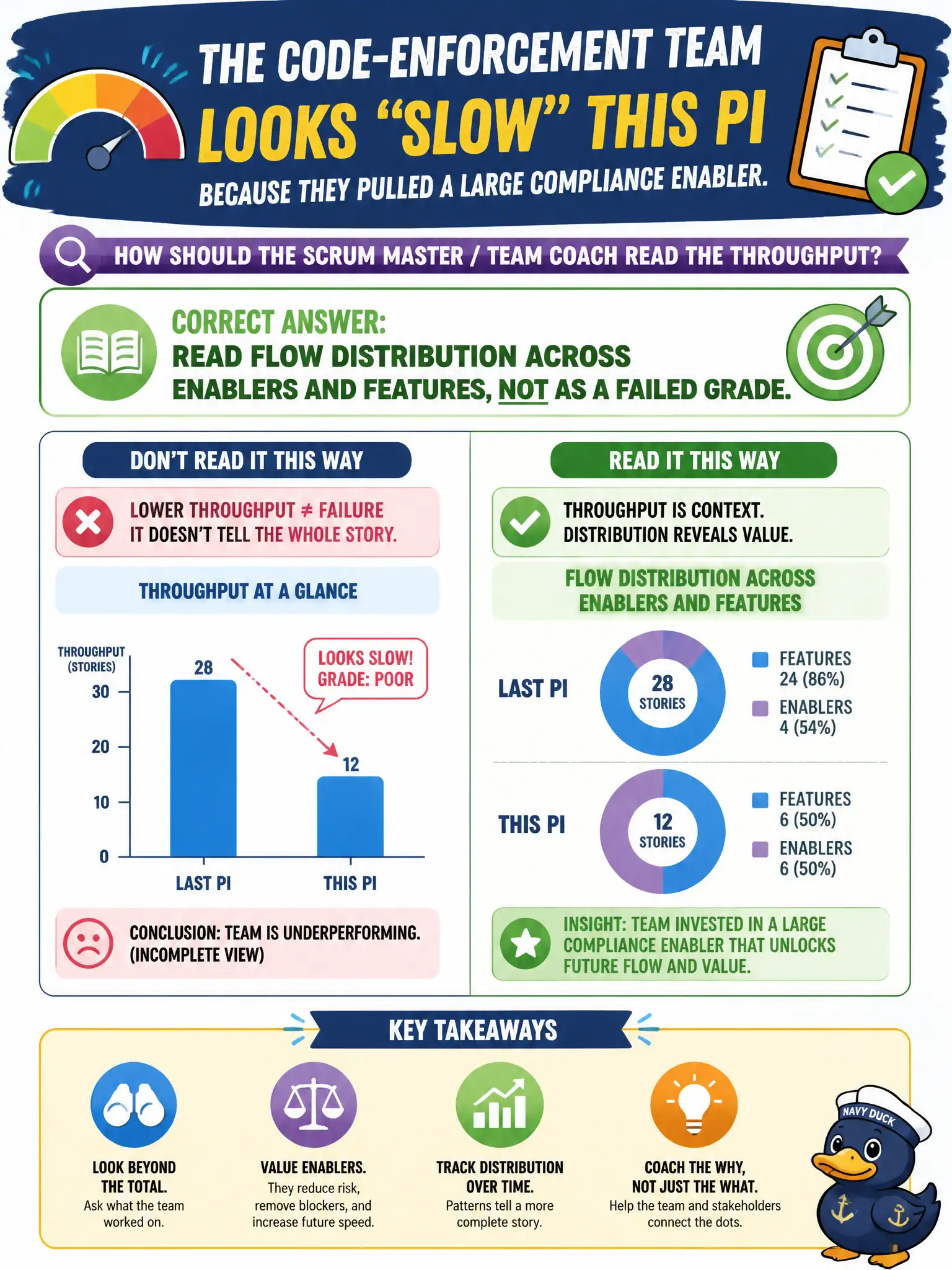
A big compliance enabler is a different kind of work, not a failing grade. The code-enforcement board should show the mix, not hide it. Throughput without distribution is a rumor.
Full Explanation
When a code-enforcement team looks "slow" because they pulled a large compliance enabler, the Scrum Master / Team Coach should read flow distribution across enablers and features rather than issuing a failed grade for lower feature throughput. Enablers that keep enforcement lawful, auditable, and operable are legitimate work; punishing them teaches teams to hide necessary compliance until it explodes. Failing the team because feature throughput dropped while the enabler flew misreads a healthy mix as underperformance. Hiding the enabler from the board so the team still looks feature-fast falsifies the system of work. Converting the enabler into points and comparing the team to a feature-only neighbor invites unfair ranking and gaming. Exam caveat: SASM reads throughput in light of work-item distribution; enabler-heavy PIs are not automatic failures for civic compliance teams. Operational check: visualize feature versus enabler distribution on the code-enforcement board, explain the compliance enabler's resident and legal value to stakeholders, assess flow health inside that mix, and avoid grading solely on feature count. Plan the next PI with transparent capacity for remaining enablers so civic compliance is not underground work.