
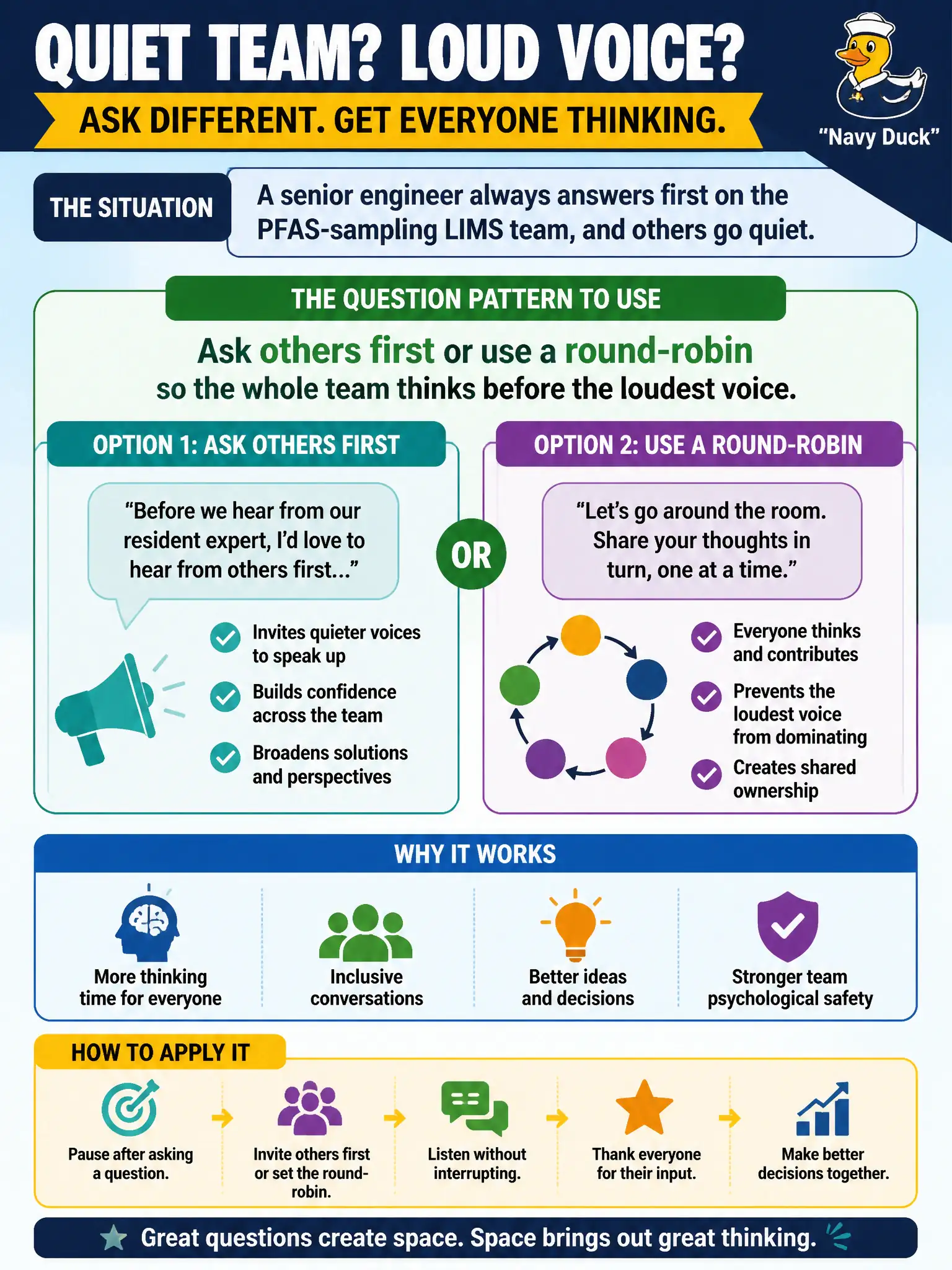
A senior engineer always answers first on the PFAS-sampling LIMS team, and others go quiet. What question pattern should the Scrum Master / Team Coach use?
Select an answer to reveal the explanation.
Short Explanation
If the senior chemist always speaks first, everyone else is just the chorus. Round-robin or "let's hear two other takes first" is how a LIMS team actually thinks. Speed to the expert's answer is not the same as a high-performing team.
Full Explanation
Question patterns can counter dominance so expertise does not silence the rest of the team. When a senior engineer always answers first on the PFAS-sampling LIMS team and others go quiet, the Scrum Master / Team Coach should ask others first or use a round-robin so the whole team thinks before the loudest voice. Lab and sampling quality for community water safety improve when junior analysts, chemists, and testers also contribute.
Always inviting the senior engineer first so the right answer lands quickly fails by concept: speed of one voice trains silence and hides alternative risks. Banning the senior engineer from events fails by concept: it removes expertise instead of balancing participation. Sending questions only to the senior engineer after the meeting fails by concept by privatizing knowledge and excluding the team from shared ownership of LIMS decisions.
Exam caveat: SASM facilitation techniques include structured turn-taking and inviting quieter voices first; silencing experts or always privileging them are both wrong. The senior engineer remains a valued contributor—the pattern change is about order and space, not about discarding experience on PFAS sampling systems.
Operational check: start key questions with a quieter teammate or round-robin, thank early dominant answers when they come later, watch for re-emergence of first-answer monopoly, and confirm more voices appear in refinement and retrospectives without losing technical rigor.