
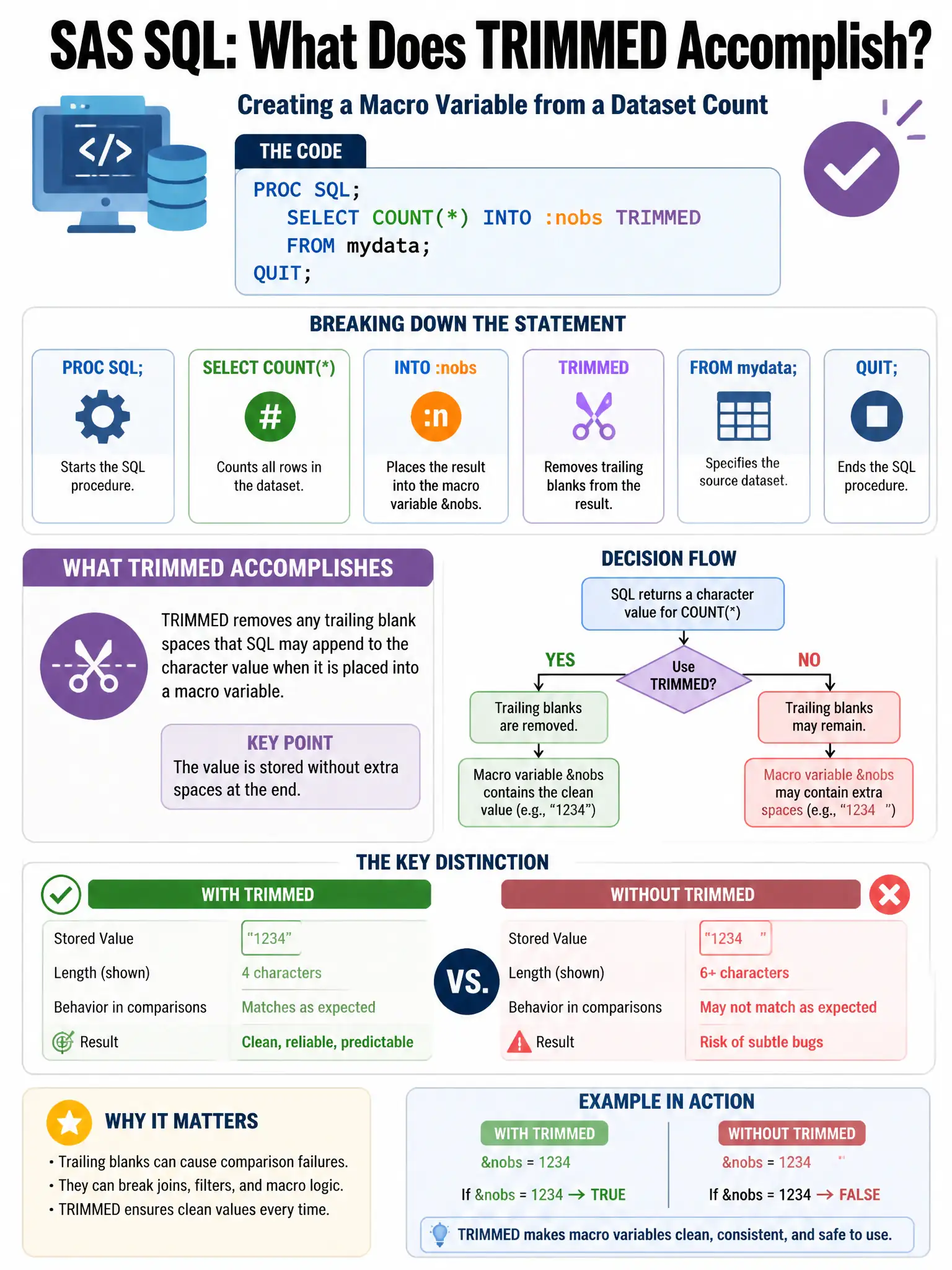
A SAS programmer uses the following code to create a macro variable from a dataset count: PROC SQL; SELECT COUNT(*) INTO :nobs TRIMMED FROM mydata; QUIT; What does TRIMMED accomplish in this context?
Select an answer to reveal the explanation.
Short Explanation
Here's the deal — TRIMMED in the INTO clause strips leading and trailing blanks from the value stored in the macro variable, so :nobs gets '1234' instead of ' 1234 '. That keeps macro resolution clean when you use the count.
Full Explanation
TRIMMED in the INTO clause of PROC SQL removes leading and trailing blanks from the stored value, so the macro variable :nobs contains '1234' rather than ' 1234 '. This avoids macro resolution issues caused by embedded spaces. The option saying it limits the count to trimmed (non-missing) observations is wrong because TRIMMED affects the stored string, not the rows counted. The options about trimming the dataset to the first 100 observations or writing a TRIMMED= output dataset for logging are fabricated SAS SQL interpretations.